
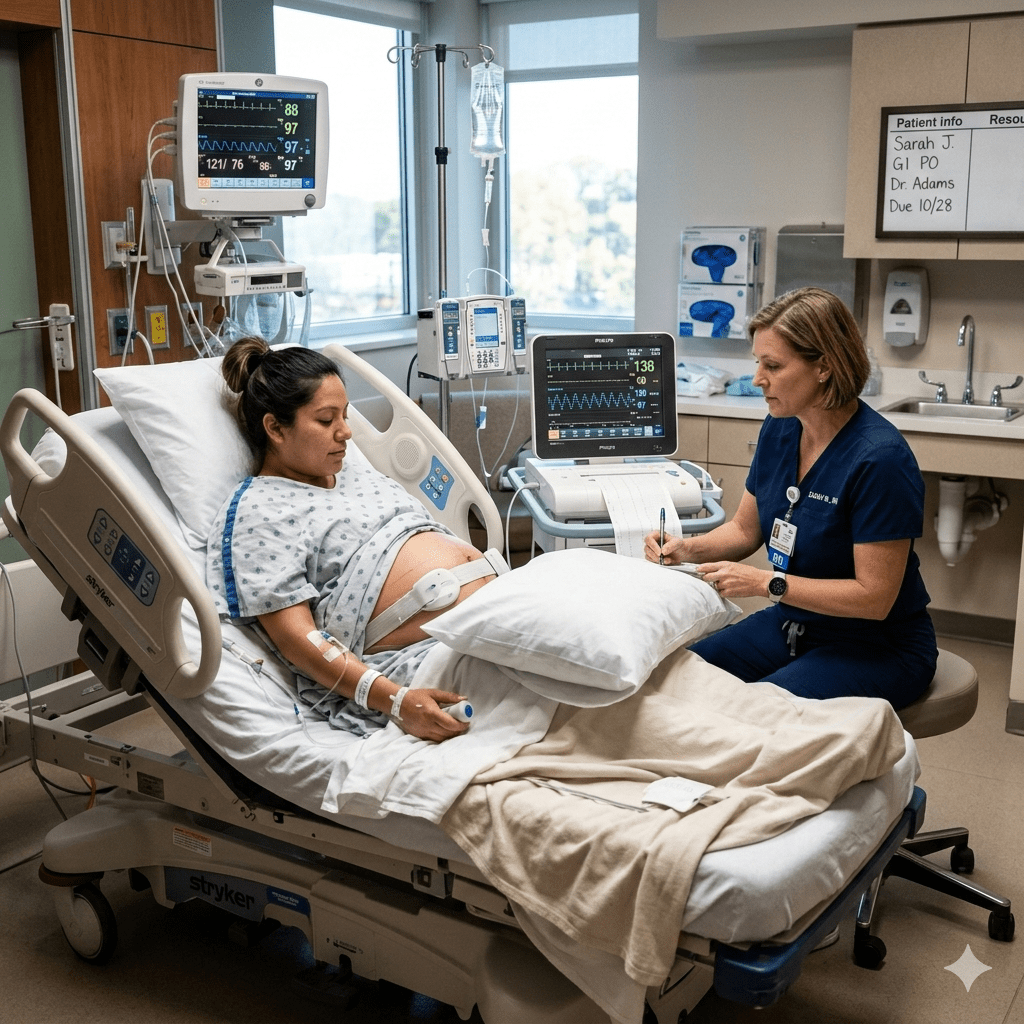
Preterm Premature Rupture of Membranes (PPROM) is a serious obstetric condition that occurs when the amniotic sac ruptures before 37 weeks of pregnancy and before the onset of labor. Because the protective membrane surrounding the fetus breaks early, both the mother and fetus are at increased risk for infection, preterm birth, and other complications.
For every registered nurse working in maternal health, recognizing and managing PPROM is essential. It is also a high-yield topic for NCLEX preparation, where nursing students must demonstrate understanding of assessment priorities, infection prevention, and fetal monitoring. In many hospitals, PPROM care is organized using a structured nursing bundle to ensure safe monitoring and timely intervention.
What Is Preterm Premature Rupture of Membranes?
Normally, the amniotic sac ruptures during active labor, often referred to as “water breaking.” However, when rupture occurs before labor begins and before 37 weeks of gestation, it is classified as PPROM.
This condition exposes the fetus to the external environment, increasing the risk of:
- Intrauterine infection
- Preterm delivery
- Umbilical cord complications
- Fetal distress
Because of these risks, a registered nurse must monitor the patient carefully and report any changes immediately.
Causes and Risk Factors
PPROM can occur spontaneously, but several factors increase the risk.
Maternal Risk Factors
- Previous preterm birth
- Genital tract infections
- Smoking during pregnancy
- Poor prenatal care
- Cervical insufficiency
Pregnancy-Related Factors
- Multiple gestation (twins or more)
- Polyhydramnios (excess amniotic fluid)
- Trauma to the abdomen
A skilled RN nurse monitoring high-risk pregnancies should be alert to these factors and watch for early symptoms.
Signs and Symptoms of PPROM
The most common symptom is sudden leakage of fluid from the vagina before labor begins.
Key Clinical Signs
- Continuous watery vaginal discharge
- Damp underwear or clothing
- Sensation of fluid “gushing” or leaking
- Reduced amniotic fluid on ultrasound
A registered nurse performing maternal assessment should ask detailed questions about the timing, amount, and color of the fluid.
Diagnostic Methods
Healthcare providers use several tests to confirm PPROM.
Nitrazine Test
Amniotic fluid has a higher pH than normal vaginal secretions. A nitrazine paper test can help detect the presence of amniotic fluid.
Ferning Test
When amniotic fluid dries on a slide, it forms a crystal pattern that resembles fern leaves.
Ultrasound
Ultrasound imaging may show reduced amniotic fluid levels, supporting the diagnosis.
The RN nurse assists with these tests and prepares the patient for evaluation.
Complications of PPROM
PPROM increases the risk of several serious complications.
Maternal Complications
- Chorioamnionitis (infection of fetal membranes)
- Sepsis
- Postpartum infection
Fetal Complications
- Premature birth
- Respiratory distress syndrome
- Umbilical cord compression
- Neonatal infection
Early recognition by the registered nurse can help prevent these complications.
Nursing Assessment Priorities
When PPROM is suspected, the RN nurse performs a thorough maternal and fetal assessment.
Key Nursing Assessments
The nurse should monitor:
- Maternal temperature
- Fetal heart rate patterns
- Uterine contractions
- Amniotic fluid color and odor
- Signs of infection
These assessments are often included in a structured nursing bundle used for high-risk pregnancy monitoring.
Nursing Interventions for PPROM
Management depends on gestational age and maternal-fetal condition.
Infection Prevention
The registered nurse should avoid unnecessary vaginal examinations, which can increase infection risk.
Maternal Monitoring
Regular monitoring includes:
- Vital signs
- Temperature checks
- Signs of uterine tenderness
- Laboratory results
Fetal Monitoring
Continuous fetal heart rate monitoring helps detect early signs of fetal distress.
Medication Support
Healthcare providers may prescribe:
- Antibiotics to prevent infection
- Corticosteroids to accelerate fetal lung maturity
- Magnesium sulfate for neuroprotection in premature infants
The RN nurse administers these medications and monitors for side effects.
Nursing Bundle for PPROM Management
Many hospitals use a nursing bundle approach to standardize care.
This bundle often includes:
- Infection monitoring protocols
- Continuous fetal assessment
- Maternal vital sign tracking
- Medication administration guidelines
- Early detection of labor progression
By following this structured nursing bundle, the registered nurse helps improve maternal and neonatal outcomes.
NCLEX Tips for PPROM
For nursing students preparing for the NCLEX, PPROM questions often focus on infection prevention and fetal monitoring.
Key points to remember:
- PPROM occurs before 37 weeks and before labor begins
- Avoid frequent vaginal exams
- Monitor maternal temperature for infection
- Watch for fetal heart rate changes
- Administer medications as ordered to support fetal development
These concepts help future RN nurses demonstrate strong clinical judgment in maternal nursing scenarios.
Conclusion
Preterm Premature Rupture of Membranes is a serious pregnancy complication that requires careful monitoring and timely intervention. The registered nurse plays a vital role in recognizing symptoms, preventing infection, and supporting both maternal and fetal health.
Through consistent assessment and adherence to evidence-based nursing bundles, the RN nurse can help reduce complications and improve outcomes for premature infants. Mastering PPROM management is essential not only for safe nursing practice but also for success on the NCLEX, where maternal-newborn emergencies are frequently tested.