
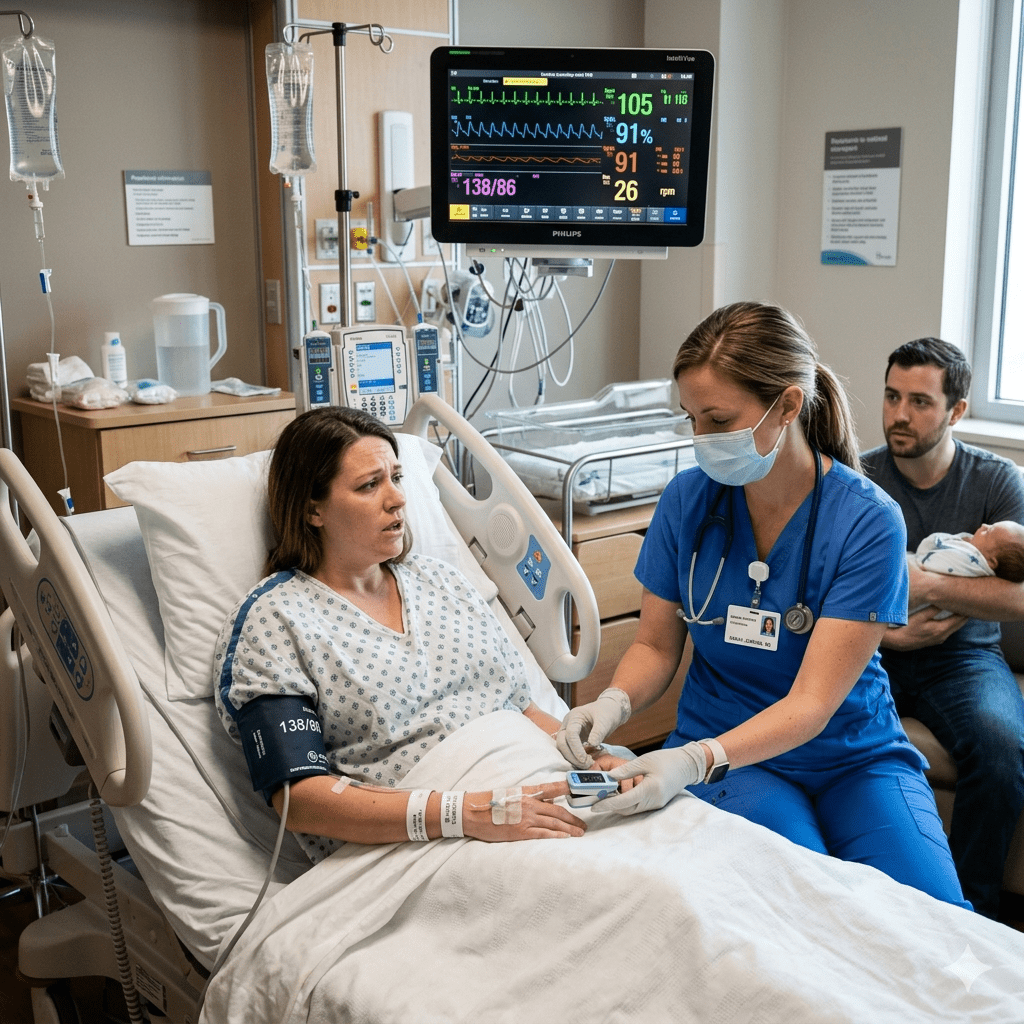
Postpartum Cardiomyopathy (PPCM) is a rare but life-threatening form of heart failure that occurs during the last month of pregnancy or within the first five months after delivery. The condition causes the heart muscle to weaken, making it difficult for the heart to pump blood effectively.
For a registered nurse working in maternal or critical care settings, early recognition of Postpartum Cardiomyopathy is essential. Symptoms may initially appear mild but can rapidly progress to severe heart failure. Because of this, PPCM is an important topic for NCLEX preparation and clinical nursing practice. Many hospitals include cardiac monitoring and early warning systems within a structured nursing bundle for postpartum complications, helping the RN nurse identify symptoms quickly and initiate appropriate care.
What Is Postpartum Cardiomyopathy?
Postpartum Cardiomyopathy is a form of dilated cardiomyopathy that develops during late pregnancy or shortly after childbirth. In this condition, the left ventricle becomes enlarged and weakened, reducing the heart’s ability to pump blood efficiently.
As a result, patients may develop symptoms of heart failure, including fluid buildup in the lungs and decreased oxygen delivery to tissues.
For the registered nurse, understanding the pathophysiology of PPCM helps guide monitoring, early detection, and supportive care.
Causes and Risk Factors
The exact cause of Postpartum Cardiomyopathy is not completely understood. However, several factors may increase the risk.
Common Risk Factors
- Maternal age over 30
- Multiple pregnancies (twins or more)
- History of hypertension or preeclampsia
- African ancestry
- Obesity
- Previous heart disease
A registered nurse providing postpartum care should assess patients with these risk factors closely, especially during the first weeks after delivery.
Pathophysiology of PPCM
In Postpartum Cardiomyopathy, the heart muscle becomes weakened and enlarged, which reduces cardiac output.
Key physiological changes include:
- Dilated left ventricle
- Decreased ejection fraction
- Fluid accumulation in the lungs
- Reduced oxygen delivery to body tissues
These changes lead to congestive heart failure symptoms, which require rapid assessment by the RN nurse and healthcare team.
Signs and Symptoms
One challenge with PPCM is that many symptoms mimic normal postpartum changes, which can delay diagnosis.
Common symptoms include:
- Shortness of breath
- Persistent cough
- Fatigue or weakness
- Swelling in the legs and ankles
- Rapid heart rate
- Difficulty breathing when lying flat
The registered nurse should carefully evaluate these symptoms, especially if they worsen or occur suddenly.
Diagnostic Tests
Healthcare providers use several tests to confirm Postpartum Cardiomyopathy.
Echocardiography
An echocardiogram evaluates heart function and measures the ejection fraction, which is often reduced in PPCM.
Chest X-Ray
This imaging test can show fluid in the lungs or an enlarged heart.
Blood Tests
Blood tests may assess markers of heart failure and rule out other causes of symptoms.
A registered nurse assists with patient preparation, monitoring, and documentation of test results.
Treatment and Management
Treatment for Postpartum Cardiomyopathy focuses on improving heart function and managing symptoms of heart failure.
Common treatments include:
- Diuretics to reduce fluid overload
- Beta blockers to improve heart function
- ACE inhibitors (after delivery)
- Anticoagulants if clot risk is present
- Oxygen therapy for respiratory distress
In severe cases, patients may require intensive cardiac monitoring or advanced cardiac support.
The RN nurse plays a critical role in administering medications, monitoring patient response, and reporting complications.
Nursing Responsibilities in PPCM Care
The registered nurse is essential in the early detection and management of Postpartum Cardiomyopathy.
Key Nursing Responsibilities
Monitor vital signs regularly
Assess respiratory status
Monitor oxygen saturation
Evaluate fluid balance and edema
Administer medications as prescribed
Provide patient education and emotional support
These responsibilities are often part of a hospital nursing bundle designed to detect postpartum complications early.
Patient Education
Education is an important role of the RN nurse caring for postpartum patients.
Patients should be taught to report symptoms such as:
- Shortness of breath
- Rapid swelling of legs
- Persistent fatigue
- Chest discomfort
Early reporting of these symptoms can prevent serious complications.
Possible Complications
If untreated, Postpartum Cardiomyopathy may lead to severe outcomes.
Potential complications include:
- Acute heart failure
- Pulmonary edema
- Blood clots
- Cardiac arrhythmias
- Cardiogenic shock
Because of these risks, prompt recognition and intervention by the nursing team are essential.
Prognosis and Recovery
The prognosis of PPCM varies among patients.
Some women experience complete recovery of heart function within several months, while others may develop chronic heart failure.
Long-term follow-up is often required to monitor cardiac function and prevent future complications.
The registered nurse helps coordinate follow-up care and supports patient recovery.
NCLEX Tips for Postpartum Cardiomyopathy
For NCLEX nursing exams, remember these key points:
- PPCM occurs during late pregnancy or within five months after delivery
- It is a type of dilated cardiomyopathy
- Symptoms resemble heart failure
- Diagnosis is confirmed with echocardiography
- Nursing care focuses on monitoring respiratory status and cardiac function
These concepts are essential for nursing students and RN nurses preparing for maternal-newborn and critical care NCLEX questions.
Conclusion
Postpartum Cardiomyopathy is a serious postpartum complication that requires rapid recognition and careful monitoring. The registered nurse plays a vital role in identifying symptoms, supporting treatment, and educating patients about warning signs.
By applying evidence-based practice and implementing structured nursing bundle protocols, healthcare teams can improve outcomes for mothers affected by PPCM. Understanding this condition is also important for NCLEX success and safe nursing practice, making it essential knowledge for every RN nurse and nursing student.