Postoperative pulmonary complications (PPCs) are among the most common and serious complications following surgery. These complications can increase hospital stays, raise healthcare costs, and significantly affect patient recovery. For every nurse and registered nurse (RN nurse) involved in postoperative care, preventing respiratory complications is a critical responsibility.
For nursing students preparing for the NCLEX, understanding strategies to prevent postoperative pulmonary complications is essential. Many nursing bundle study resources emphasize respiratory monitoring and postoperative nursing interventions because they are frequently tested on the NCLEX and are vital in real clinical practice.
Effective nursing management can reduce the risk of complications such as pneumonia, atelectasis, and respiratory failure.
What Are Postoperative Pulmonary Complications?
Postoperative pulmonary complications refer to respiratory problems that develop after surgery. These complications occur because anesthesia, pain, and immobility can interfere with normal lung function.
Common postoperative pulmonary complications include:
- Atelectasis
- Pneumonia
- Bronchospasm
- Pulmonary embolism
- Respiratory failure
A knowledgeable registered nurse must understand how these complications develop in order to prevent them effectively.
Why Postoperative Pulmonary Complications Occur
Several factors contribute to respiratory problems after surgery.
Effects of Anesthesia
General anesthesia can depress the respiratory system and reduce the patient’s ability to breathe deeply or cough effectively.
Pain and Limited Mobility
Postoperative pain often prevents patients from taking deep breaths or coughing, which allows secretions to accumulate in the lungs.
Reduced Lung Expansion
Patients who remain in bed for long periods may experience decreased lung expansion, increasing the risk of atelectasis.
These factors are frequently highlighted in NCLEX nursing questions involving postoperative care.
Risk Factors for Postoperative Pulmonary Complications
A RN nurse should recognize patients at higher risk for respiratory complications.
Important risk factors include:
- Advanced age
- Smoking history
- Chronic lung disease
- Obesity
- Prolonged surgery
- Abdominal or thoracic surgery
- Immobility after surgery
Early identification of high-risk patients allows nurses to implement preventive strategies.
Common Postoperative Pulmonary Complications
Atelectasis
Atelectasis is the collapse of small areas of the lung and is the most common postoperative respiratory complication.
Symptoms may include:
- Decreased oxygen saturation
- Shallow breathing
- Fever
- Crackles on lung auscultation
This condition often appears within the first 24–48 hours after surgery.
Pneumonia
Pneumonia can develop when secretions accumulate and bacteria grow in the lungs.
Signs include:
- Fever
- Productive cough
- Shortness of breath
- Chest pain
- Abnormal breath sounds
A vigilant registered nurse plays a crucial role in early detection.
Pulmonary Embolism
A pulmonary embolism occurs when a blood clot travels to the lungs and blocks blood flow.
Symptoms may include:
- Sudden shortness of breath
- Chest pain
- Rapid heart rate
- Low oxygen saturation
This condition requires immediate medical attention.
Nursing Assessment for Respiratory Complications
Effective prevention begins with thorough nursing assessment.
A nurse should regularly monitor:
- Respiratory rate and depth
- Oxygen saturation
- Lung sounds
- Presence of cough
- Sputum production
- Patient’s level of activity
Monitoring these parameters allows the RN nurse to detect early warning signs of complications.
Key Nursing Interventions for Prevention
Preventing postoperative pulmonary complications requires proactive nursing care.
Incentive Spirometry
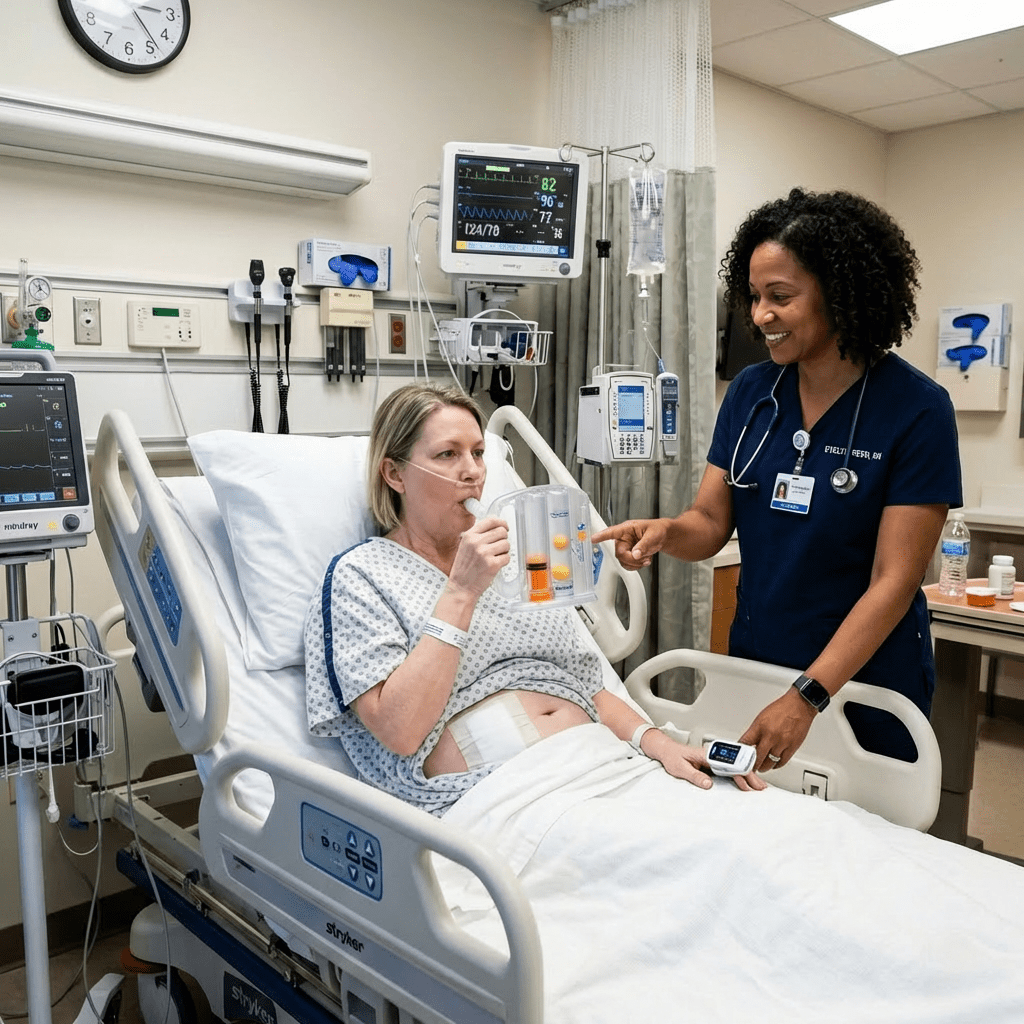
Incentive spirometry encourages patients to take deep breaths, which helps expand the lungs and prevent atelectasis.
Patients should be encouraged to use the device every 1–2 hours while awake.
For NCLEX preparation, remember that incentive spirometry is a primary intervention for preventing atelectasis.
Early Ambulation
Early mobilization helps improve lung expansion and circulation.
Nurses should assist patients to:
- Sit up in bed
- Transfer to a chair
- Walk as soon as medically safe
Early ambulation is a key concept emphasized in many nursing bundle postoperative care guides.
Deep Breathing and Coughing Exercises
Deep breathing exercises help maintain lung expansion and clear secretions.
Patients should perform:
- Deep breathing exercises
- Controlled coughing techniques
These techniques help prevent pneumonia and atelectasis.
Proper Pain Management
Pain control is essential for effective breathing.
If patients experience severe pain, they may avoid deep breathing or coughing.
A registered nurse should administer analgesics as prescribed and evaluate pain levels regularly.
Positioning
Positioning helps improve lung ventilation.
Recommended positions include:
- Semi-Fowler’s position
- High Fowler’s position
- Frequent repositioning
Changing position every two hours helps improve lung function and prevent complications.
Patient Education
Education is an important responsibility of every RN nurse.
Patients should be taught to:
- Use the incentive spirometer regularly
- Perform deep breathing exercises
- Walk as soon as possible after surgery
- Report shortness of breath or chest pain immediately
Proper education empowers patients to participate in their own recovery.
NCLEX Tips for Nurses
When preparing for the NCLEX, remember these important postoperative respiratory care priorities:
- Incentive spirometry prevents atelectasis.
- Early ambulation improves lung expansion.
- Pain control promotes effective breathing.
- Deep breathing and coughing clear secretions.
These priorities frequently appear in NCLEX questions related to postoperative nursing management.
Many nursing bundle review materials highlight these interventions because they represent key patient safety measures.
Conclusion
Postoperative pulmonary complications can significantly impact patient recovery, but many of these complications are preventable with proper nursing care.
A skilled registered nurse plays a critical role in respiratory monitoring, early intervention, and patient education. By implementing preventive strategies such as incentive spirometry, early ambulation, and effective pain management, nurses can greatly reduce the risk of respiratory complications.
For nursing students preparing for the NCLEX, mastering these postoperative care concepts strengthens clinical reasoning and prepares future RN nurses to provide safe and effective patient care.