
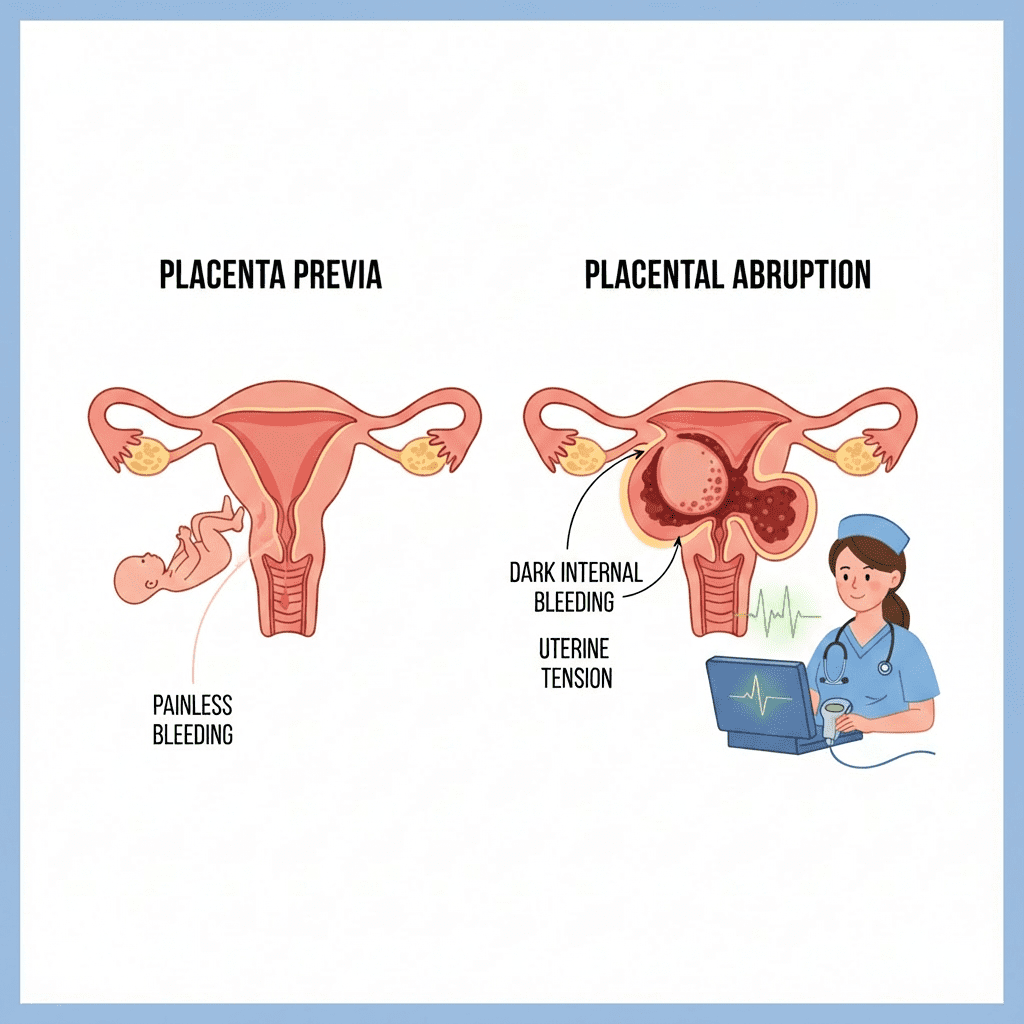
Placenta previa and placental abruption are serious obstetric complications that require rapid assessment, close monitoring, and skilled nursing care. For every nurse and registered nurse, understanding the differences between these conditions is essential for safe maternal and fetal outcomes. These topics are also high-yield for NCLEX and frequently included in nursing bundles and maternity exams.
This article reviews key concepts, assessment priorities, and nursing interventions for both conditions.
Understanding Placenta Previa
What Is Placenta Previa?
Placenta previa occurs when the placenta implants in the lower uterus and partially or completely covers the cervical opening. As the cervix begins to thin or dilate, bleeding can occur.
Types of Placenta Previa
- Complete previa: Placenta fully covers the cervix
- Partial previa: Placenta partially covers the cervix
- Marginal previa: Placenta is near the cervical opening
Key Signs and Symptoms of Placenta Previa
A nurse should immediately recognize these classic findings:
- Painless, bright red vaginal bleeding
- Bleeding usually occurs in the second or third trimester
- Soft, non-tender uterus
- Normal fetal heart rate initially
🚨 NCLEX tip: Painless bleeding = think placenta previa.
Nursing Priorities for Placenta Previa
1. Avoid Vaginal Exams
- Never perform a vaginal exam if placenta previa is suspected
- Can cause severe hemorrhage
2. Monitor Maternal and Fetal Status
- Continuous fetal heart rate monitoring
- Assess bleeding amount, color, and frequency
- Monitor vital signs for shock
3. Prepare for Possible Cesarean Delivery
- Many patients require a C-section
- Ensure IV access and blood availability
4. Patient Education
- Pelvic rest (no intercourse or vaginal insertion)
- Report any bleeding immediately
Understanding Placental Abruption
What Is Placental Abruption?
Placental abruption occurs when the placenta prematurely separates from the uterine wall, reducing oxygen and blood flow to the fetus. This is a medical emergency.
Key Signs and Symptoms of Placental Abruption
Unlike previa, placental abruption presents with:
- Painful vaginal bleeding (may be concealed)
- Severe abdominal or back pain
- Rigid, tender uterus
- Uterine contractions
- Signs of fetal distress
🚨 NCLEX tip: Painful bleeding + rigid uterus = placental abruption.
Nursing Priorities for Placental Abruption
1. Rapid Assessment and Stabilization
- Monitor vital signs closely
- Assess pain level and uterine tone
- Watch for signs of hypovolemic shock
2. Continuous Fetal Monitoring
- Late decelerations or bradycardia may occur
- Notify the provider immediately of abnormalities
3. Maintain Oxygenation and Circulation
- Administer oxygen via face mask
- Start large-bore IVs
- Prepare for fluid or blood replacement
4. Prepare for Emergency Delivery
- Severe cases often require immediate cesarean delivery
- Coordinate with the healthcare team quickly
Key Differences: Placenta Previa vs Placental Abruption
| Feature | Placenta Previa | Placental Abruption |
|---|---|---|
| Bleeding | Painless | Painful |
| Uterine Tone | Soft | Rigid, tender |
| Bleeding Color | Bright red | Dark or concealed |
| Vaginal Exam | Contraindicated | Usually avoided |
| Urgency | Serious | Emergency |
NCLEX Nursing Focus Points
For RN nurses preparing for exams:
- Always assess pain vs no pain
- Never perform vaginal exams with previa
- Prioritize maternal stabilization first
- Monitor fetal heart rate continuously
- Recognize early signs of shock
These conditions are commonly tested in OB nursing bundles and maternity NCLEX questions.
Patient Education and Emotional Support
Both diagnoses can cause fear and anxiety. A compassionate nurse should:
- Explain procedures clearly
- Encourage questions
- Provide emotional reassurance
- Support family involvement when appropriate
Conclusion
Placenta previa and placental abruption are life-threatening conditions that require skilled nursing assessment and rapid intervention. By understanding the key differences, recognizing early warning signs, and applying evidence-based nursing care, the registered nurse plays a critical role in protecting both mother and baby.