
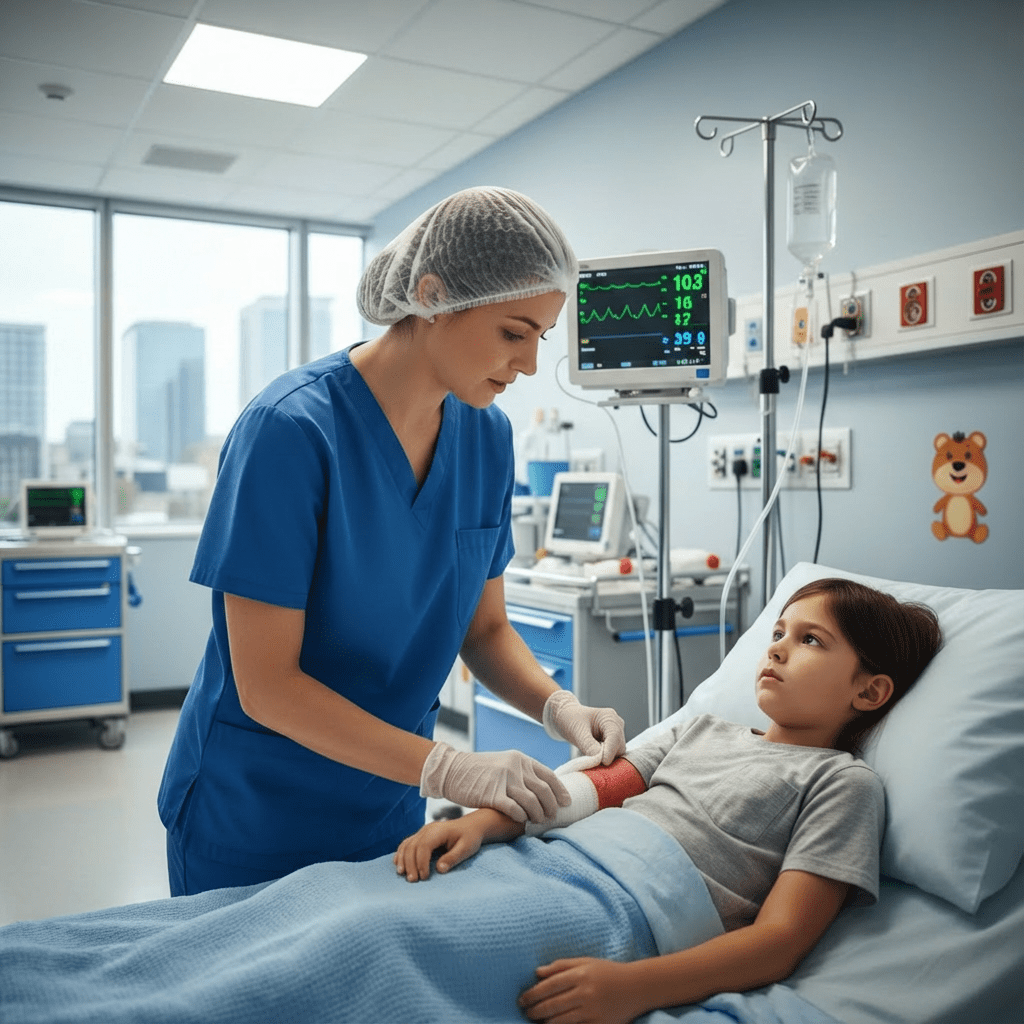
Burn injuries are one of the most serious pediatric emergencies. For any nurse, especially a pediatric registered nurse or an RN nurse preparing for the NCLEX, understanding the correct first aid steps and hospital management is essential. Pediatric burns can escalate quickly, and early nursing interventions make a huge difference in healing, pain control, and preventing complications.
This article explains everything nurses need to know about pediatric burn care—from first aid to inpatient treatment—making it an excellent addition to any nursing bundle or study guide.
Understanding Pediatric Burns
Children are more vulnerable to burn injuries due to their thinner skin and curious behavior. Burns are classified into:
1. Superficial (First-Degree)
- Red skin
- Painful
- No blisters
2. Partial-Thickness (Second-Degree)
- Red or pink skin
- Blisters
- Moist appearance
- Very painful
3. Full-Thickness (Third-Degree)
- White, brown, or black skin
- Dry, leathery texture
- Little or no pain (nerve damage)
For nurses, correctly identifying burn depth and percentage is crucial for interventions and fluid management.
First Aid for Pediatric Burns – The Nursing Approach
Immediate care determines outcomes and reduces complications. Here’s how a registered nurse or trained caregiver should respond during the initial moments after a burn.
1. Stop the Burning Process
- Remove the child from the heat source.
- Switch off electricity if it’s an electrical burn.
- Remove hot clothing, but do not peel off fabric stuck to the skin.
2. Cool the Burn (NCLEX Tip)
Cool the area with cool running water for 10–20 minutes.
🚫 Not ice – it worsens tissue damage.
🚫 Not butter, toothpaste, or oil.
This is a very common NCLEX question.
3. Protect the Burn
- Cover with a clean, dry cloth or sterile dressing.
- Do not break blisters.
- Keep the child warm to prevent hypothermia (children lose heat FAST).
4. Pain Control
Even minor burns can be extremely painful.
Oral pain relievers may be needed until help arrives.
5. When to Seek Emergency Care
A child requires immediate medical evaluation if:
- Burn is larger than the child’s palm
- Burn is on the face, hands, genitals, or joints
- Electrical or chemical burn
- Signs of airway involvement (soot, coughing, hoarse voice)
- Full-thickness burn
- Any burn in infants under 1 year
Nurses must always prioritize airway and breathing—especially in fire or inhalation injuries.
Hospital Care for Pediatric Burns
Once the child arrives at the hospital, the RN nurse plays a key role in assessment, wound care, fluid management, and family education.
1. Primary Assessment (ABCs)
This mirrors NCLEX emergency care priorities:
- A – Airway: Look for soot, burns in mouth, singed nasal hairs.
- B – Breathing: Listen for wheezing or reduced breath sounds.
- C – Circulation: Check capillary refill and heart rate.
In severe burns, airway swelling may occur rapidly—nurses must anticipate early intubation.
2. Calculate Burn Size (TBSA)
Total Body Surface Area (TBSA) helps determine treatment.
For children, nurses commonly use:
- Lund and Browder chart (most accurate for pediatrics)
- Palmar method (child’s palm ≈ 1% TBSA)
This is essential knowledge for the NCLEX and pediatric nursing exams.
3. Fluid Resuscitation
Large burns require aggressive hydration to prevent shock.
The Parkland Formula is key for nursing and NCLEX prep:
4 mL × weight (kg) × TBSA%
- Give first half in 8 hours
- Give second half over 16 hours
Ringer’s lactate is the preferred solution.
Nurses monitor:
- Urine output
- Vital signs
- Mental status
- Lactate levels
4. Wound Care
Pediatric wound care varies depending on burn depth.
Nursing responsibilities include:
- Cleaning with mild solutions
- Debridement if needed
- Applying topical antimicrobials (silver sulfadiazine, bacitracin)
- Dressing changes
- Monitoring for infection
Signs of infection nurses watch for:
- Fever
- Increased redness
- Purulent drainage
- Sudden increase in pain
5. Pain Management
Burn pain is intense. Nurses administer:
- IV opioids for severe burns
- Oral analgesics for mild burns
- Sedation for dressing changes
- Non-pharmacological techniques (distraction, caregiver presence)
6. Nutrition and Hydration
Children with burns need high-calorie, high-protein diets for healing.
Nurses collaborate with dietitians to ensure adequate intake:
- Enteral feedings if needed
- Frequent monitoring of weight and electrolytes
7. Preventing Complications
Pediatric burns can lead to:
- Infection
- Sepsis
- Scarring or contractures
- Dehydration
- Hypothermia
The registered nurse evaluates for complications at every shift.
8. Family Education
Nurses play a crucial teaching role:
- How to clean burns at home
- Signs of infection
- Pain management
- Dressing change techniques
- Scar care (moisturizers, sun protection)
This part is heavily emphasized on the NCLEX.