
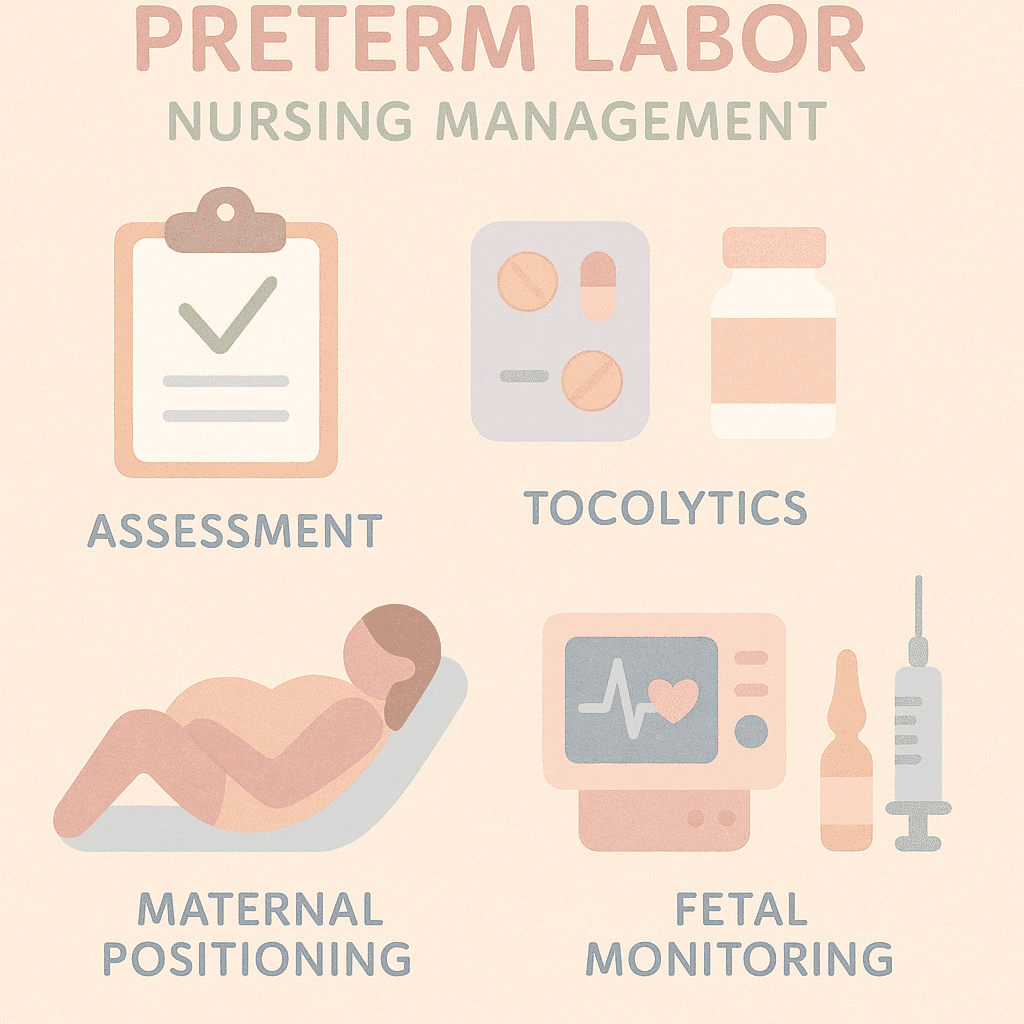
Preterm labor is a critical condition that every nurse, especially an RN nurse in Med-Surg or OB, must recognize early. Because it directly affects both maternal and fetal outcomes, understanding the signs, interventions, and patient-education strategies is essential for NCLEX preparation and safe clinical practice. Moreover, early identification allows the registered nurse to prevent preterm birth and reduce neonatal complications.
This guide breaks down what nursing students, new graduates, and professionals using a nursing bundle should know about managing preterm labor safely.
What Is Preterm Labor?
Preterm labor occurs when regular contractions cause cervical changes before 37 weeks gestation. Although some episodes resolve with treatment, others progress quickly, making rapid nursing assessment crucial.
Key Risk Factors
A nurse should always screen for risk factors, since early recognition improves outcomes. Common contributors include:
- Previous preterm birth
- Infections (UTIs, STIs)
- Multiple gestation
- Smoking or substance use
- Short cervical length
- Chronic illnesses such as diabetes or hypertension
Additionally, stress and inadequate prenatal care can increase risk.
Early Signs a Nurse Must Recognize
Timely identification helps prevent further complications. Typical symptoms include:
- Regular contractions
- Menstrual-like cramping
- Pelvic or back pressure
- Increased vaginal discharge
- Spotting or bleeding
Furthermore, some patients may simply report “not feeling right,” which should never be ignored.
Essential Nursing Interventions
Managing preterm labor requires quick, structured action. The following steps are emphasized heavily on the NCLEX:
1. Perform a Rapid Assessment
A registered nurse starts with maternal vital signs, fetal heart monitoring, contraction pattern assessment, and evaluation of cervical changes. At the same time, the nurse checks for infection or dehydration, both of which can trigger contractions.
2. Initiate Hydration
IV hydration may reduce uterine irritability. It also supports maternal hemodynamic stability, especially if dehydration is contributing to contractions.
3. Administer Medications
Several medications may be ordered:
- Tocolytics (e.g., nifedipine, terbutaline) to slow contractions
- Corticosteroids (betamethasone) to mature fetal lungs
- Antibiotics if infection is suspected
- Magnesium sulfate for neuroprotection if birth seems imminent
Moreover, the nurse monitors for medication side effects, a frequent NCLEX testing point.
4. Position the Patient
Side-lying positions improve uteroplacental perfusion. This simple measure can reduce contraction intensity and enhance fetal oxygenation.
5. Educate the Patient
Education is an essential part of nursing care. Therefore, the RN nurse explains warning signs, medication effects, and activity restrictions. Consistent education improves compliance and decreases repeat preterm labor episodes.
Monitoring and Ongoing Evaluation
Continuous fetal monitoring allows the nurse to detect distress quickly. Additionally, observing maternal response to treatment ensures safety. If contractions decrease, the patient may return to modified bed rest or home monitoring.
Discharge Teaching for NCLEX Success
Patients should understand:
- When to return (e.g., contractions, decreased fetal movement)
- How to perform daily fetal kick counts
- Medication instructions
- Importance of hydration
- Avoidance of strenuous activity
Since many patients go home still at risk, strong teaching skills are essential parts of nursing practice.
Final Thoughts
Preterm labor can escalate quickly, yet nurses play a central role in prevention, early detection, and intervention. By mastering these steps, nursing students, new grads, and experienced RNs enhance clinical judgment and improve outcomes — skills highly tested on the NCLEX.
FAQ: Nursing Management of Preterm Labor
Preterm labor occurs when a pregnant patient has regular contractions that cause cervical changes before 37 weeks of gestation. Every RN nurse, registered nurse, and nursing student must understand this definition because it is frequently tested on the NCLEX.
The priority steps are:
Assess uterine contractions
Monitor fetal heart rate
Check for rupture of membranes
Evaluate cervical dilation
Provide hydration and left-side positioning