Intracranial Pressure Waveforms and Neuro ICU Monitoring
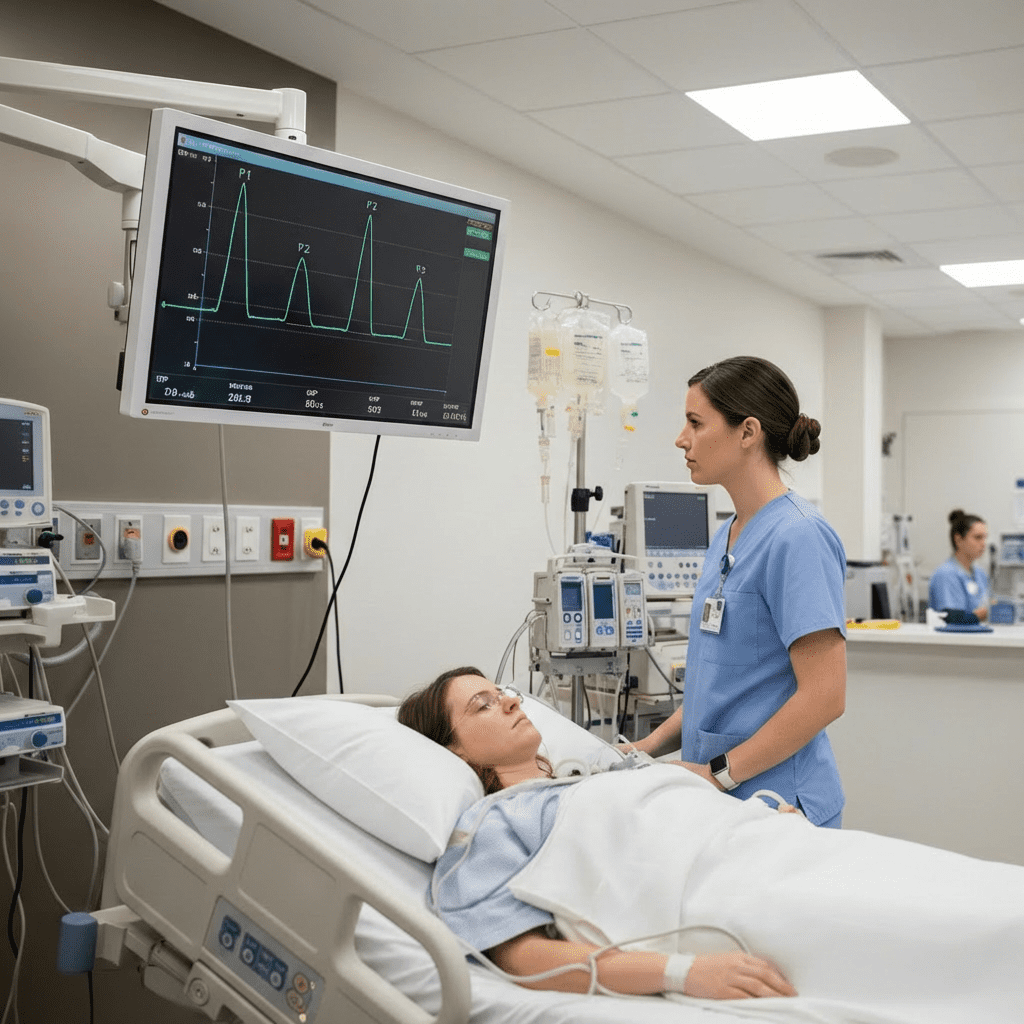
Intracranial Pressure Waveforms

Intracranial pressure (ICP) monitoring is a cornerstone of Neuro ICU care. For every nurse, especially the critical care registered nurse (RN nurse), understanding ICP waveforms is essential for early detection of neurological deterioration. Because neuro assessment and increased ICP management are frequently tested on the NCLEX, mastering waveform interpretation strengthens both clinical judgment and exam … Read more

Septic Shock Bundle: 1-Hour Protocol Breakdown for Nurses

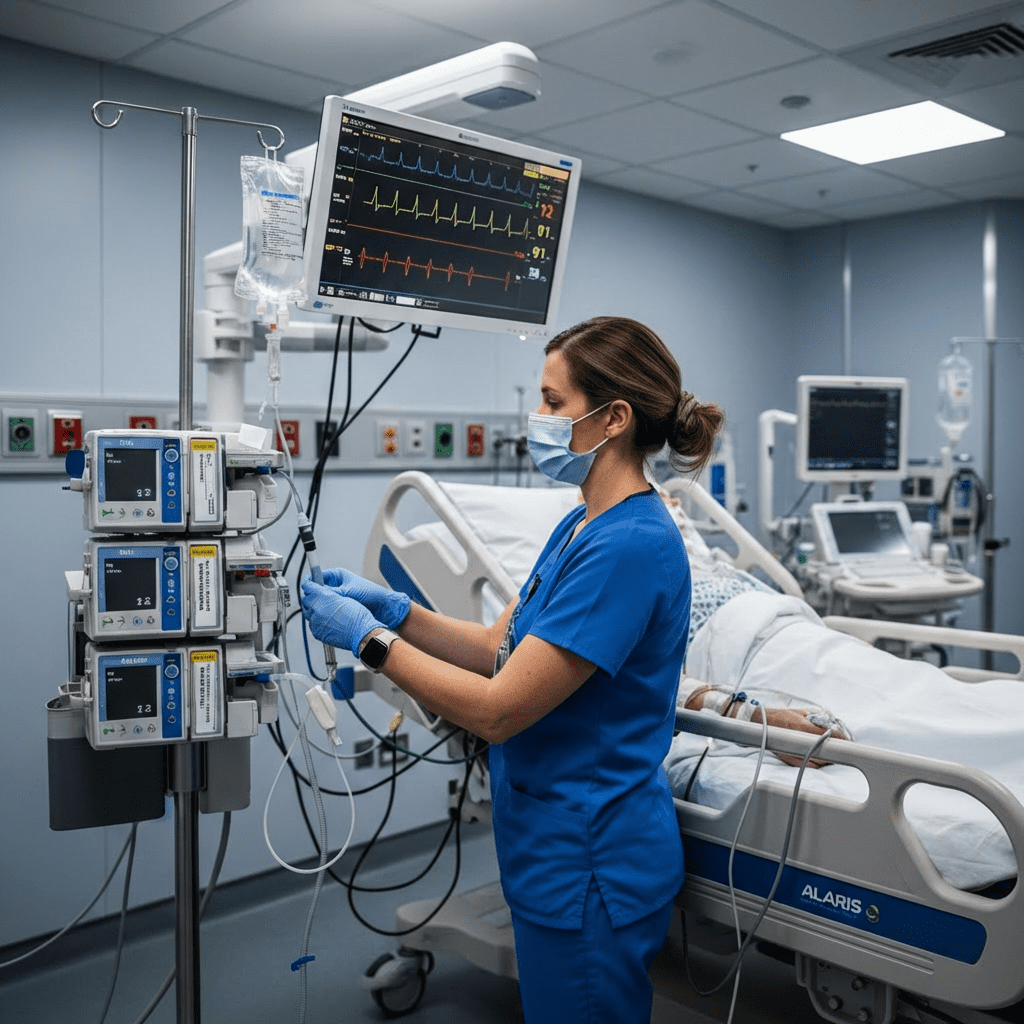
Septic Shock 1-Hour Bundle

Septic shock is a life-threatening emergency that requires immediate recognition and rapid intervention. For every nurse, especially the ICU registered nurse (RN nurse), understanding the 1-hour septic shock bundle is critical to improving survival outcomes. Because sepsis management is heavily tested on the NCLEX, mastering this protocol is essential for both exam success and safe … Read more

Targeted Temperature Management After Cardiac Arrest

Targeted Temperature Management

Targeted Temperature Management (TTM) is a critical post–cardiac arrest intervention that significantly impacts neurological outcomes and survival. For every nurse, especially the ICU registered nurse (RN nurse), understanding TTM is essential for delivering evidence-based nursing care. Because post–cardiac arrest management is heavily tested on the NCLEX, mastering TTM concepts is vital both for exam success … Read more

Mechanical Ventilation Modes (AC, SIMV, PSV) and Nursing Implications

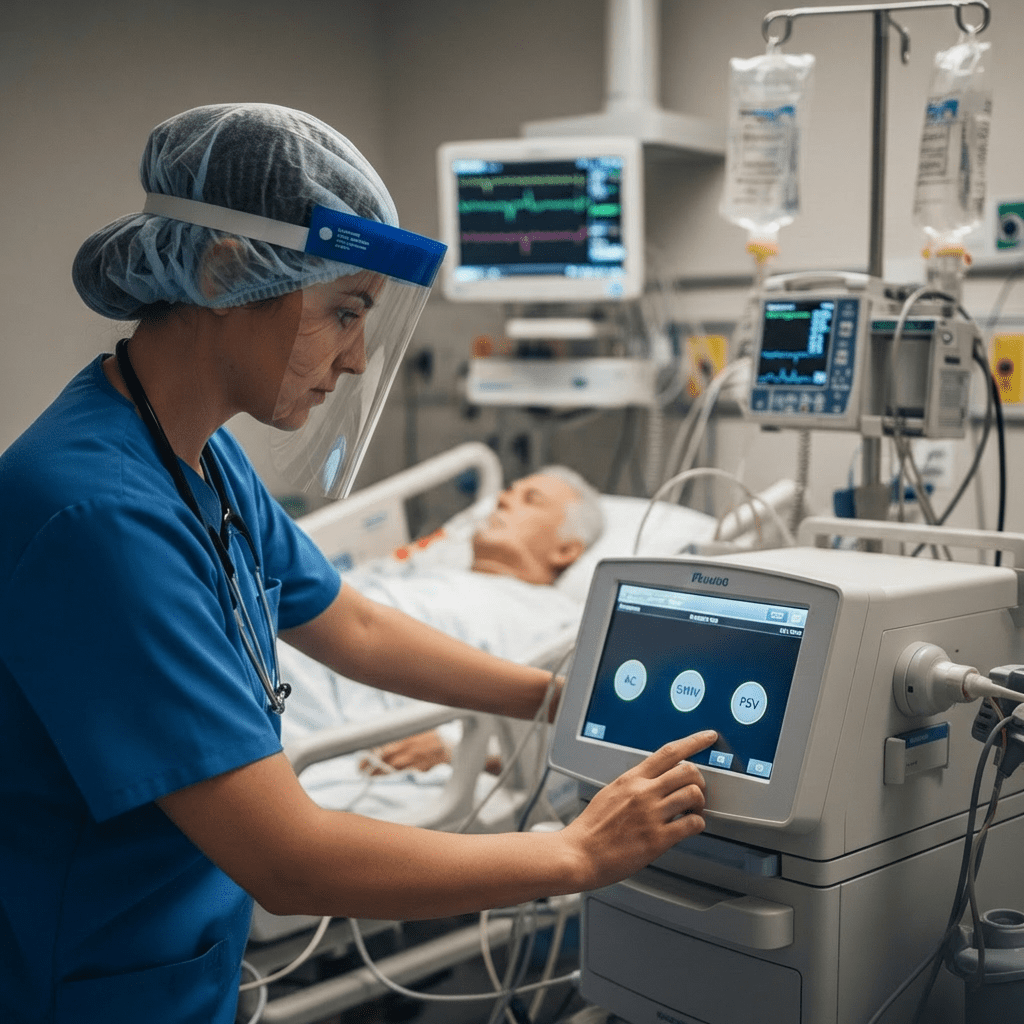
Mechanical ventilation modes

Mechanical ventilation is a life-saving intervention commonly used in critical care. For every ICU nurse, understanding ventilator modes such as Assist-Control (AC), Synchronized Intermittent Mandatory Ventilation (SIMV), and Pressure Support Ventilation (PSV) is essential for safe patient management. In addition, ventilator settings and interpretation are frequently tested on the NCLEX, making this topic crucial for … Read more

Vasopressor Selection in Different Types of Shock: Nursing Decision Guide

Vasopressor selection in shock

Vasopressors are life-saving medications frequently used in critical care. For every ICU nurse, understanding how and why different vasopressors are selected is essential for safe patient care. Moreover, vasopressor management is a high-yield topic on the NCLEX, especially in questions related to shock, hemodynamics, and emergency nursing interventions. Because each type of shock has a … Read more

Advanced Hemodynamic Monitoring Interpretation (CVP, MAP, SVR, PAWP Explained Clinically)

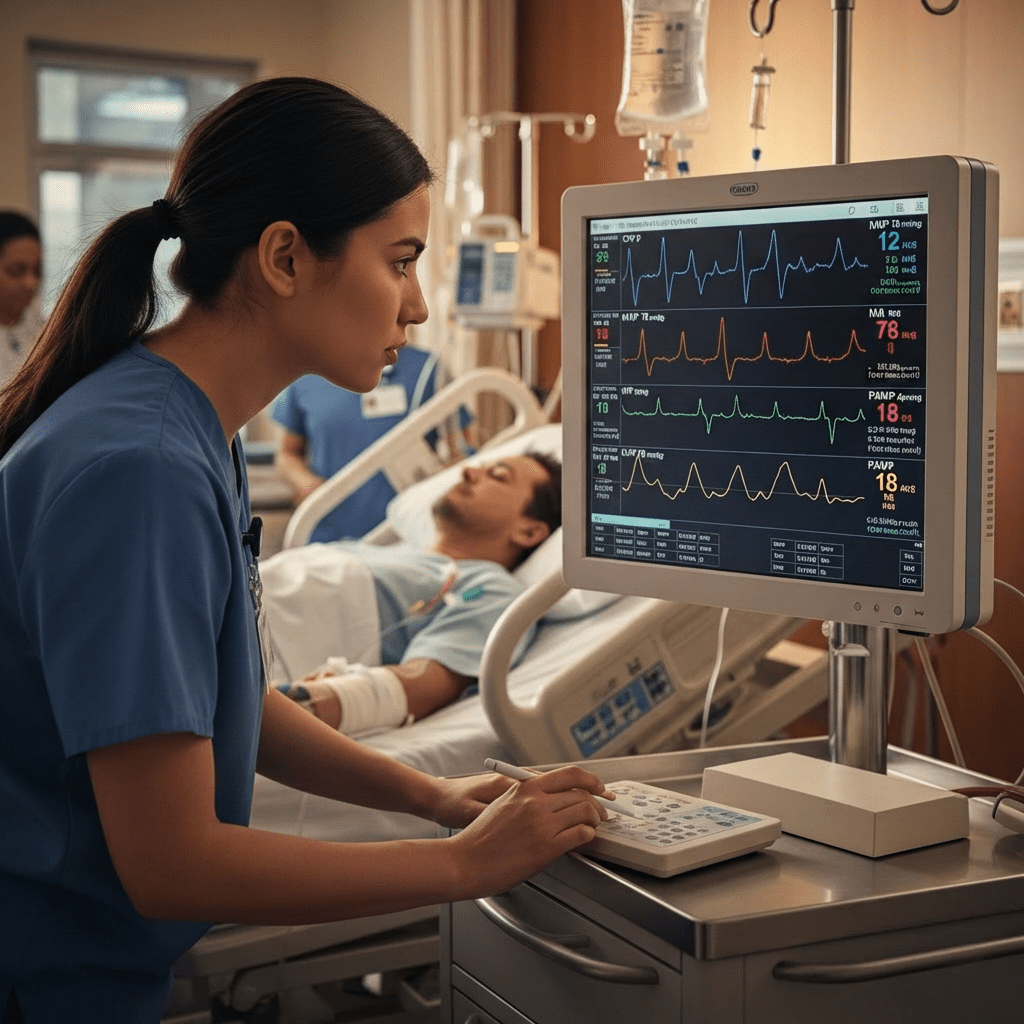
Hemodynamic monitoring

Advanced hemodynamic monitoring is a core skill for every ICU nurse and an important concept tested on the NCLEX. In critical care settings, understanding values such as CVP, MAP, SVR, and PAWP allows the registered nurse (RN nurse) to detect shock early, guide fluid therapy, and evaluate medication effects. Although these numbers may look complex … Read more

ICU Documentation: What Matters Most

ICU documentation

Accurate ICU documentation is one of the most critical responsibilities of a nurse working in critical care. In the Intensive Care Unit, patients are unstable, treatments change rapidly, and decisions must be made quickly. Therefore, clear and timely nursing documentation ensures patient safety, supports clinical decisions, and protects the registered nurse (RN nurse) legally and … Read more

Managing Family Stress in the ICU

Managing Family Stress in the ICU

The Intensive Care Unit (ICU) is a highly stressful environment not only for patients but also for their families. Sudden illness, unfamiliar equipment, and uncertain outcomes can overwhelm loved ones. In this setting, the nurse plays a vital role in recognizing and managing family stress. Because of its impact on patient care and communication, this … Read more

Ethical Challenges in Critical Care

Ethical challenges in critical care

Critical care units are fast-paced, high-stakes environments where life-saving decisions are made every day. In these settings, ethical challenges are common and often complex. Because nurses are at the bedside continuously, the nurse plays a central role in identifying, addressing, and advocating through ethical dilemmas. For this reason, ethical challenges in critical care are frequently … Read more