Risk Assessment Tools for Suicide Prevention: A Practical Guide for Nurses and NCLEX Success

Suicide Risk Assessment Tools

Suicide prevention is a critical responsibility in healthcare. For every nurse, registered nurse, and RN nurse, the ability to recognize warning signs and use structured risk assessment tools can save lives. Suicide risk assessment is heavily tested on the NCLEX, especially in psychiatric and emergency nursing scenarios. A comprehensive nursing bundle should always include suicide … Read more


Trauma-Informed Care in Emergency Settings: A Practical Guide for Nurses and NCLEX Success

Trauma-Informed Care

Emergency departments are fast-paced, unpredictable, and emotionally intense. For every nurse, registered nurse, and RN nurse, understanding trauma-informed care (TIC) is essential for providing safe, compassionate, and effective treatment. Trauma-informed care is increasingly tested on the NCLEX, especially in mental health, community health, and emergency nursing scenarios. Many modern study resources and comprehensive nursing bundle … Read more

Borderline Personality Disorder Crisis Management: A Practical Guide for Nurses and NCLEX Success

Borderline Personality Disorder

Crisis management in Borderline Personality Disorder (BPD) is one of the most challenging areas in psychiatric nursing. For every nurse, registered nurse, and RN nurse working in emergency or inpatient psychiatry, understanding how to respond calmly and effectively is critical. This topic frequently appears on the NCLEX, especially in mental health, therapeutic communication, and safety-based … Read more

Managing Acute Mania in Inpatient Psychiatry: A Practical NCLEX Guide for Nurses

Managing Acute Mania

Acute mania is a psychiatric emergency that requires structured, calm, and strategic care. For every nurse and registered nurse (RN nurse) working in inpatient psychiatry, understanding how to manage manic episodes safely is essential. Mania management is frequently tested on the NCLEX, especially in mental health and psychopharmacology sections of a comprehensive nursing bundle. :highlight … Read more

Psychopharmacology Monitoring for Lithium Toxicity: What Nurses Must Know for the NCLEX

Lithium Toxicity Monitoring

Lithium is a powerful mood stabilizer widely used in bipolar disorder. However, it has a narrow therapeutic range, which makes monitoring critical. For every nurse and registered nurse (RN nurse), recognizing early signs of lithium toxicity can prevent life-threatening complications. Lithium questions are extremely common on the NCLEX, especially in psychiatric and pharmacology sections of … Read more

Serotonin Syndrome vs Neuroleptic Malignant Syndrome: NCLEX Guide for Nurses

Serotonin Syndrome vs NMS

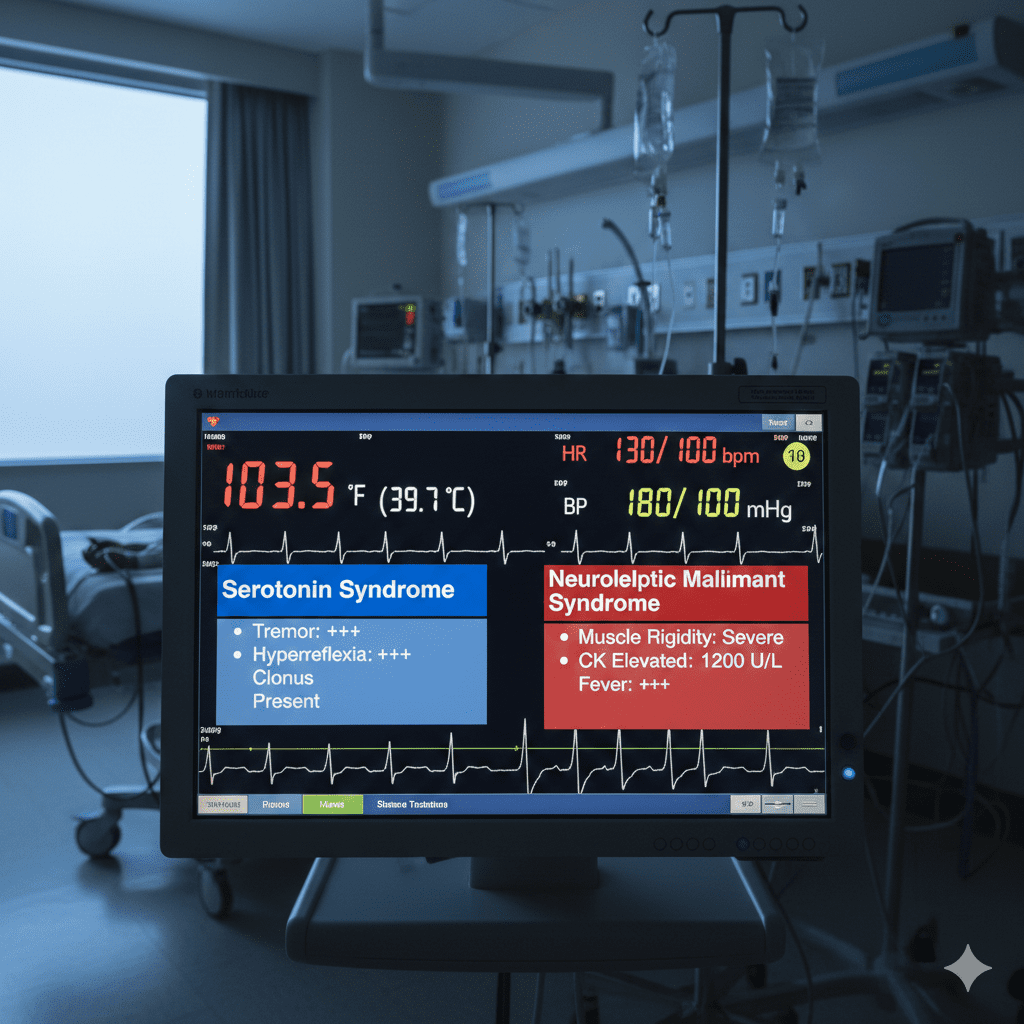
Serotonin Syndrome and Neuroleptic Malignant Syndrome (NMS) are two life-threatening medication reactions every nurse must recognize. Both can present with fever and altered mental status, but their causes, timing, and management are very different. For the registered nurse (RN nurse) preparing for the NCLEX, understanding this comparison is essential. :highlight This simple rule can help … Read more

Neurobiology of Major Depressive Disorder: What Nurses Must Know for the NCLEX

Neurobiology of Major Depressive Disorder

Major Depressive Disorder (MDD) is more than sadness. It is a complex brain disorder involving neurotransmitters, neural circuits, hormones, and inflammation. For every nurse and registered nurse, understanding the neurobiology behind depression improves patient care and strengthens success on the NCLEX. Major depressive disorder is linked to measurable changes in brain chemistry, structure, and stress-response … Read more

Advanced ECG Interpretation in Electrolyte Emergencies: A Practical NCLEX Guide for Nurses

Advanced ECG in Electrolyte

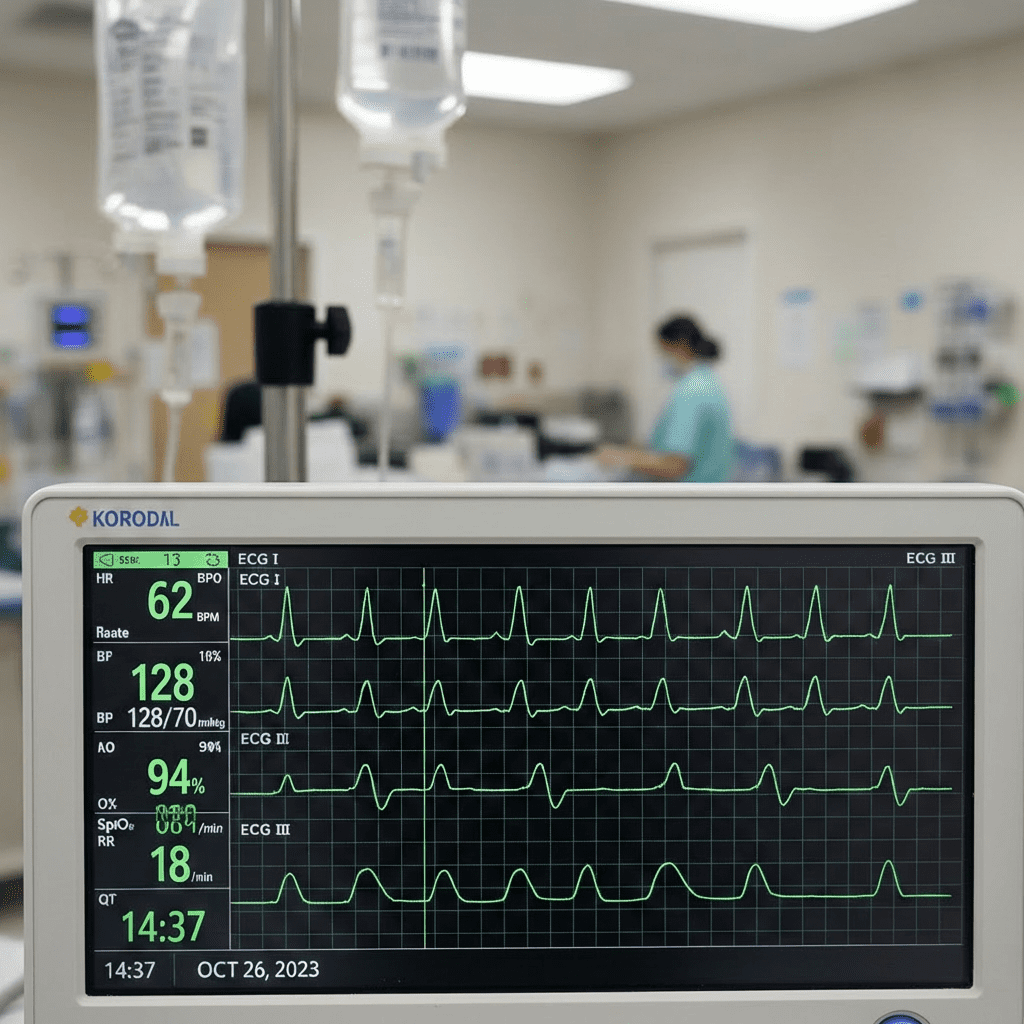
Electrolyte imbalances can silently change the ECG before symptoms become severe. For any nurse or registered nurse, recognizing these early cardiac clues can prevent cardiac arrest. Advanced ECG interpretation in electrolyte emergencies is heavily tested on the NCLEX and frequently seen in critical care and telemetry nursing practice. When electrolytes shift, the heart’s electrical system … Read more

Electrical Alternans and Cardiac Tamponade Clues: NCLEX Guide for Nurses

Electrical Alternans & Cardiac Tamponade

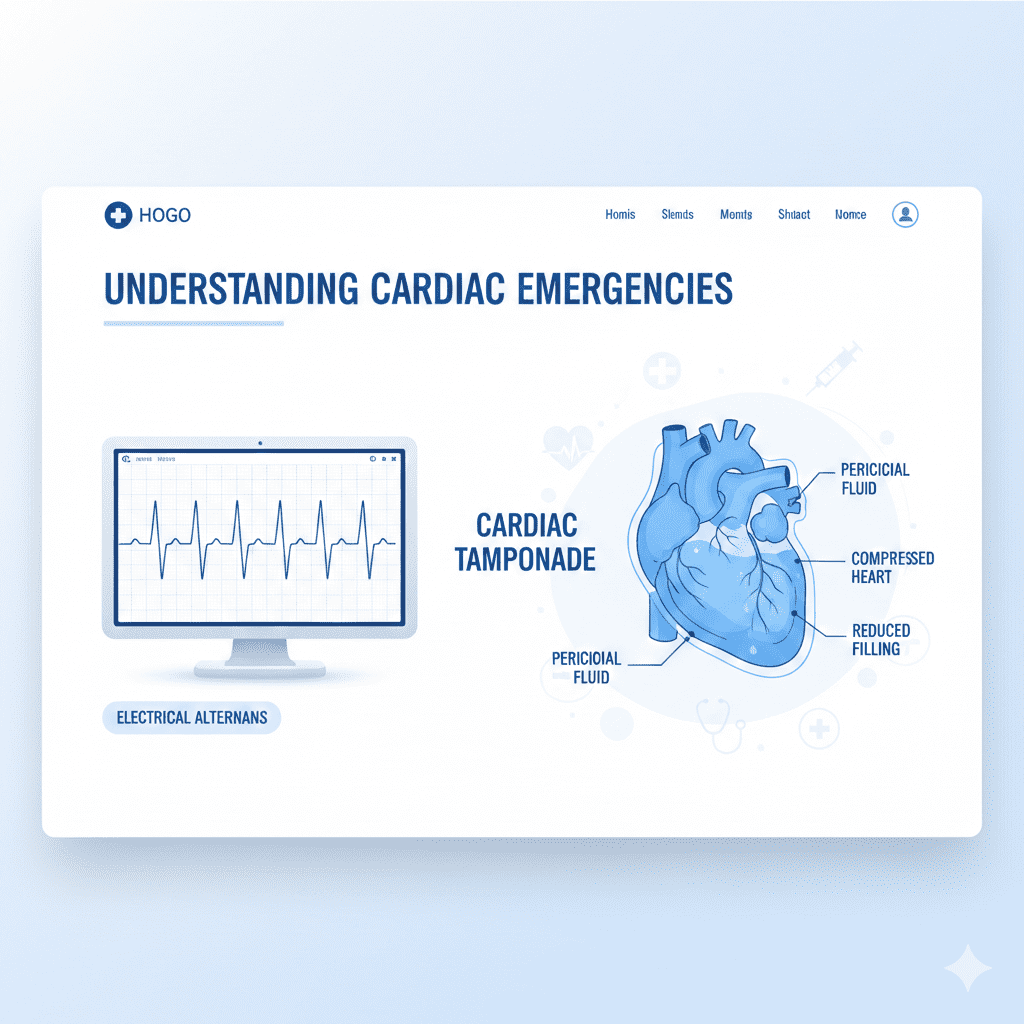
Electrical alternans is a classic ECG finding that every nurse must recognize. It is strongly associated with cardiac tamponade, a life-threatening emergency frequently tested on the NCLEX. Electrical alternans plus hypotension and jugular venous distention should immediately make a nurse suspect cardiac tamponade. Whether you are a nursing student, a new registered nurse, or reviewing … Read more

Hyperkalemia vs MI ECG Differences: NCLEX Guide for Nurses

Hyperkalemia vs MI ECG Differences

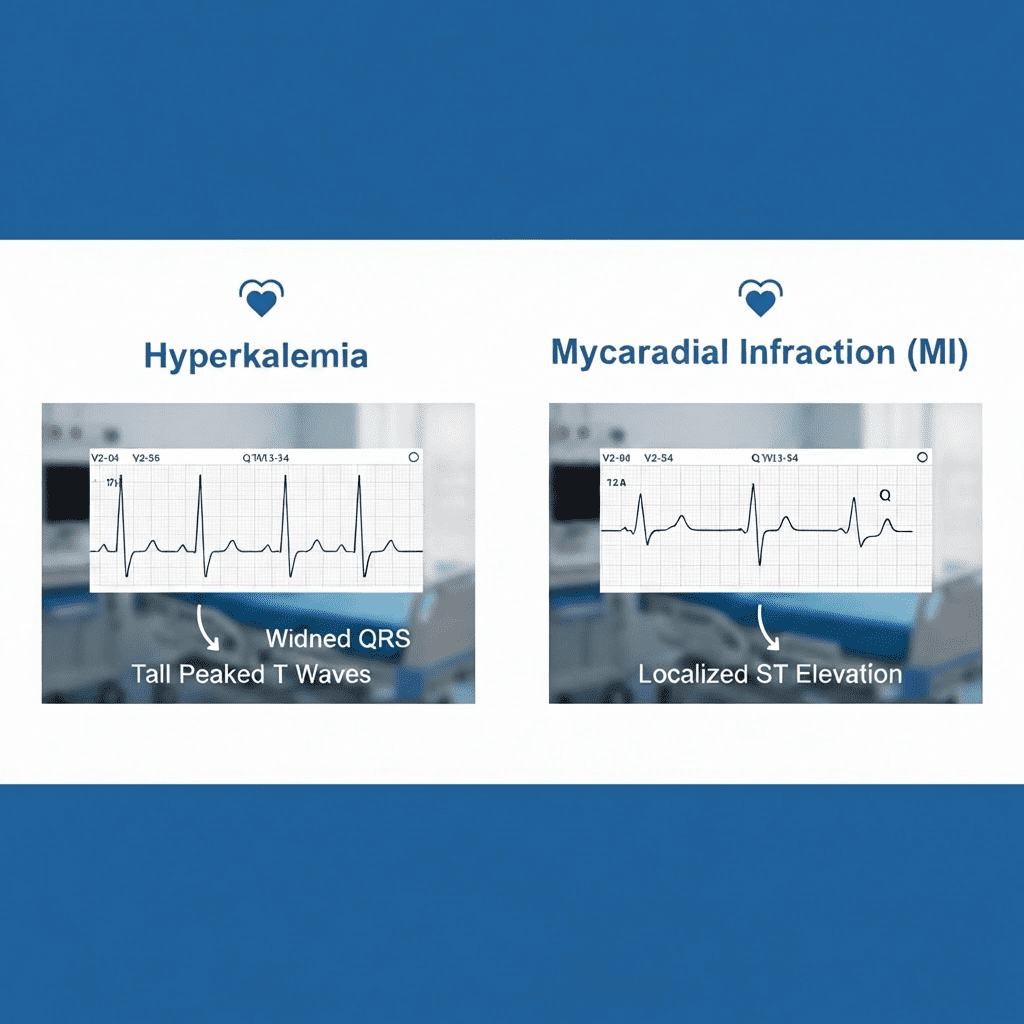
Understanding hyperkalemia vs MI ECG differences is critical for every nurse, especially when preparing for the NCLEX. These two life-threatening conditions can produce similar ECG findings — but the treatments are completely different. Differentiating hyperkalemia from myocardial infarction (MI) on ECG can prevent fatal treatment errors and save a patient’s life. Whether you’re a nursing … Read more