
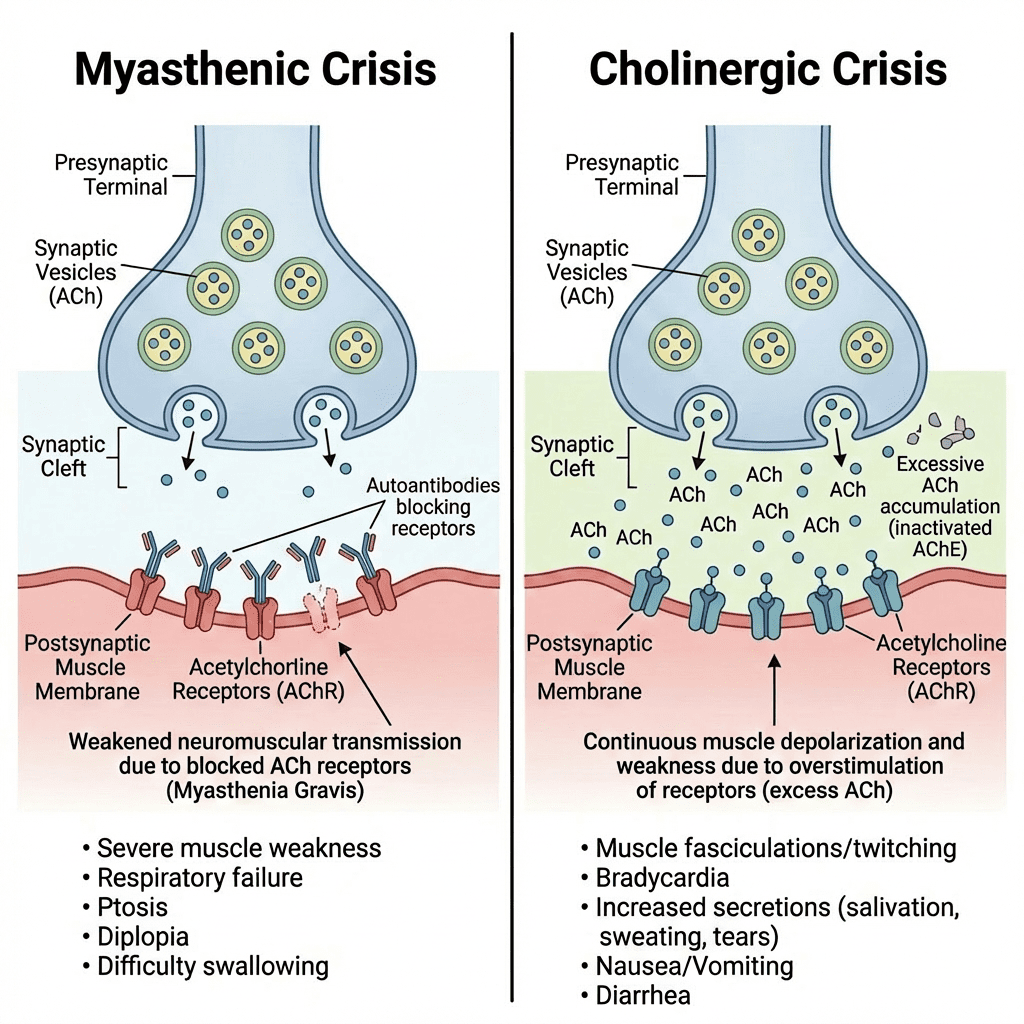
Recognizing the difference between myasthenic crisis and cholinergic crisis is one of the most critical clinical skills for any nurse caring for neuromuscular patients. Both conditions can cause severe muscle weakness and respiratory distress, but their causes and treatments are completely different. For a registered nurse (RN nurse) or nursing student preparing for the NCLEX, understanding how to quickly differentiate these two crises can literally save a patient’s life.
Because the treatments are opposite, misidentifying the crisis can worsen the patient’s condition. This is why many nursing bundle resources and NCLEX review guides emphasize this topic in neurology and pharmacology sections.
In this guide, we will simplify the pathophysiology, symptoms, key differences, and nursing interventions that help nurses quickly distinguish between myasthenia gravis crisis and cholinergic crisis.
Understanding Myasthenia Gravis
Myasthenia gravis (MG) is an autoimmune neuromuscular disorder where antibodies attack acetylcholine receptors at the neuromuscular junction. As a result, nerve signals cannot properly stimulate muscle contraction.
This leads to progressive muscle weakness that worsens with activity and improves with rest.
Common muscles affected include:
- Eye muscles
- Facial muscles
- Swallowing muscles
- Respiratory muscles
For a registered nurse, recognizing early symptoms is important because worsening weakness may progress to a myasthenic crisis, a life-threatening emergency.
What Is a Myasthenic Crisis?
A myasthenic crisis occurs when too little acetylcholine stimulation reaches the muscles due to worsening disease or insufficient medication.
This leads to severe muscle weakness, especially in the respiratory muscles.
Common Causes
A RN nurse should recognize common triggers such as:
- Infection
- Surgery
- Stress
- Inadequate anticholinesterase medication
- Certain medications (like antibiotics or beta blockers)
Symptoms of Myasthenic Crisis
Patients typically present with:
- Severe muscle weakness
- Difficulty swallowing (dysphagia)
- Drooping eyelids (ptosis)
- Weak cough
- Respiratory distress
- Decreased oxygen levels
For nurses preparing for the NCLEX, remember:
Myasthenic crisis = Not enough medication or worsening disease.
What Is a Cholinergic Crisis?
A cholinergic crisis occurs when there is too much acetylcholine in the neuromuscular junction. This usually happens due to excess anticholinesterase medication, such as pyridostigmine.
Instead of improving muscle strength, excessive acetylcholine overstimulates the receptors, eventually causing muscle fatigue and weakness.
For a nurse, distinguishing this crisis from a myasthenic crisis is essential because the treatment approach is the opposite.
Symptoms of Cholinergic Crisis
A registered nurse should watch for signs of cholinergic toxicity, including:
- Muscle weakness
- Excessive salivation
- Sweating
- Diarrhea
- Abdominal cramping
- Bradycardia
- Miosis (constricted pupils)
- Increased bronchial secretions
These symptoms occur because acetylcholine stimulates both muscarinic and nicotinic receptors.
Key Differences Between Myasthenic Crisis and Cholinergic Crisis
For NCLEX preparation, nurses often use quick comparison tables.
| Feature | Myasthenic Crisis | Cholinergic Crisis |
|---|---|---|
| Cause | Too little acetylcholine | Too much acetylcholine |
| Medication issue | Under-medication | Over-medication |
| Muscle weakness | Severe | Severe |
| Secretions | Normal | Excessive |
| Heart rate | Normal or increased | Bradycardia |
| Pupils | Normal | Constricted |
| Treatment | Increase anticholinesterase drugs | Stop medication and give atropine |
This comparison is commonly highlighted in nursing bundle review materials because it frequently appears in NCLEX questions.
The Edrophonium Test (Historical Clinical Test)
Historically, physicians used the edrophonium test to help differentiate the two crises.
Edrophonium is a short-acting anticholinesterase drug.
Interpretation
If muscle strength improves, the patient likely has:
Myasthenic crisis
If weakness worsens, the patient likely has:
Cholinergic crisis
However, this test is used less frequently today because of potential side effects and improved diagnostic methods.
Still, many NCLEX nursing questions include it as a concept that nurses must understand.
Respiratory Failure Risk
Both crises can lead to respiratory failure, making early recognition critical for any RN nurse working in emergency or ICU settings.
Warning signs include:
- Rapid breathing
- Weak cough
- Inability to clear secretions
- Declining oxygen saturation
- Use of accessory muscles
Nurses should immediately notify the healthcare team if these signs appear.
Nursing Assessment and Monitoring
A nurse caring for patients with myasthenia gravis must closely monitor neuromuscular and respiratory status.
Important nursing assessments include:
- Respiratory rate
- Oxygen saturation
- Vital capacity
- Ability to swallow
- Muscle strength
- Presence of excessive secretions
Monitoring respiratory function is especially important because respiratory collapse may occur rapidly.
These monitoring strategies are often included in advanced nursing bundle learning materials designed for registered nurses and NCLEX preparation.
Nursing Interventions
For Myasthenic Crisis
Key nursing actions include:
- Administer anticholinesterase medications as ordered
- Prepare for possible ventilatory support
- Monitor respiratory function
- Provide infection prevention
- Ensure adequate nutrition
Because respiratory muscles are weak, some patients may require mechanical ventilation until the crisis resolves.
For Cholinergic Crisis
Treatment focuses on reducing acetylcholine stimulation.
Nursing care may include:
- Holding anticholinesterase medications
- Administering atropine as ordered
- Managing excessive secretions
- Supporting breathing
- Continuous cardiac monitoring
A registered nurse must monitor heart rate carefully because severe bradycardia may occur.
NCLEX Tips for Nurses
When preparing for the NCLEX, remember this simple rule:
Dry patient = Myasthenic crisis
Wet patient = Cholinergic crisis
Wet symptoms include:
- Salivation
- Sweating
- Diarrhea
- Bronchial secretions
These signs point toward cholinergic toxicity.
Many nursing bundle NCLEX study guides use this trick to help nurses quickly recognize exam scenarios.
Why This Topic Matters for Nurses
Patients with myasthenia gravis often require lifelong management. During hospitalization, they depend on skilled registered nurses to detect complications early.
A knowledgeable RN nurse who understands the difference between myasthenic crisis and cholinergic crisis can prevent respiratory failure and improve patient outcomes.
For nursing students and practicing nurses alike, mastering this topic strengthens both clinical reasoning and NCLEX exam performance.