
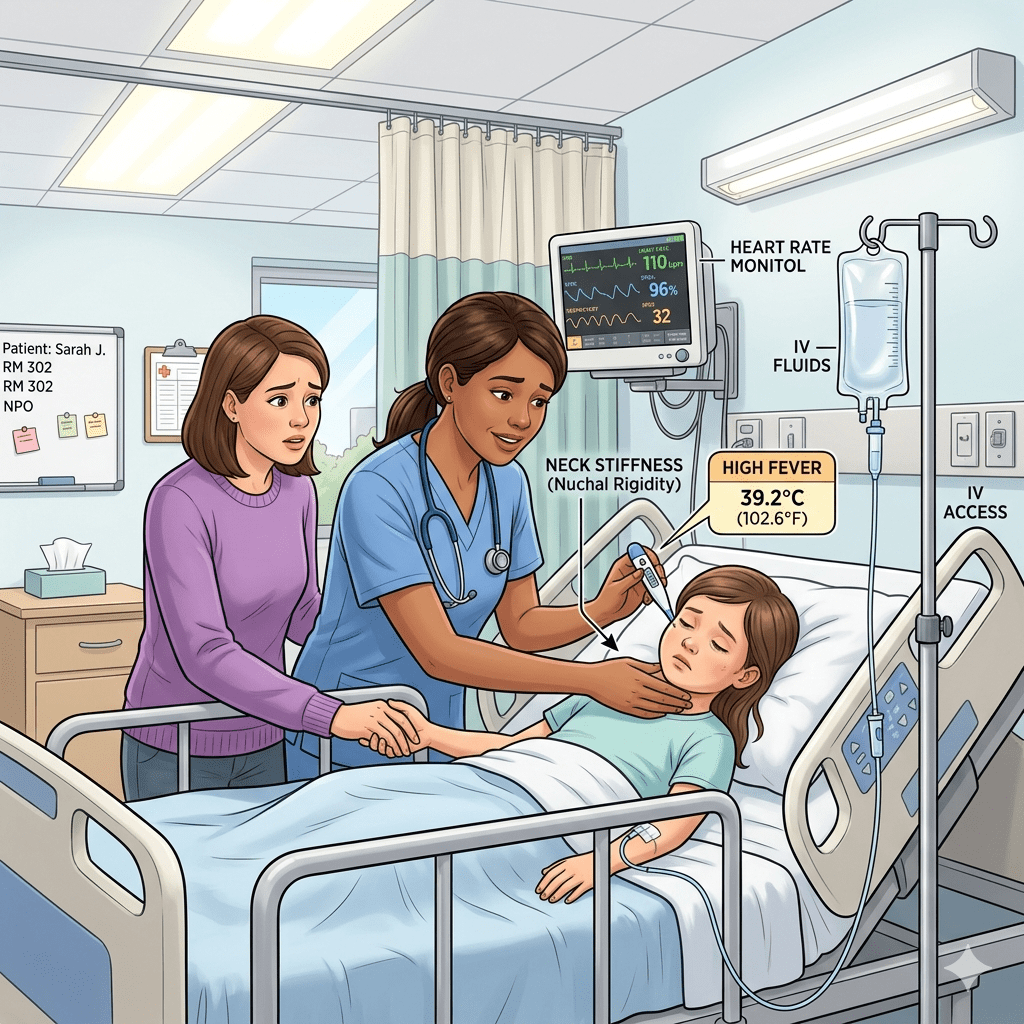
Meningitis is a serious and potentially life-threatening infection that affects the protective membranes surrounding the brain and spinal cord. Because the condition can progress rapidly in pediatric patients, early recognition is critical. Therefore, every nurse and registered nurse (RN nurse) must understand the warning signs of meningitis in children.
For students preparing for the NCLEX, meningitis is a commonly tested topic in pediatric nursing. Recognizing symptoms quickly allows the nurse to initiate emergency interventions and improve patient outcomes. Additionally, many study guides and nursing bundle resources include meningitis as a key topic because it combines infection control, neurological assessment, and pediatric emergency care.
This guide explains the early warning signs of meningitis in children, the causes of the condition, and the important nursing interventions every registered nurse should know.
What Is Meningitis?
Meningitis is an inflammation of the meninges, the membranes that surround the brain and spinal cord. The infection can be caused by bacteria, viruses, or, in rare cases, fungi.
There are two main types of meningitis that pediatric nurses should recognize:
Bacterial meningitis
- More severe and potentially life-threatening
- Requires immediate antibiotic treatment
- Common causes include Neisseria meningitidis and Streptococcus pneumoniae
Viral meningitis
- Usually less severe
- Often resolves with supportive treatment
- More common in children
Because bacterial meningitis progresses quickly, early detection by the RN nurse is essential for preventing complications such as brain damage, seizures, or hearing loss.
Why Children Are at Higher Risk
Children, especially infants and young toddlers, have immune systems that are still developing. As a result, they may not fight infections as effectively as adults.
Several factors increase the risk of meningitis in pediatric patients:
- Immature immune systems
- Close contact in schools or daycare
- Incomplete vaccination status
- Exposure to respiratory infections
Because symptoms may appear suddenly, pediatric nursing professionals must remain alert for early warning signs. Consequently, recognizing subtle symptoms can save a child’s life.
Early Warning Signs of Meningitis in Children
The symptoms of meningitis can appear quickly and worsen within hours. Therefore, the nurse must monitor pediatric patients carefully for neurological and systemic changes.
Common early signs include:
Fever
A sudden high fever is often the first symptom of meningitis. In many cases, children develop temperatures above 38.5°C (101.3°F).
Severe Headache
Older children may complain of an intense headache that does not improve with rest or medication.
Neck Stiffness
Neck stiffness, also called nuchal rigidity, is a classic sign of meningitis. The child may have difficulty bending the neck forward.
Sensitivity to Light
Photophobia, or sensitivity to light, can occur because inflammation affects the brain and surrounding nerves.
Nausea and Vomiting
Children with meningitis may experience persistent vomiting that is not related to food or stomach illness.
Confusion or Irritability
Mental status changes can occur early in the disease. Young children may become extremely irritable, while older children may appear confused or lethargic.
Recognizing these symptoms quickly is a critical skill for every registered nurse, especially when preparing for the NCLEX exam.
Meningitis Symptoms in Infants
Infants often show different symptoms than older children. For this reason, pediatric nurses must look for subtle behavioral changes.
Common signs in infants include:
- Bulging fontanelle (soft spot on the head)
- Poor feeding
- Persistent crying
- Extreme sleepiness
- Vomiting
- Seizures
Unlike adults, infants may not develop obvious neck stiffness. Therefore, the RN nurse must rely on careful observation and neurological assessment.
Emergency Signs That Require Immediate Action
Some symptoms indicate that meningitis is progressing rapidly. In these situations, the nurse must treat the condition as a medical emergency.
Danger signs include:
- Seizures
- Difficulty waking the child
- Purple or red rash (meningococcal infection)
- Severe lethargy
- Difficulty breathing
- Unresponsiveness
When these symptoms appear, rapid intervention by the registered nurse and medical team is essential to prevent life-threatening complications.
Diagnostic Tests for Meningitis
When meningitis is suspected, doctors perform several tests to confirm the diagnosis. Meanwhile, the nurse prepares the patient and monitors vital signs.
Common diagnostic procedures include:
Lumbar puncture (spinal tap)
This test collects cerebrospinal fluid to identify infection.
Blood cultures
These tests detect bacteria in the bloodstream.
CT scan or MRI
Imaging may be used to evaluate brain swelling or complications.
For NCLEX preparation, nursing students should understand that lumbar puncture is the primary diagnostic test for meningitis.
Nursing Responsibilities in Meningitis Care
Caring for a child with meningitis requires careful monitoring and rapid response. Pediatric nursing interventions focus on stabilizing the patient and preventing complications.
Key nursing responsibilities include:
- Monitoring vital signs frequently
- Assessing neurological status
- Administering IV antibiotics if bacterial meningitis is suspected
- Maintaining infection control precautions
- Monitoring for seizures
Additionally, the RN nurse must provide emotional support to parents and explain the treatment process.
Many nursing bundle study resources include meningitis case scenarios to help students practice these skills before the NCLEX.
Preventing Meningitis in Children
Vaccination is one of the most effective ways to prevent meningitis. Consequently, healthcare providers strongly recommend routine childhood immunizations.
Important vaccines include:
- Meningococcal vaccine
- Pneumococcal vaccine
- Haemophilus influenzae type B (Hib) vaccine
By promoting vaccination and early detection, pediatric nurses help reduce the risk of severe meningitis infections.
How Nursing Study Bundles Help Students Learn Pediatric Emergencies
Preparing for pediatric emergencies can be challenging for many students. However, structured learning tools such as a nursing bundle make complex topics easier to understand.
A comprehensive nursing bundle often includes:
- Simplified disease summaries
- NCLEX-style practice questions
- Pediatric emergency care guides
- Quick review sheets for exams
Using these resources helps the future registered nurse review essential pediatric conditions like meningitis and improve NCLEX exam performance.
Final Thoughts
Meningitis in children is a medical emergency that requires rapid recognition and treatment. Because symptoms can progress quickly, early detection by the nurse is essential for protecting brain function and preventing life-threatening complications.
By recognizing warning signs such as fever, neck stiffness, confusion, and seizures, the RN nurse can help ensure children receive immediate medical care.
For students studying pediatric nursing, understanding meningitis symptoms and treatment is also vital for success on the NCLEX exam. With consistent practice and the support of structured study tools like a nursing bundle, every future registered nurse can develop the skills needed to recognize and respond to pediatric emergencies effectively.