
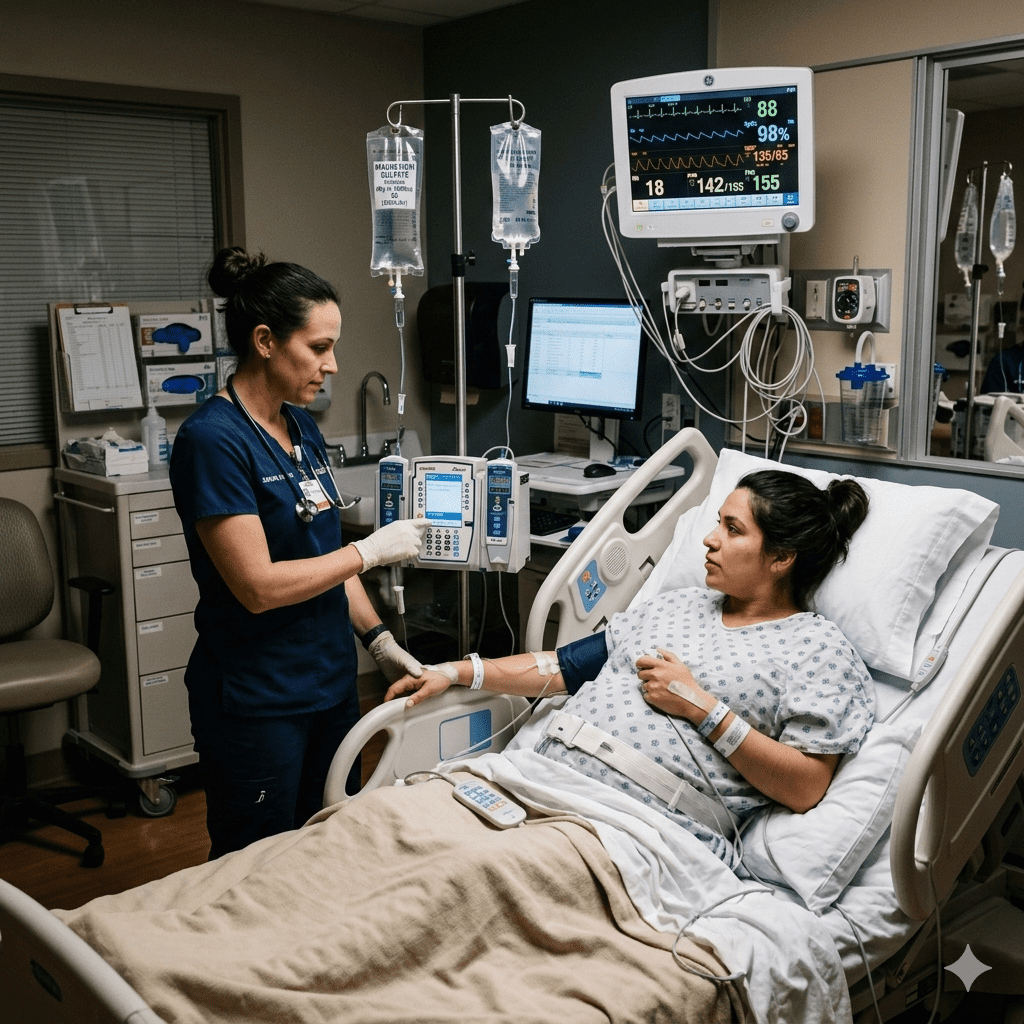
Magnesium sulfate is a commonly used medication in maternal and critical care nursing, especially for the treatment and prevention of seizures in patients with severe preeclampsia and eclampsia. While highly effective, magnesium sulfate has a narrow therapeutic range, meaning that careful monitoring is essential to prevent toxicity.
For every registered nurse, understanding how to recognize early signs of magnesium sulfate toxicity is crucial for patient safety. This topic is also frequently tested on the NCLEX, making it essential knowledge for both nursing students and experienced RN nurses. Hospitals often include magnesium monitoring protocols as part of a structured nursing bundle for obstetric safety and medication monitoring.
What Is Magnesium Sulfate Used For?
Magnesium sulfate is primarily used in obstetric and critical care settings for several important clinical purposes.
Common Clinical Uses
- Prevention of eclamptic seizures
- Treatment of severe preeclampsia
- Neuroprotection in premature infants
- Management of certain cardiac arrhythmias
In labor and delivery units, the registered nurse is responsible for administering magnesium sulfate and monitoring the patient continuously.
Therapeutic Magnesium Levels
Magnesium sulfate must be maintained within a therapeutic serum range to prevent complications.
Therapeutic Range
| Serum Magnesium Level | Clinical Effect |
|---|---|
| 4 – 7 mEq/L | Therapeutic seizure prevention |
| 7 – 10 mEq/L | Loss of deep tendon reflexes |
| 10 – 13 mEq/L | Respiratory depression |
| 15 mEq/L or higher | Cardiac arrest |
A vigilant RN nurse must frequently assess the patient to detect early signs of rising magnesium levels.
Why Magnesium Toxicity Is Dangerous
Excess magnesium depresses the central nervous system and respiratory system.
If toxicity develops, it can lead to:
- Respiratory failure
- Severe hypotension
- Cardiac conduction abnormalities
- Cardiac arrest
Because these complications can progress rapidly, continuous nursing monitoring is essential.
Key Nursing Assessments for Magnesium Monitoring
The registered nurse plays a central role in detecting early toxicity through systematic patient assessments.
1. Deep Tendon Reflexes
Deep tendon reflexes (DTRs), especially the patellar reflex, are one of the most important indicators.
Normal finding: reflexes present
Early toxicity: reflexes diminished
Severe toxicity: reflexes absent
For NCLEX exam questions, remember that loss of deep tendon reflexes is often the first sign of magnesium toxicity.
2. Respiratory Rate
Magnesium depresses the respiratory center in the brain.
The RN nurse must monitor respiratory status closely.
Normal respiratory rate: ≥ 12 breaths per minute
If respirations fall below this level, magnesium infusion may need to be stopped immediately.
3. Urine Output
Magnesium is excreted through the kidneys, so decreased urine output can lead to dangerous accumulation.
The registered nurse should ensure that urine output remains at least 30 mL per hour.
Low urine output increases the risk of magnesium toxicity.
4. Level of Consciousness
Changes in mental status may indicate rising magnesium levels.
The nurse should monitor for:
- Drowsiness
- Confusion
- Lethargy
These symptoms may signal worsening toxicity.
Early Signs of Magnesium Sulfate Toxicity
Recognizing early symptoms allows the RN nurse to intervene before life-threatening complications occur.
Common Early Signs
- Decreased deep tendon reflexes
- Muscle weakness
- Flushing
- Nausea
- Mild hypotension
Immediate assessment and provider notification are essential when these symptoms appear.
Severe Signs of Magnesium Toxicity
If magnesium levels continue to rise, serious complications may develop.
Dangerous Symptoms
- Absent reflexes
- Respiratory depression
- Severe hypotension
- Bradycardia
- Cardiac arrest
Rapid response from the nursing team is critical in this situation.
Emergency Nursing Interventions
If magnesium sulfate toxicity is suspected, the registered nurse must act immediately.
Priority Nursing Actions
The RN nurse should:
- Stop the magnesium sulfate infusion
- Notify the healthcare provider immediately
- Administer oxygen if needed
- Monitor respiratory status closely
- Prepare the antidote calcium gluconate
Hospitals include these steps in their nursing bundle for obstetric medication safety.
Antidote for Magnesium Toxicity
The antidote used to reverse magnesium toxicity is calcium gluconate.
Important Nursing Point
Calcium gluconate reverses the effects of excess magnesium on the heart and muscles.
A prepared registered nurse ensures that calcium gluconate is available at the bedside whenever magnesium sulfate is administered.
Nursing Responsibilities During Magnesium Therapy
Safe magnesium therapy requires continuous monitoring and documentation.
Nursing Responsibilities
The RN nurse should monitor:
- Deep tendon reflexes
- Respiratory rate
- Urine output
- Blood pressure
- Level of consciousness
- Fetal heart rate (in obstetric patients)
These assessments are part of a structured nursing bundle designed to detect complications early.
NCLEX Tips for Magnesium Sulfate
For nursing students preparing for the NCLEX, remember these key points:
- Magnesium sulfate prevents eclamptic seizures
- Loss of deep tendon reflexes is an early sign of toxicity
- Respiratory rate must stay above 12 breaths per minute
- Urine output should be at least 30 mL per hour
- Calcium gluconate is the antidote
Understanding these principles helps future registered nurses respond quickly to medication emergencies.
Conclusion
Magnesium sulfate is a life-saving medication when used correctly, but it requires careful monitoring due to the risk of toxicity. The registered nurse plays a vital role in assessing patients, recognizing early warning signs, and initiating rapid interventions.
Through consistent monitoring, accurate assessment, and adherence to the nursing bundle for medication safety, the RN nurse ensures that patients receive the benefits of magnesium therapy while minimizing potential risks.