
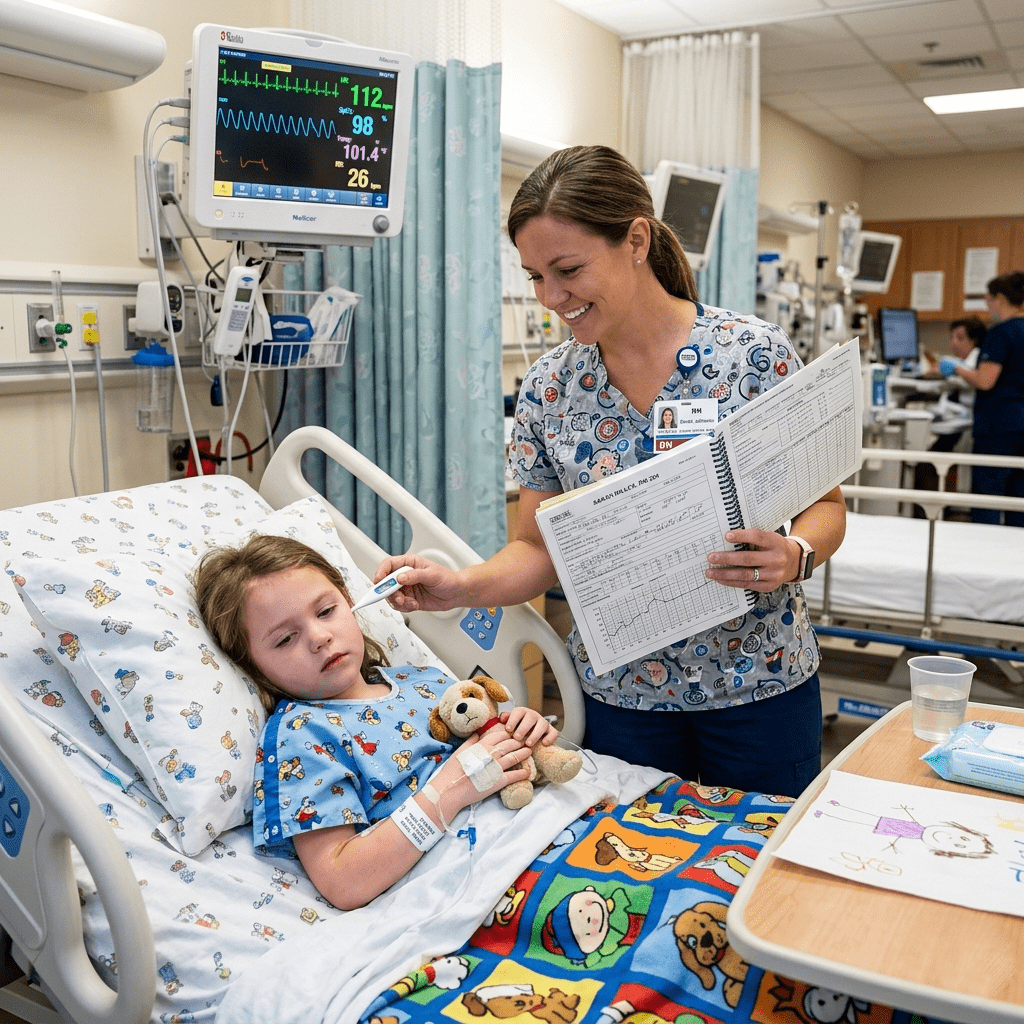
Kawasaki disease is a serious pediatric inflammatory condition that primarily affects young children. Although the disease often begins with fever and rash, its most dangerous complication is the development of coronary artery aneurysms, which can affect the heart permanently if not treated promptly.
For every registered nurse, recognizing Kawasaki disease early is essential because timely treatment can significantly reduce the risk of heart complications. This condition is frequently discussed in pediatric nursing courses and NCLEX examinations, making it an important topic for nursing students and RN nurses. Many hospitals also use a structured nursing bundle for Kawasaki disease management, which helps ensure early diagnosis and proper treatment.
This guide explains the causes, symptoms, complications, and nursing management of Kawasaki disease, with a special focus on the risk of coronary artery aneurysms.
What Is Kawasaki Disease?
Kawasaki disease is an acute inflammatory illness that affects blood vessels throughout the body, particularly medium-sized arteries. The condition most commonly occurs in children under five years of age.
Although the exact cause is not fully understood, researchers believe it may involve an abnormal immune response to infection in genetically susceptible children.
The inflammation associated with Kawasaki disease can affect many organs. However, the coronary arteries are the most important structures involved, because inflammation may lead to dangerous heart complications.
Because of these risks, the registered nurse must monitor pediatric patients carefully during the illness.
Why Coronary Arteries Are at Risk
The coronary arteries supply oxygen-rich blood to the heart muscle. During Kawasaki disease, inflammation weakens the arterial walls, which can cause abnormal dilation.
When the vessel wall becomes severely weakened, it may form a coronary artery aneurysm, which is a balloon-like enlargement of the artery.
These aneurysms can lead to serious complications such as:
- Blood clots
- Reduced blood flow to the heart
- Heart attacks in severe cases
Therefore, early diagnosis and treatment are critical to protect the heart.
Signs and Symptoms of Kawasaki Disease
Kawasaki disease usually begins with persistent fever lasting at least five days. However, other characteristic symptoms often appear during the illness.
Common symptoms include:
- High fever
- Red eyes without discharge
- Rash on the body
- Swollen lymph nodes in the neck
- Red or cracked lips
- Swelling of the hands and feet
- Strawberry tongue
Because many of these symptoms resemble other childhood illnesses, diagnosis may sometimes be delayed. As a result, the RN nurse must report persistent fever and unusual symptoms promptly.
Phases of Kawasaki Disease
Kawasaki disease generally progresses through three phases.
Acute Phase
The acute phase lasts approximately one to two weeks.
During this time, the child experiences:
- High fever
- Rash
- Irritability
- Conjunctivitis
- Mucous membrane inflammation
Inflammation of the blood vessels is most intense during this stage.
Subacute Phase
The subacute phase occurs two to four weeks after symptom onset.
During this stage:
- Fever may resolve
- Skin peeling may occur on fingers and toes
- Coronary artery aneurysms may develop
This phase is particularly important because cardiac complications are most likely to appear.
Convalescent Phase
The convalescent phase continues until laboratory values return to normal.
Although symptoms improve, ongoing cardiac monitoring remains important.
Diagnosis and Cardiac Monitoring
Early diagnosis significantly reduces the risk of coronary artery complications.
Healthcare providers often perform several tests, including:
- Blood tests to detect inflammation
- Echocardiography to evaluate coronary arteries
- Electrocardiograms to monitor heart activity
The registered nurse plays a key role in preparing patients for these tests and monitoring results.
Many healthcare facilities include cardiac monitoring as part of a Kawasaki disease nursing bundle, which helps ensure standardized patient care.
Treatment of Kawasaki Disease
Prompt treatment is essential to reduce inflammation and prevent coronary artery aneurysms.
Intravenous Immunoglobulin (IVIG)
IVIG is the primary treatment for Kawasaki disease. When administered early, it significantly reduces the risk of coronary artery damage.
Aspirin Therapy
Aspirin is often used to reduce inflammation and prevent blood clot formation.
However, aspirin therapy in children must be carefully monitored.
Because of these medications, the RN nurse must monitor for adverse reactions and ensure accurate dosing.
Nursing Responsibilities in Kawasaki Disease
The registered nurse plays an essential role in managing children with Kawasaki disease.
Key nursing responsibilities include:
Monitoring Vital Signs
Frequent monitoring of temperature, heart rate, and blood pressure helps detect complications early.
Cardiac Monitoring
Nurses should monitor for signs of coronary complications such as chest pain, fatigue, or abnormal heart rhythms.
Medication Administration
Accurate administration of IVIG and aspirin is critical for effective treatment.
Patient and Family Education
Parents must understand the importance of follow-up appointments and cardiac monitoring.
Following structured nursing bundle protocols helps ensure safe and consistent care.
Complications of Kawasaki Disease
If untreated, Kawasaki disease may lead to several serious complications.
These may include:
- Coronary artery aneurysms
- Myocarditis
- Heart valve abnormalities
- Blood clots
Early treatment greatly reduces the likelihood of these complications.
NCLEX Tips for Kawasaki Disease
For NCLEX exam preparation, remember these important points:
- Kawasaki disease commonly affects children under five years old
- Persistent fever lasting five days or longer is a key symptom
- The most serious complication is coronary artery aneurysm
- IVIG therapy is the primary treatment
Understanding these concepts helps nursing students and RN nurses answer pediatric cardiovascular questions effectively.
Conclusion
Kawasaki disease is a serious inflammatory condition that can affect the coronary arteries and lead to life-threatening complications. Early recognition and prompt treatment are essential to prevent coronary artery aneurysms and protect heart health.
The registered nurse plays a vital role in identifying symptoms, administering treatment, and monitoring cardiac complications. Through careful assessment and adherence to established nursing bundle protocols, nurses can significantly improve outcomes for pediatric patients.
For both clinical nursing practice and NCLEX preparation, understanding Kawasaki disease and its cardiac risks is an essential part of pediatric nursing education for every RN nurse.