
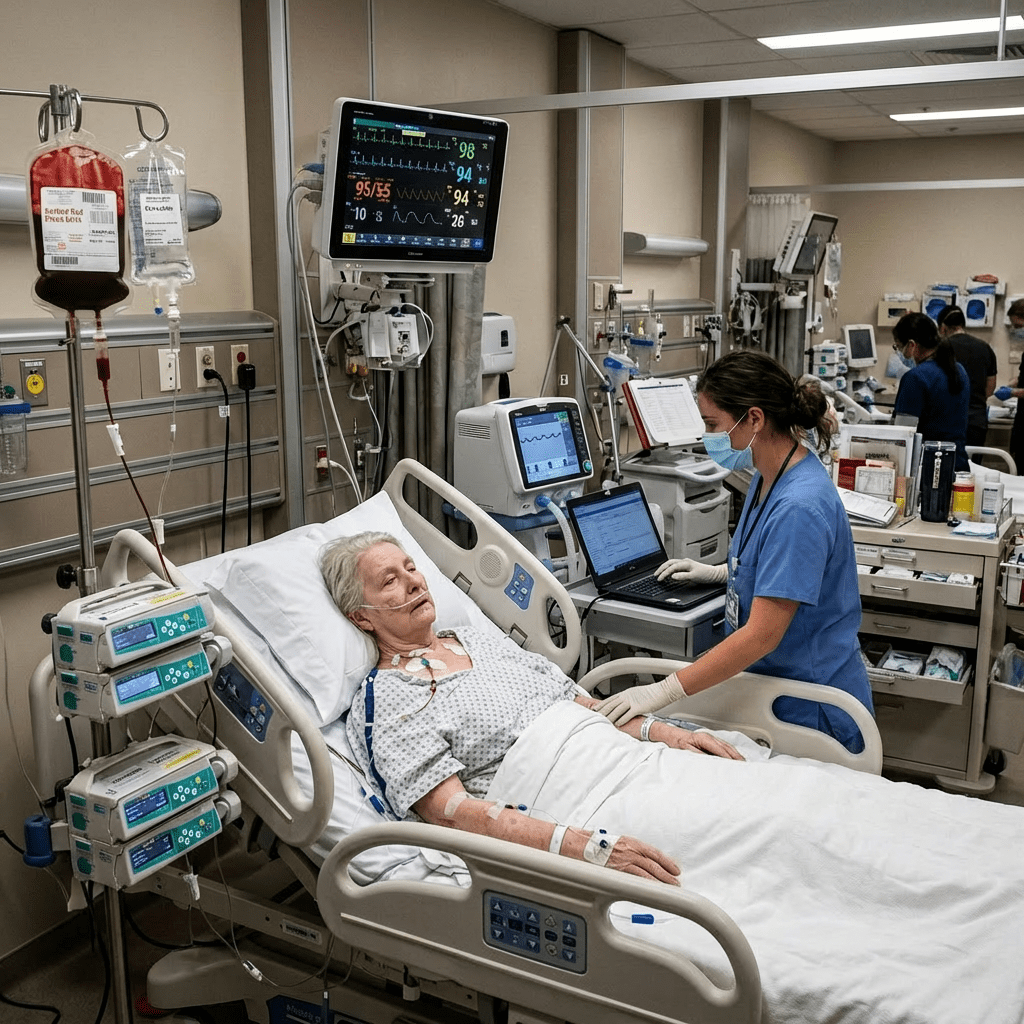
Gastrointestinal (GI) varices are a life-threatening complication of portal hypertension, a condition most commonly associated with advanced liver disease such as cirrhosis. When pressure in the portal venous system rises, blood is redirected through smaller collateral veins in the esophagus, stomach, and intestines. These fragile veins enlarge and form varices, which can rupture and cause severe internal bleeding.
For every nurse, especially those preparing for the NCLEX, understanding how portal hypertension leads to GI varices is essential. Early recognition and effective nursing management can prevent catastrophic hemorrhage and improve patient survival. A knowledgeable registered nurse (RN nurse) plays a critical role in monitoring symptoms, administering medications, and coordinating emergency care.
Many NCLEX preparation resources and nursing bundle study guides highlight portal hypertension because it combines knowledge from gastroenterology, critical care, and pharmacology nursing.
Understanding Portal Hypertension
Portal hypertension occurs when pressure increases in the portal vein, the vessel responsible for carrying blood from the digestive organs to the liver. When the liver becomes scarred or obstructed, blood cannot flow normally.
Common causes include:
- Liver cirrhosis
- Chronic hepatitis
- Alcoholic liver disease
- Portal vein thrombosis
- Non-alcoholic fatty liver disease
When portal pressure increases, blood is forced to reroute through smaller veins in the GI tract. These veins are not designed to handle high pressure, which causes them to dilate and form varices.
For nursing students and registered nurses, understanding this pathophysiology is important for NCLEX-style clinical reasoning questions.
Types of GI Varices
Varices can develop in several parts of the gastrointestinal system.
Esophageal Varices
These are the most common and dangerous. They occur in the lower esophagus and are a frequent cause of upper GI bleeding.
Gastric Varices
These occur in the stomach and can also lead to massive bleeding.
Ectopic Varices
These occur in unusual locations such as:
- Small intestine
- Colon
- Rectum
A RN nurse must be aware that bleeding may present differently depending on the location.
Signs and Symptoms of Variceal Bleeding
Many patients with portal hypertension have no symptoms until bleeding occurs.
Early recognition is critical in nursing practice.
Common symptoms include:
- Hematemesis (vomiting blood)
- Melena (black tarry stools)
- Hypotension
- Tachycardia
- Pallor
- Weakness
- Dizziness
- Signs of hypovolemic shock
In NCLEX scenarios, hematemesis combined with a history of liver disease is a key clue suggesting esophageal varices.
A skilled registered nurse must quickly recognize these signs and activate emergency interventions.
Diagnostic Evaluation
Several diagnostic tools confirm the presence of GI varices and assess portal hypertension.
Endoscopy
The most important diagnostic test. It allows visualization and treatment of varices.
Laboratory Tests
Important labs include:
- Hemoglobin and hematocrit
- Platelet count
- Liver function tests
- INR and coagulation profile
Imaging Studies
Additional diagnostic tools may include:
- Ultrasound with Doppler
- CT scan
- MRI
For NCLEX preparation, nurses should remember that endoscopy is the gold standard for diagnosing esophageal varices.
Medical Treatment of GI Varices
Treatment focuses on stopping bleeding, reducing portal pressure, and preventing recurrence.
Medications
Common medications include:
Vasoactive drugs
- Octreotide
- Vasopressin
These drugs reduce portal pressure and decrease bleeding.
Beta-blockers
- Propranolol
- Nadolol
These medications help prevent future bleeding episodes.
Antibiotics
Patients with cirrhosis are at high risk for infection, so prophylactic antibiotics are commonly used.
These pharmacology concepts are frequently emphasized in NCLEX nursing bundle study materials.
Emergency Procedures
Severe variceal bleeding may require urgent procedures.
Endoscopic Variceal Band Ligation
A rubber band is placed around the varix to stop bleeding.
Sclerotherapy
A chemical agent is injected into the varix to cause clotting.
Balloon Tamponade
A specialized tube compresses the bleeding veins.
TIPS Procedure
Transjugular Intrahepatic Portosystemic Shunt (TIPS) reduces portal pressure by creating a pathway for blood flow.
For a RN nurse working in critical care, understanding these procedures helps anticipate patient needs and complications.
Nursing Assessment
The nurse plays a vital role in monitoring patients with portal hypertension.
Important assessments include:
- Monitoring vital signs frequently
- Observing for signs of GI bleeding
- Assessing abdominal distention
- Monitoring mental status for hepatic encephalopathy
- Checking laboratory values
A registered nurse should immediately report:
- Rapid drop in blood pressure
- Increased heart rate
- New hematemesis
- Decreased urine output
These signs may indicate active bleeding or shock.
Nursing Interventions
Effective nursing management can stabilize patients and prevent complications.
Hemodynamic Monitoring
Monitor vital signs and assess for signs of shock.
IV Access
Large-bore IV lines should be established for fluid resuscitation and blood transfusion.
Medication Administration
Administer vasoactive medications and proton pump inhibitors as prescribed.
Oxygen Therapy
Provide supplemental oxygen if the patient shows signs of hypoxia.
Blood Transfusions
Monitor closely for transfusion reactions.
These interventions are common NCLEX scenarios testing nursing priorities.
Patient Education
Education is another important role of the RN nurse.
Patients with portal hypertension should be taught to:
- Avoid alcohol
- Take medications as prescribed
- Attend regular endoscopy screenings
- Recognize early signs of bleeding
- Maintain proper nutrition
Education improves long-term outcomes and reduces hospital readmissions.
NCLEX Tips for Nurses
For NCLEX preparation, remember these key points:
- Portal hypertension causes GI varices.
- Esophageal varices are the most common source of bleeding.
- Hematemesis in cirrhosis suggests variceal bleeding.
- Octreotide is commonly used to control bleeding.
- Endoscopic band ligation is the preferred treatment.
Many nursing bundle review guides emphasize these facts because they appear frequently in exam questions.
Conclusion
GI varices are a serious complication of portal hypertension and can lead to life-threatening hemorrhage if not managed promptly. Nurses play a critical role in early recognition, monitoring, and intervention.
A well-trained registered nurse understands how to assess for bleeding, administer lifesaving medications, and assist with emergency procedures. For NCLEX candidates, mastering this topic strengthens clinical reasoning and improves readiness for real-world nursing practice.
Using comprehensive study resources such as a nursing bundle, practicing NCLEX questions, and reviewing key nursing interventions can help every RN nurse confidently manage patients with portal hypertension and GI varices.