
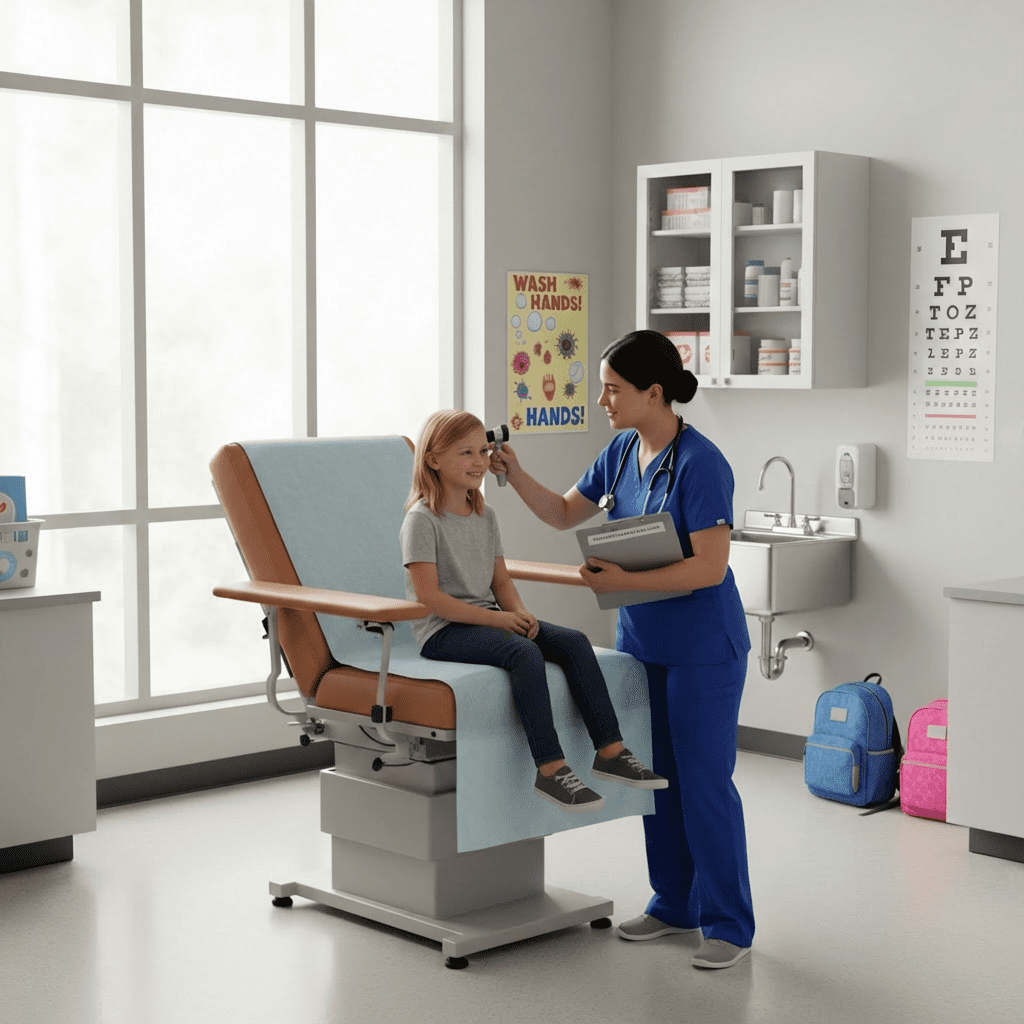
School health nursing plays a critical role in keeping students safe, healthy, and ready to learn. A registered nurse working in a school environment becomes a frontline caregiver, educator, and advocate for children’s health. For the NCLEX, school nursing topics often appear in community health and pediatrics sections, making it important for every nurse and nursing student to understand these responsibilities. Whether you are studying through a nursing bundle or working as a practicing RN, school health care skills remain essential.
Below is a simple, comprehensive guide outlining what school health nurses do every day inside the school setting.
✅ 1. Managing Daily Student Health Needs
A school nurse responds to everyday complaints such as headaches, stomachaches, minor injuries, and emotional distress. They perform quick assessments, determine whether a student should stay in class, go home, or require further evaluation.
RN nurses use their clinical judgment to keep students safe while reducing unnecessary absences.
✅ 2. Medication Administration and Monitoring
Many students depend on daily medications during school hours. A registered nurse ensures:
- Correct timing and dosage
- Safe storage of medications
- Monitoring for side effects
- Documentation following school policy
- Communication with parents and providers
This responsibility often appears on the NCLEX, especially regarding safe medication administration and legal accountability.
✅ 3. Managing Chronic Conditions (Asthma, Diabetes, Epilepsy, ADHD)
School nurses provide specialized care for students with chronic illnesses. For example:
- Asthma: inhaler training, peak flow monitoring
- Diabetes: glucose checks, insulin administration
- Seizure disorders: emergency plans, rescue medications
- ADHD: medication effects, behavioral support
Using evidence-based nursing practices, the RN nurse becomes the coordinator between families, teachers, and medical providers.
✅ 4. Emergency Preparedness and First Aid
Schools rely on the school nurse to handle emergencies such as:
- Allergic reactions
- Asthma attacks
- Head injuries
- Seizures
- Diabetic emergencies
- Playground injuries
The registered nurse develops and rehearses emergency response plans, including CPR readiness, AED availability, and rapid triage skills.
✅ 5. Health Screenings and Early Detection
Routine screenings help catch problems early. School nurses conduct:
- Vision screenings
- Hearing tests
- Growth and BMI monitoring
- Scoliosis checks
These screenings ensure early referrals and prevent long-term academic or health complications. NCLEX often highlights the importance of early detection in community settings.
✅ 6. Creating Individualized Health Plans (IHP) and 504 Plans
Students with medical needs require structured support. A school nurse develops:
- IHPs for ongoing daily medical care
- Emergency Care Plans for allergic reactions or seizures
- 504 Plans for students needing classroom accommodations
The RN nurse collaborates with teachers, counselors, and administrators to ensure safety and equal learning access.
✅ 7. Health Education for Students and Staff
School health nursing involves ongoing education. Nurses deliver lessons and workshops on:
- Hygiene
- Nutrition
- Puberty
- Mental health
- Infection prevention
- Safe medication use
- Managing chronic illnesses
They also train staff on EpiPen use, seizure first aid, bloodborne pathogen protocols, and emergency procedures.
✅ 8. Communicating With Families and Providers
Strong communication keeps students healthy. The RN nurse:
- Updates parents on concerns
- Coordinates with doctors
- Refers families to community services
- Documents all interactions
Effective communication is a major priority in nursing and a common NCLEX-tested competency.
✅ 9. Maintaining Health Records and Compliance
School nurses manage large amounts of health data, ensuring all documentation meets legal standards. This includes:
- Immunization records
- Chronic disease management documentation
- Medication logs
- Screening results
- Incident reports
Accurate documentation protects both the student and the school.
✅ 10. Promoting a Safe and Healthy School Environment
Finally, the school nurse works to create a healthy school culture by:
- Monitoring infectious disease outbreaks
- Supporting mental health
- Encouraging healthy eating and physical activity
- Ensuring accessibility for students with disabilities
A school nurse’s presence significantly improves the overall well-being of the school community.
Final Thoughts
School health nursing is a dynamic and rewarding specialty. A registered nurse in this setting blends assessment skills, teaching, emergency care, and chronic condition management every single day. For anyone preparing for the NCLEX or studying through a nursing bundle, school nursing concepts reinforce essential community health principles.