
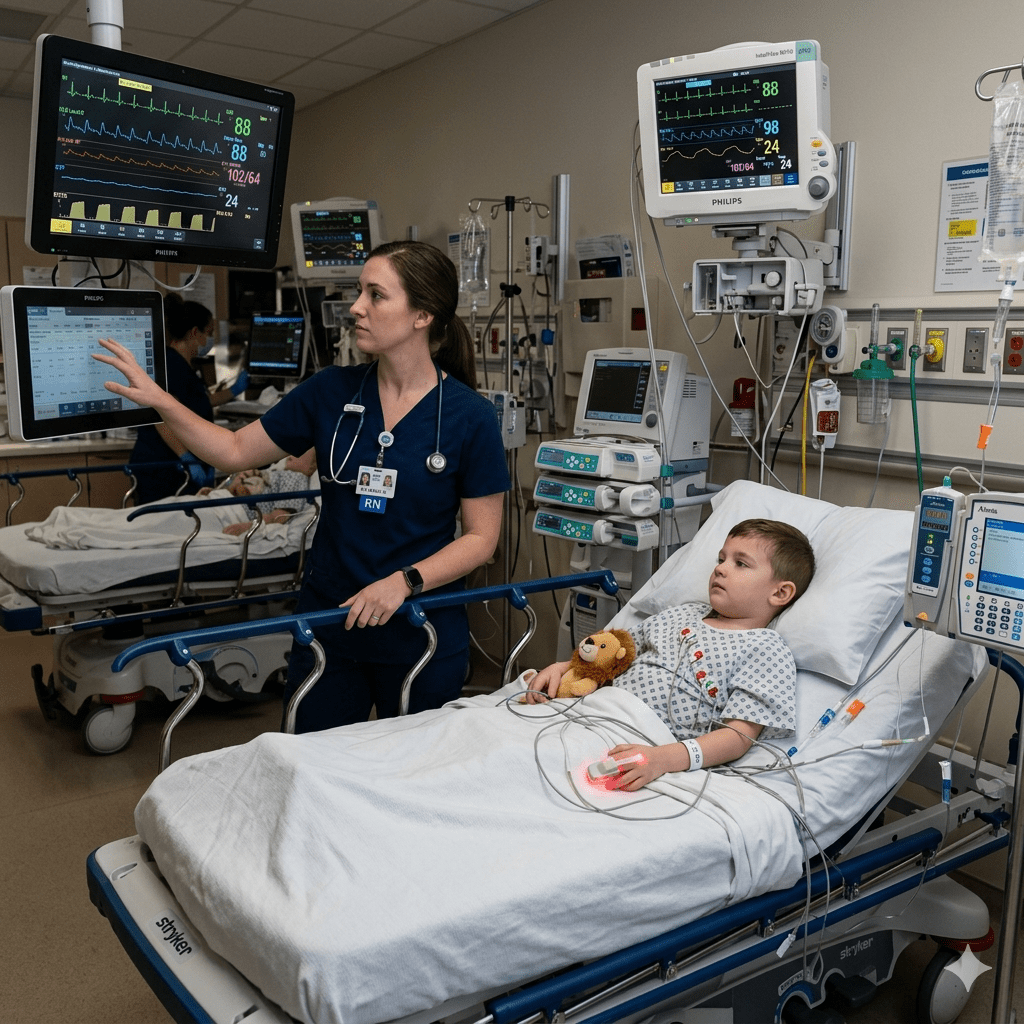
Congenital heart defects (CHDs) are structural abnormalities of the heart that are present at birth. These conditions affect the normal flow of blood through the heart and can significantly alter cardiovascular function. For a registered nurse, understanding the hemodynamics of congenital heart defects is essential when caring for pediatric patients with cardiac conditions.
In pediatric and cardiac units, nurses frequently manage children with congenital heart defects who require close monitoring, medication therapy, and sometimes surgical correction. Therefore, mastering this topic is important for clinical nursing practice, pediatric cardiac care, and NCLEX preparation. Many hospitals also include congenital heart defect monitoring within structured nursing bundle protocols designed to improve patient safety and outcomes.
This article explains the hemodynamic principles behind congenital heart defects, helping every RN nurse understand how blood flow changes affect patient care.
What Are Congenital Heart Defects?
Congenital heart defects are abnormalities in the heart’s structure that develop before birth. These defects may involve:
- Heart valves
- Heart chambers
- Blood vessels
- Septal walls separating heart chambers
Because of these structural problems, blood may flow abnormally through the heart or lungs, which changes oxygen delivery throughout the body.
The registered nurse must understand these circulation changes to properly assess symptoms and monitor treatment effectiveness.
Understanding Normal Cardiac Hemodynamics
Before exploring congenital defects, it is important to understand normal blood circulation through the heart.
In a healthy heart:
- Deoxygenated blood enters the right atrium
- Blood flows to the right ventricle
- The right ventricle pumps blood to the lungs
- Oxygenated blood returns to the left atrium
- Blood moves to the left ventricle
- The left ventricle pumps oxygenated blood to the body
Congenital heart defects disrupt this normal circulation, which leads to abnormal pressure changes and oxygen delivery problems.
Major Hemodynamic Categories of Congenital Heart Defects
Congenital heart defects are often classified according to how they affect blood flow and oxygenation.
Left-to-Right Shunt Defects
In left-to-right shunts, oxygenated blood from the left side of the heart flows back into the right side.
This abnormal flow causes excess blood circulation to the lungs.
Common examples include:
- Atrial septal defect (ASD)
- Ventricular septal defect (VSD)
- Patent ductus arteriosus (PDA)
Hemodynamic Effects
These defects may cause:
- Increased pulmonary blood flow
- Pulmonary hypertension
- Heart enlargement
- Congestive heart failure
The RN nurse must monitor respiratory status and signs of fluid overload in affected patients.
Right-to-Left Shunt Defects
In right-to-left shunts, deoxygenated blood bypasses the lungs and enters the systemic circulation.
As a result, oxygen-poor blood reaches the body, which causes cyanosis.
Common conditions include:
- Tetralogy of Fallot
- Tricuspid atresia
- Pulmonary atresia
Hemodynamic Effects
These defects may lead to:
- Cyanosis
- Decreased oxygen saturation
- Hypoxic episodes
- Poor growth in infants
The registered nurse must monitor oxygen levels and recognize cyanotic episodes quickly.
Obstructive Congenital Heart Defects
Some congenital heart defects involve narrowing or obstruction of blood flow.
Examples include:
- Coarctation of the aorta
- Pulmonary stenosis
- Aortic stenosis
Hemodynamic Effects
Obstruction increases pressure within certain heart chambers, which can lead to:
- Ventricular hypertrophy
- Reduced cardiac output
- Circulatory instability
Because of these risks, the RN nurse must closely monitor blood pressure and peripheral circulation.
Mixed Congenital Heart Defects
Certain congenital heart defects involve multiple structural abnormalities, resulting in complex blood flow patterns.
One example is transposition of the great arteries, where the pulmonary and systemic circulations run in parallel rather than in sequence.
These defects usually require urgent surgical correction.
The registered nurse plays a crucial role in monitoring oxygenation, vital signs, and cardiac function in these patients.
Nursing Responsibilities in Congenital Heart Defects
The registered nurse plays a key role in monitoring children with congenital heart defects.
Important nursing responsibilities include:
Monitoring Oxygen Saturation
Pulse oximetry helps detect changes in oxygen levels.
Assessing Cardiac and Respiratory Status
Nurses must monitor:
- Heart rate
- Respiratory rate
- Signs of heart failure
- Cyanosis
Monitoring Growth and Nutrition
Children with CHDs may experience feeding difficulties and poor weight gain.
Medication Administration
Some patients require medications such as:
- Diuretics
- Inotropic agents
- Vasodilators
Hospitals often include these steps in a congenital heart disease nursing bundle, which improves monitoring and treatment consistency.
Complications of Congenital Heart Defects
If untreated or poorly managed, congenital heart defects may cause serious complications such as:
- Heart failure
- Pulmonary hypertension
- Arrhythmias
- Growth delays
Early recognition of complications allows the RN nurse to intervene quickly and improve patient outcomes.
NCLEX Tips for Congenital Heart Defects
For NCLEX preparation, remember these important principles:
- Left-to-right shunts increase pulmonary blood flow
- Right-to-left shunts cause cyanosis
- Congenital heart defects affect cardiac hemodynamics and oxygen delivery
- Nurses must monitor oxygen saturation, heart rate, and respiratory status
Understanding these concepts helps nursing students and registered nurses answer pediatric cardiac questions successfully.
Conclusion
Congenital heart defects significantly affect cardiac circulation and oxygen delivery. Understanding the hemodynamic changes associated with these defects is essential for providing safe and effective patient care.
The registered nurse plays a critical role in monitoring symptoms, administering medications, and identifying complications early. By following evidence-based care plans and structured nursing bundle protocols, nurses can improve outcomes for pediatric patients with congenital heart defects.
For both clinical practice and NCLEX success, mastering the hemodynamics of congenital heart defects is an essential skill for every RN nurse involved in pediatric nursing care.