
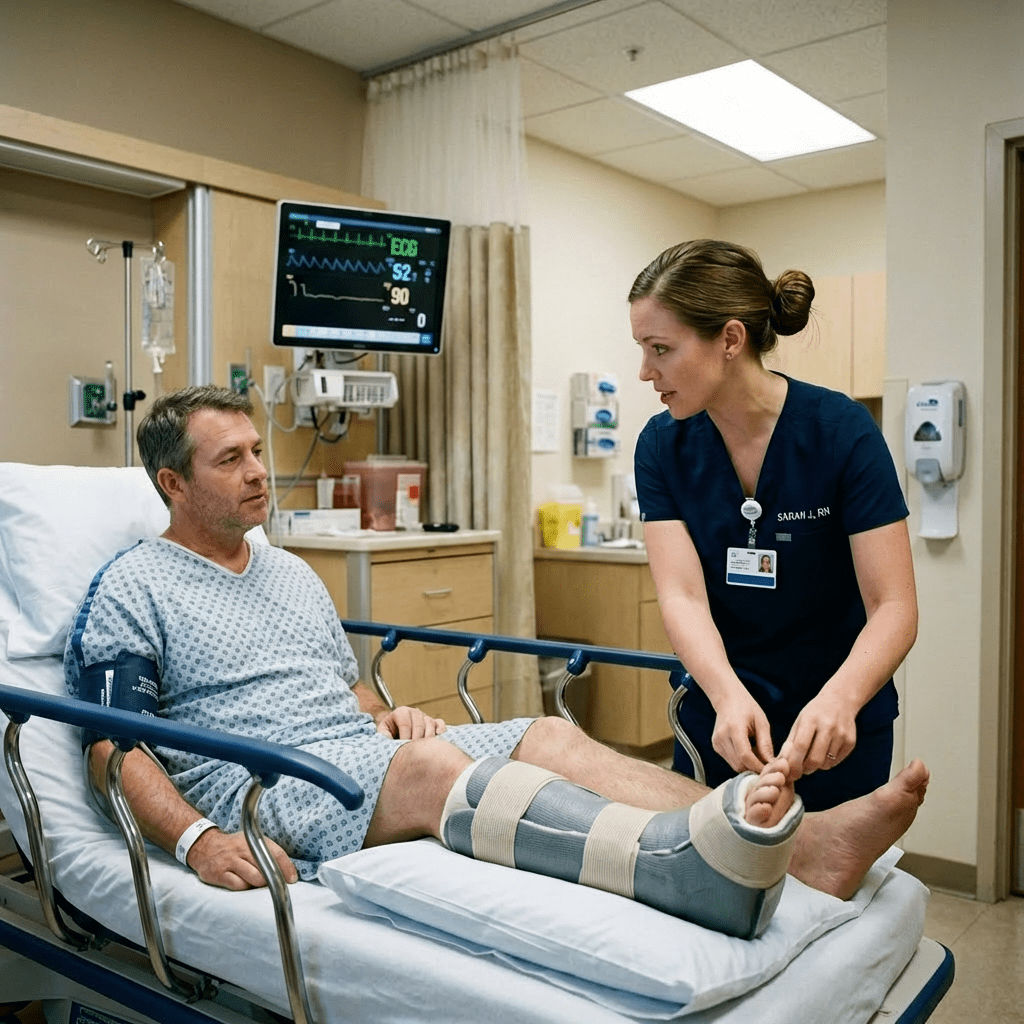
Compartment syndrome is a limb-threatening emergency that every nurse, registered nurse (RN nurse), and nursing student must recognize early. Delayed treatment can result in permanent nerve damage, muscle death, amputation, or even systemic complications.
For NCLEX preparation and real-world nursing practice, understanding the early warning signs of compartment syndrome can truly save limbs — and lives.
What Is Compartment Syndrome?
Compartment syndrome occurs when pressure builds up inside a closed muscle compartment, reducing blood flow to muscles and nerves. Because fascia surrounding muscle compartments does not stretch easily, any swelling or bleeding inside the compartment increases pressure rapidly.
Without quick intervention, tissues become ischemic and can die within hours.
Common Causes of Compartment Syndrome
A nurse should always suspect compartment syndrome in patients with:
- Long bone fractures (especially tibial fractures)
- Crush injuries
- Tight casts or splints
- Severe contusions
- Reperfusion injury after vascular repair
- Burns
- IV infiltration (especially in pediatric patients)
NCLEX tip: Fracture + increasing pain = Think compartment syndrome.
The 6 P’s of Compartment Syndrome
Early recognition is critical. The classic assessment findings are known as the 6 P’s:
- Pain (most important early sign)
- Pallor
- Paresthesia
- Paralysis
- Pulselessness
- Poikilothermia (cool limb)
⚠️ Critical NCLEX Alert
The earliest and most important sign is severe pain that is disproportionate to the injury, especially pain with passive stretching of the muscle.
Do not wait for pulselessness — that is a late and dangerous finding.
Pathophysiology (Simple Breakdown for Nursing Students)
Here is what happens step-by-step:
- Injury causes swelling or bleeding inside the compartment.
- Pressure increases.
- Capillaries collapse.
- Tissue perfusion decreases.
- Ischemia develops.
- Muscle and nerve damage begins within 4–6 hours.
This is why rapid nursing assessment is life- and limb-saving.
Nursing Assessment Priorities
For the registered nurse or RN nurse caring for orthopedic or trauma patients:
Perform Frequent Neurovascular Checks:
- Assess pain level and quality
- Check sensation
- Evaluate movement
- Monitor color and temperature
- Compare both limbs
- Assess capillary refill
Document thoroughly and report immediately if symptoms worsen.
Nursing Interventions
If compartment syndrome is suspected:
- Notify the provider immediately.
- Loosen tight dressings if prescribed.
- Remove restrictive casts (bivalving may be required).
- Keep limb at heart level (NOT elevated high).
- Prepare for emergency fasciotomy.
What Is a Fasciotomy?
A fasciotomy is a surgical procedure where the fascia is cut open to relieve pressure. It is the definitive treatment.
Post-fasciotomy nursing care includes:
- Sterile wound care
- Monitoring for infection
- Pain management
- Monitoring for rhabdomyolysis
- Assessing kidney function
Complications of Delayed Treatment
If not treated early, compartment syndrome can lead to:
- Permanent nerve damage
- Muscle necrosis
- Contractures
- Amputation
- Acute kidney injury (due to myoglobin release)
NCLEX reminder: Time = tissue survival.
NCLEX-Style Practice Question
A patient with a tibial fracture reports severe pain despite opioid administration. The nurse notes increasing tightness and pain with passive movement. What is the priority action?
A. Elevate the limb above heart level
B. Apply ice packs
C. Notify the provider immediately
D. Reassess in one hour
Correct Answer: C. Notify the provider immediately
Why This Matters for Nursing Students
Compartment syndrome questions frequently appear on the NCLEX because they test:
- Critical thinking
- Emergency prioritization
- Neurovascular assessment skills
- Early recognition of life-threatening complications
Including this topic in your nursing bundle review materials ensures better preparation for real clinical situations.
Key Takeaways for Every Nurse
- Severe, unrelieved pain is the earliest warning sign.
- Do not wait for pulselessness.
- Perform frequent neurovascular checks.
- Rapid intervention prevents amputation.
- Fasciotomy is the definitive treatment.
For every registered nurse and RN nurse, early recognition truly saves limbs.