
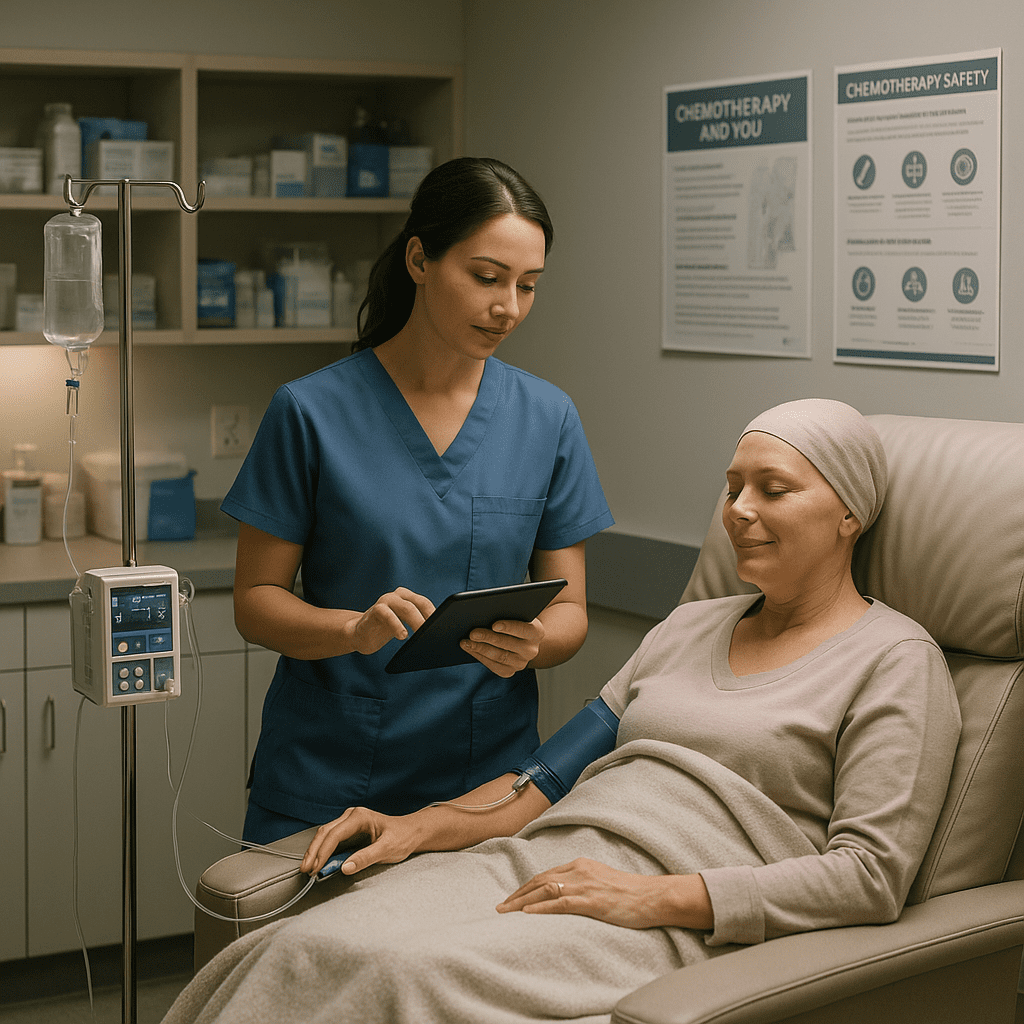
Chemotherapy is a life-saving treatment for many cancer patients, but it comes with significant physical and emotional challenges. For every registered nurse (RN nurse), understanding chemotherapy care is essential—both for safe practice and for NCLEX success. Because these patients often experience complex symptoms, nursing interventions must be precise, compassionate, and evidence-based.
Providing high-quality chemotherapy care requires a combination of clinical skills, patient education, emotional support, and continuous monitoring. This guide will help any nurse strengthen their knowledge and enrich their nursing bundle of essential oncology concepts.
⭐ What Is Chemotherapy?
Chemotherapy uses powerful drugs to kill or slow the growth of cancer cells. Although effective, these medications also affect healthy cells, leading to common side effects such as nausea, fatigue, neutropenia, anemia, and mucositis. Therefore, the RN nurse must perform thorough assessments and prepare patients for expected reactions.
🩺 Key Nursing Responsibilities During Chemotherapy
1. Pre-Treatment Assessment
A registered nurse must:
- Review lab values including CBC, ANC, platelet count, and kidney function
- Assess vital signs and baseline symptoms
- Verify chemotherapy orders using the “Five Rights”
- Evaluate previous reactions to treatment
- Provide anticipatory guidance to reduce patient anxiety
For NCLEX purposes, nurses should always hold chemotherapy if neutrophils or platelets are critically low.
2. Safe Medication Administration
Chemotherapy agents are hazardous. Consequently, the nurse must:
- Use PPE (gown, gloves, face shield)
- Follow strict infusion protocols
- Monitor IV site for infiltration or extravasation
- Use central lines when possible
- Double-check medication with another RN nurse
Safe handling and disposal are a major NCLEX focus, especially regarding vesicant drugs.
3. Monitoring for Side Effects
Continuous observation is critical. Nurses should watch for:
- Nausea and vomiting: administer antiemetics before chemotherapy
- Neutropenia: monitor for fever, promote infection prevention
- Mucositis: encourage oral care, avoid irritating foods
- Anemia: assess fatigue, shortness of breath, pallor
- Thrombocytopenia: check for bleeding, bruising, petechiae
Each of these side effects is a core part of oncology questions on the NCLEX.
4. Infection Prevention
Since chemotherapy compromises immunity, every RN nurse should:
- Educate patients about hand hygiene
- Encourage avoidance of crowds
- Advise prompt reporting of fever
- Emphasize safe food handling practices
- Promote daily oral hygiene
Preventing infection is one of the most important nursing interventions in oncology.
5. Patient Teaching
Nurses play a key educational role by teaching:
- How chemotherapy works
- Expected side effects
- When to seek emergency care
- Importance of hydration and nutrition
- Strategies to cope with fatigue
This type of patient education is part of every oncology nursing bundle and frequently tested on the NCLEX.
6. Emotional and Psychosocial Support
Cancer treatment can be overwhelming. Therefore, nurses should:
- Offer reassurance and therapeutic communication
- Encourage expression of fears or concerns
- Provide resources such as support groups
- Involve family members when appropriate
Registered nurses must treat not only the physical symptoms but also emotional well-being.
💊 Common Chemotherapy Medications Nurses Should Know
A solid oncology nursing bundle includes knowledge of major drug classes:
Antimetabolites
- Example: Methotrexate
- Nursing note: risk of liver toxicity; leucovorin rescue may be required
Alkylating Agents
- Example: Cyclophosphamide
- Nursing note: monitor for hemorrhagic cystitis; encourage hydration
Anthracyclines
- Example: Doxorubicin
- Nursing note: cardiotoxicity—monitor ECG and cardiac function
Plant Alkaloids
- Example: Vincristine
- Nursing note: assess for peripheral neuropathy
These medications appear frequently on NCLEX pharmacology questions.
🧠 NCLEX Tips for Chemotherapy Care
- Always place immunocompromised patients in protective isolation when necessary.
- Hold chemotherapy for ANC < 1,000 or platelets < 50,000 (based on facility policy).
- Use strict PPE when handling chemotherapy or body fluids within 48 hours of treatment.
- Teach patients to report fever over 38°C (100.4°F) immediately.
- Monitor IV sites carefully—vesicants require immediate intervention if extravasation occurs.
These points help new nurses develop confidence and perform safely in the oncology setting.
📌 Conclusion
Managing patients undergoing chemotherapy requires skill, knowledge, empathy, and vigilance. Every nurse—especially the newly graduated RN nurse preparing for the NCLEX—must understand how chemotherapy affects the body and how nursing interventions can improve outcomes. With strong assessment skills and consistent patient education, nurses play a crucial role in helping cancer patients navigate each step of their treatment journey.
❓ FAQ: Chemotherapy Nursing Care
A registered nurse (RN nurse) is responsible for monitoring the patient before, during, and after chemotherapy. This includes assessing lab values, checking for infusion reactions, managing side effects, and providing patient education. Nurses must also follow strict chemotherapy safety protocols to protect both the patient and themselves.
Nurses must evaluate:
CBC with differential (WBC, neutrophils, platelets, hemoglobin)
Renal function (BUN, creatinine)
Liver function tests
Electrolytes
Registered nurses commonly assess for:
Nausea and vomiting
Fatigue
Neutropenia
Mucositis
Alopecia
Peripheral neuropathy
Anemia or thrombocytopenia
Nursing interventions include:
Encouraging strict hand hygiene
Avoiding fresh flowers, raw foods, and crowds
Monitoring temperature closely
Educating patients to report fevers immediately