Ventilator Settings Nurses Must Understand
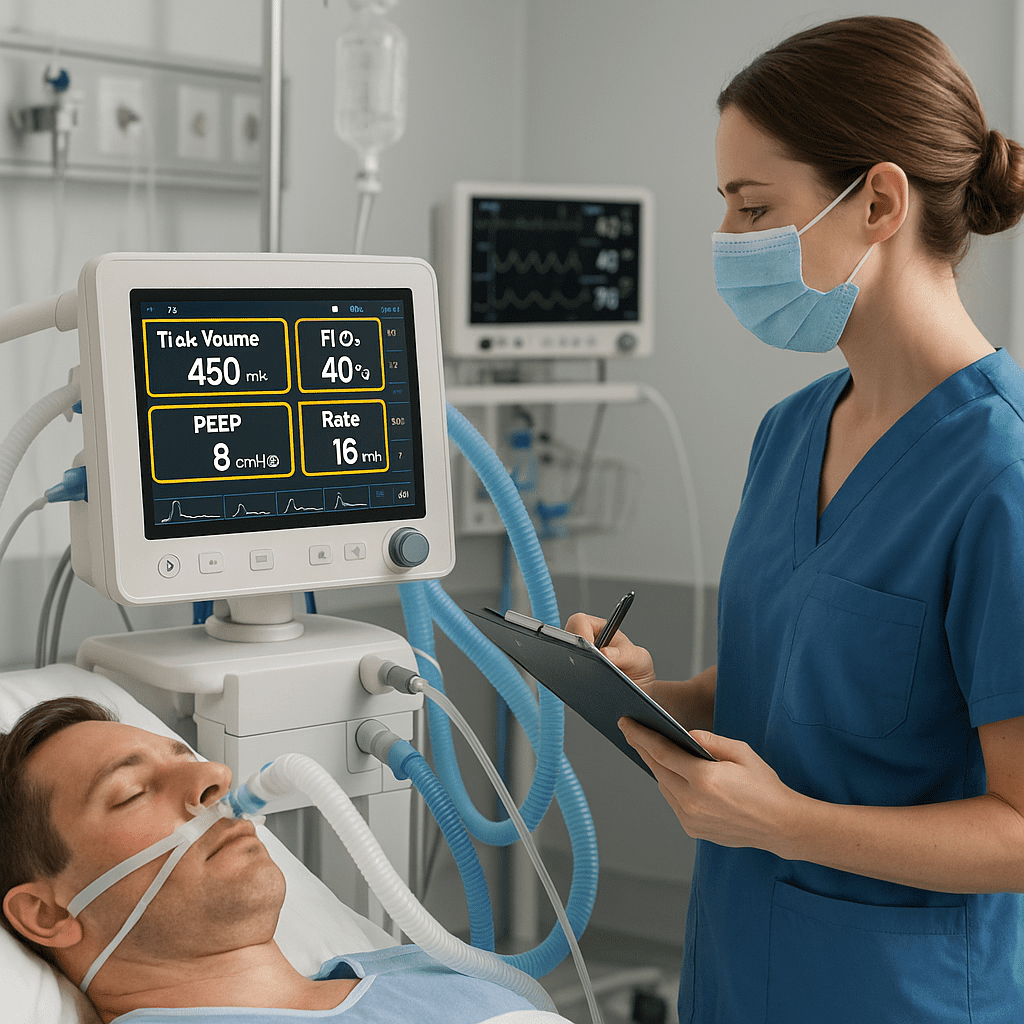
Master the ventilator settings every nurse must understand. This NCLEX-focused guide breaks down tidal volume, FiO₂, PEEP, and ventilation modes with simplified nursing notes.
Download nursing study guides & NCLEX prep bundles from RN-Nurse. Ideal for students & grads. Learn faster nursing courses for NCLEX prep.
Master the ventilator settings every nurse must understand. This NCLEX-focused guide breaks down tidal volume, FiO₂, PEEP, and ventilation modes with simplified nursing notes.
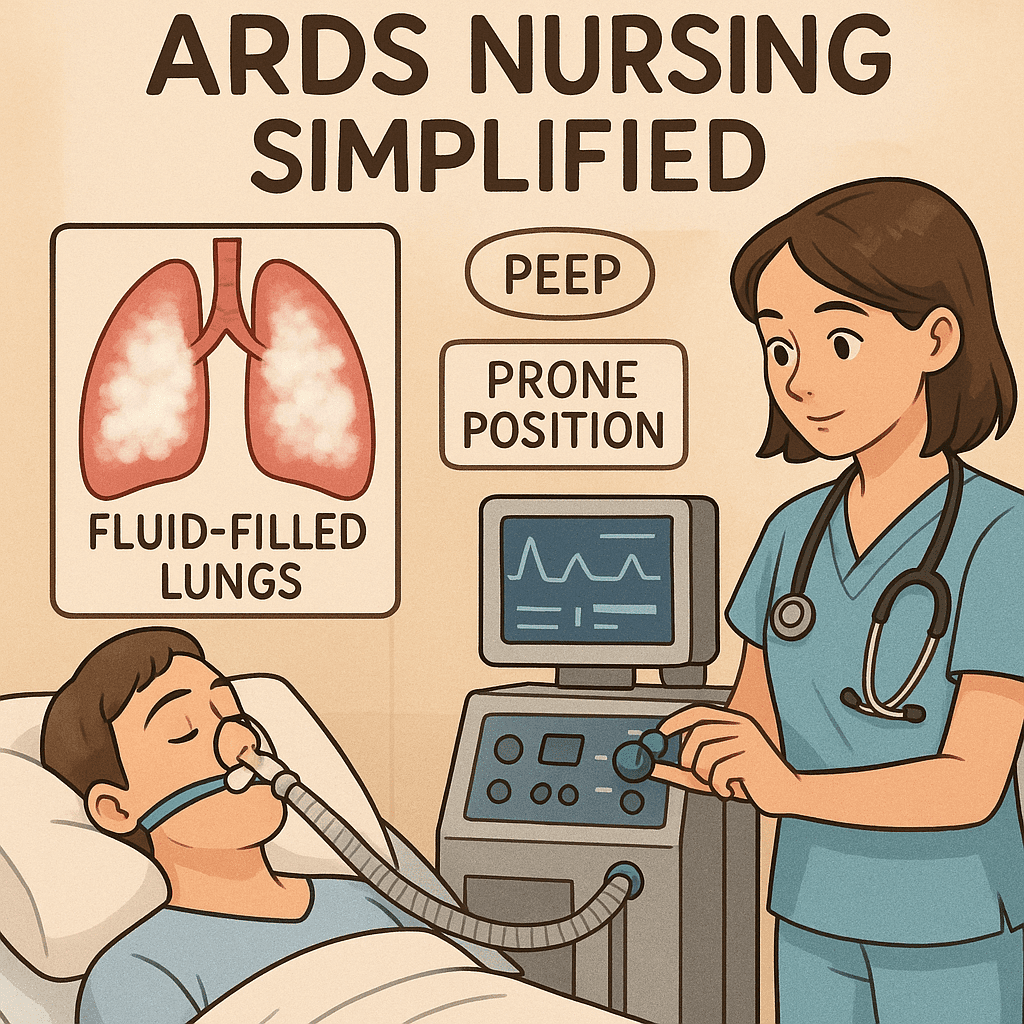
Acute Respiratory Distress Syndrome (ARDS) is one of the most critical respiratory conditions that every registered nurse (RN nurse) must understand. It’s not only a frequent cause of ICU admissions but also a high-yield topic on the NCLEX. For nursing students and practicing nurses, ARDS can seem overwhelming — but when broken down into simple … Read more

When a Code Blue is called, seconds can mean the difference between life and death. For every nurse, especially those preparing for the NCLEX or working as a registered nurse (RN nurse), the ability to quickly read and respond to an EKG rhythm is critical. Whether you’re in the ICU, ER, or on a med-surg … Read more
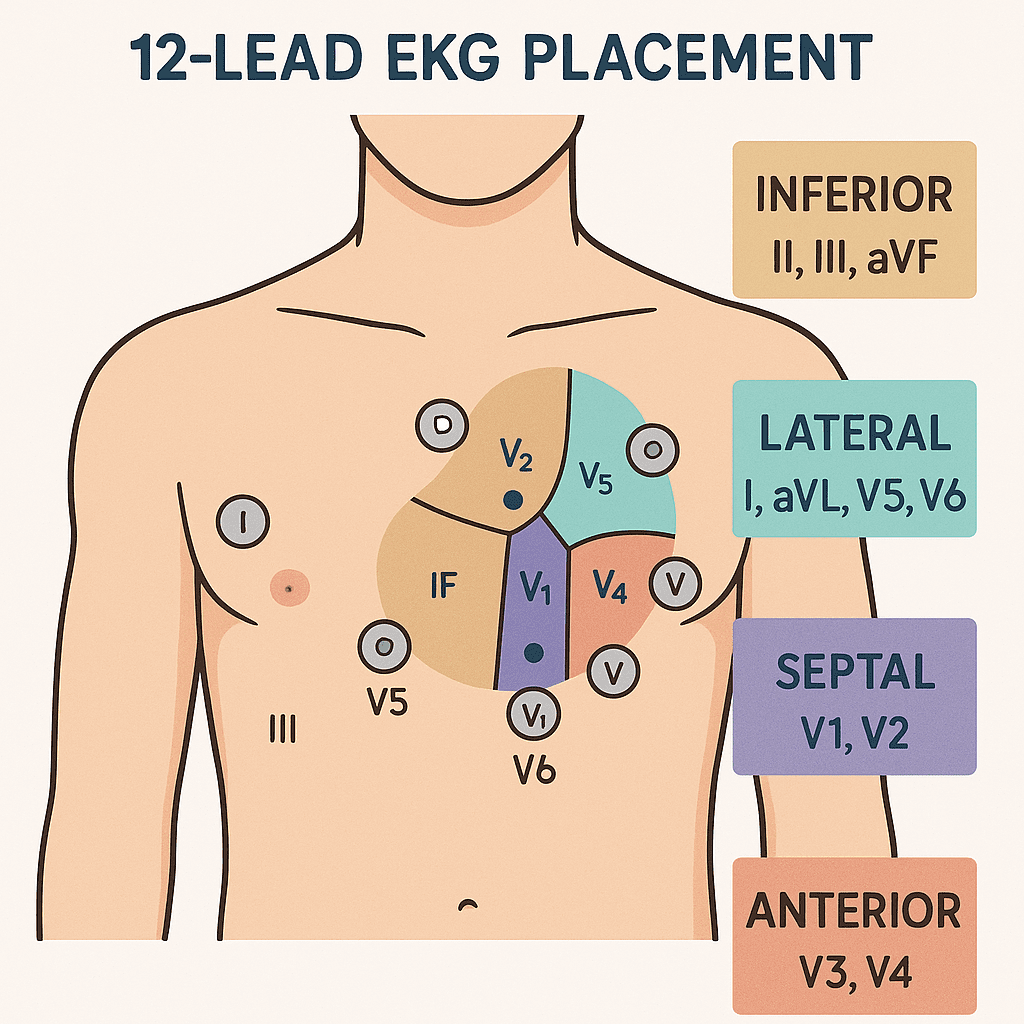
Electrocardiograms (EKGs) are one of the most tested skills on the NCLEX and a critical responsibility for every nurse and registered nurse (RN nurse) at the bedside. Understanding the 12-lead EKG and which lead corresponds to which part of the heart helps in recognizing ischemia, infarction, and arrhythmias early. For nursing students and graduates, this … Read more
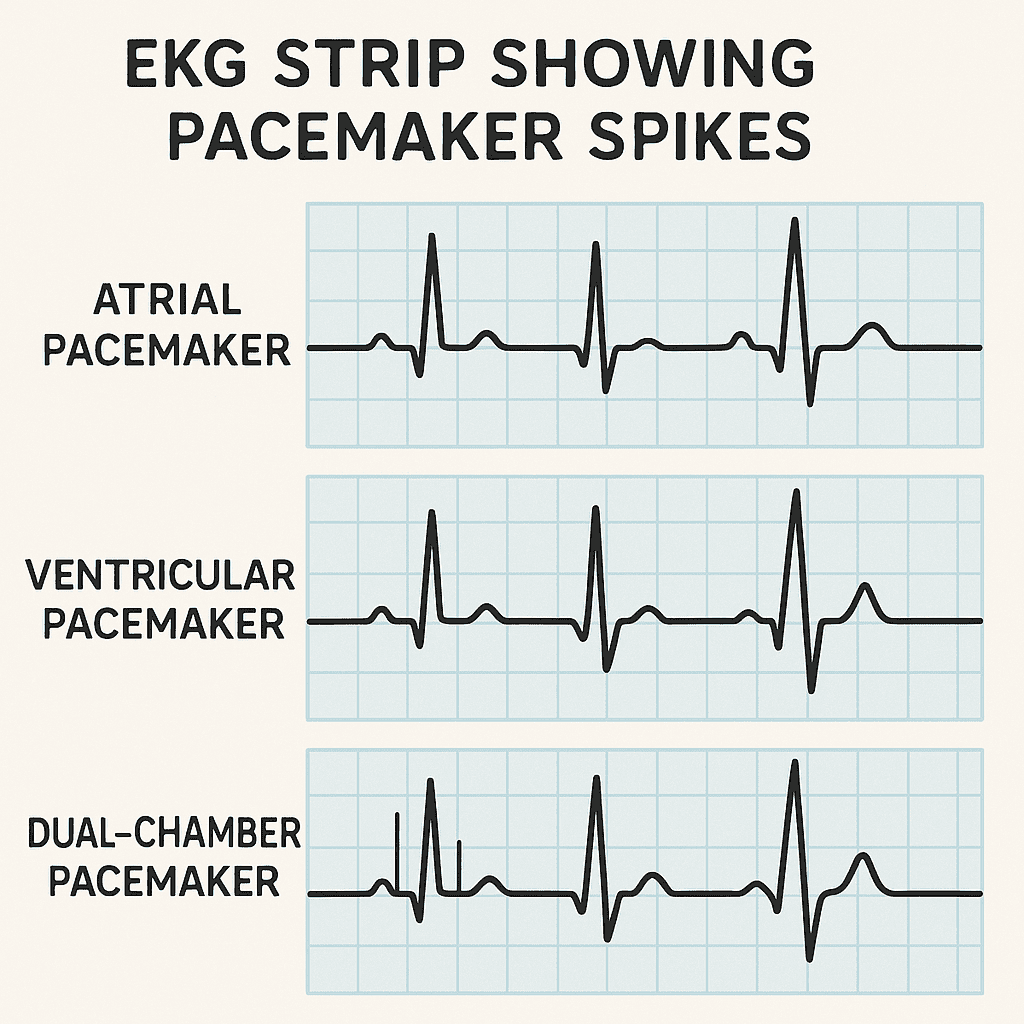
For nursing students preparing for the NCLEX and for every registered nurse (RN nurse) at the bedside, understanding pacemaker strips is a critical skill. Nurses often encounter patients with pacemakers in telemetry units, critical care, and even medical-surgical floors. Recognizing pacemaker spikes and providing the right nursing care ensures both patient safety and accurate documentation. … Read more

Electrocardiogram (EKG/ECG) interpretation is one of the most tested NCLEX topics. For a registered nurse (RN nurse), recognizing ST elevation vs ST depression can mean the difference between saving a life and missing a critical diagnosis. This guide breaks down the basics for nursing students, new graduates, and any nurse preparing for the NCLEX or … Read more
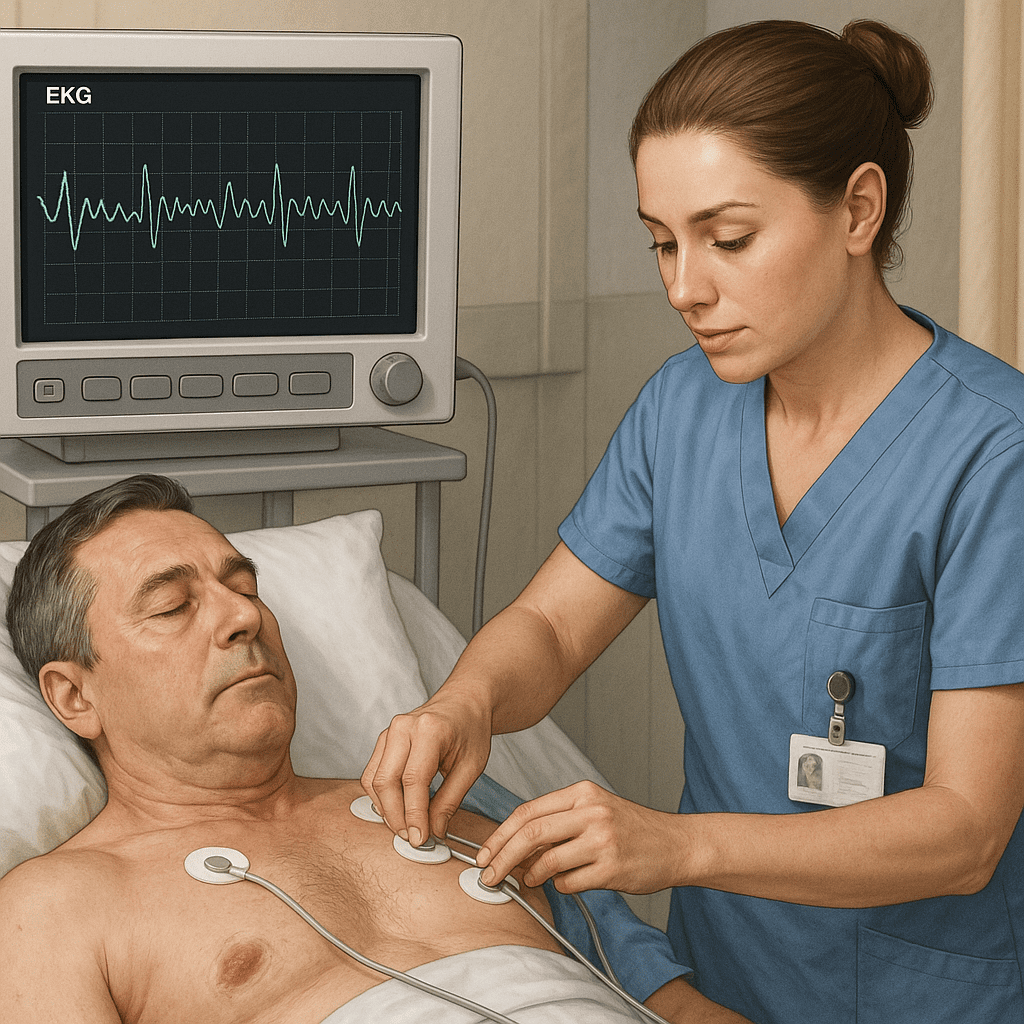
Electrocardiogram (EKG or ECG) interpretation is a critical skill for every RN nurse, registered nurse, and nursing student preparing for the NCLEX. While many EKG readings show real cardiac activity, sometimes unusual markings appear on the strip that are not caused by the patient’s heart. These are known as artifacts, and they can confuse both … Read more
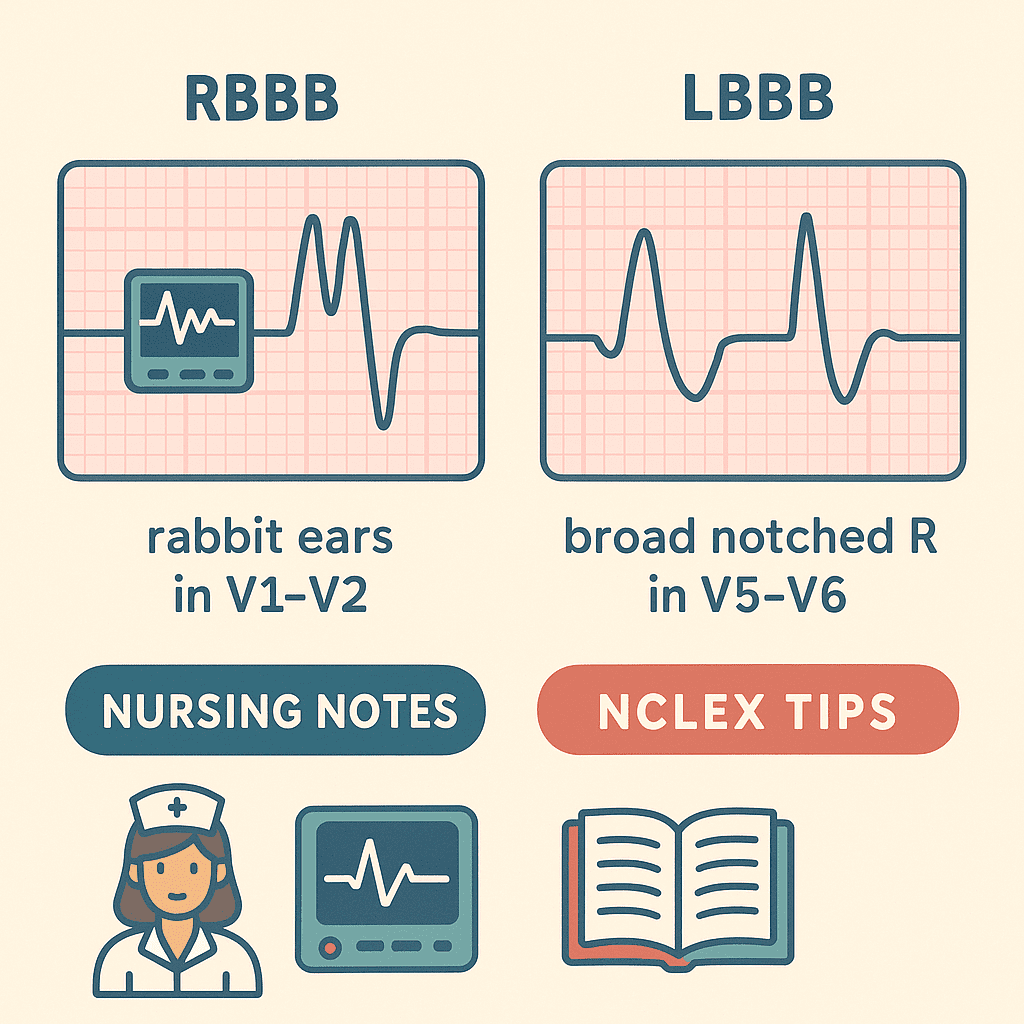
For every nurse preparing for the NCLEX, heart rhythm interpretation is a must-know skill. One of the trickier concepts is bundle branch blocks (BBBs). Whether you’re a registered nurse (RN nurse) or a student working through a nursing bundle, breaking down right and left bundle branch blocks into simple patterns makes them much easier to … Read more
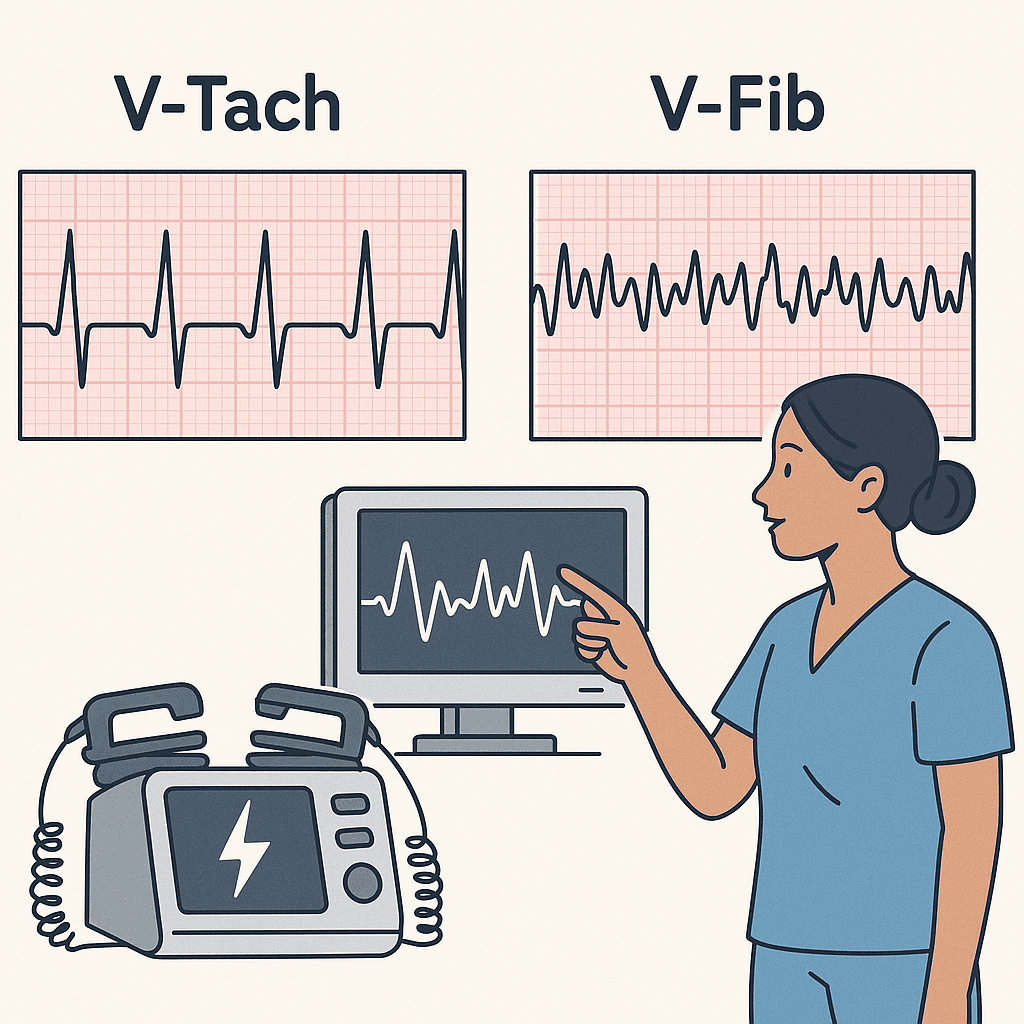
V-Tach vs V-Fib: How to Recognize and Respond For every nurse, RN nurse, or nursing student preparing for the NCLEX, cardiac arrhythmias are a must-know. Among the most critical are ventricular tachycardia (V-Tach) and ventricular fibrillation (V-Fib). Both rhythms can be life-threatening; therefore, a quick and accurate response is essential in both clinical practice and … Read more
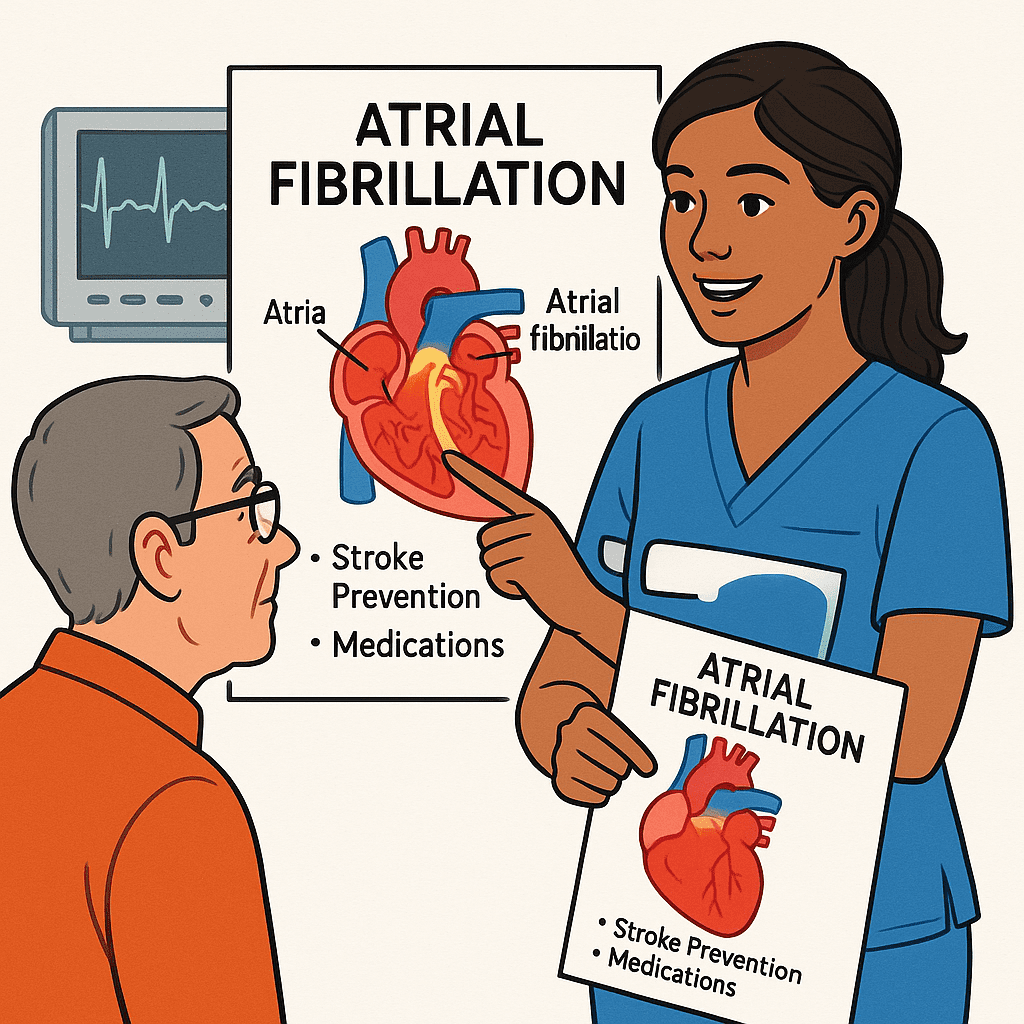
Atrial fibrillation (AFib) is one of the most common cardiac arrhythmias, and it’s a critical concept for every nurse and registered nurse (RN nurse) to understand—especially when preparing for the NCLEX. As AFib directly affects cardiac output and increases the risk of life-threatening complications, nursing students must master its assessment, medications, and interventions. This guide … Read more