Phosphate and Chloride: Essential Electrolytes
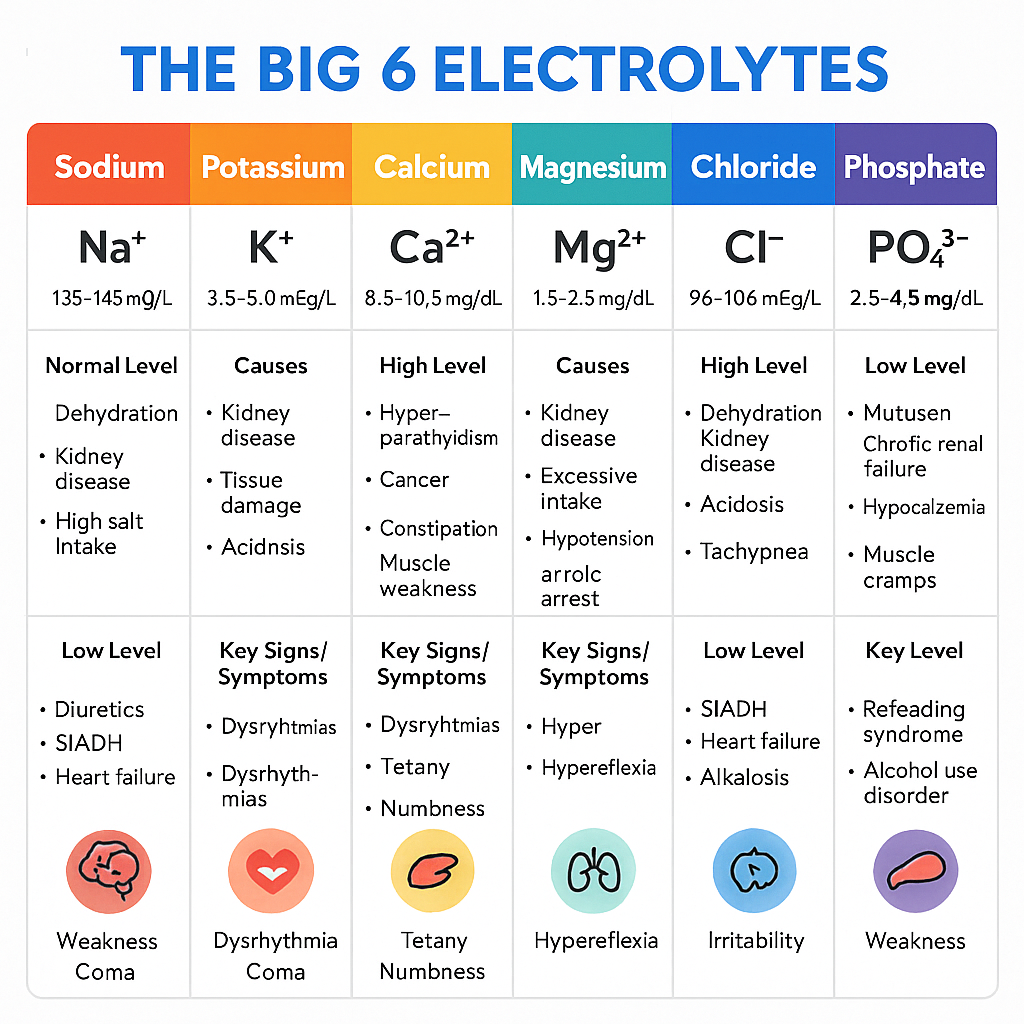
Phosphate and chloride may not get as much attention as sodium or potassium, but these electrolytes are crucial for metabolism, acid-base balance, and more.
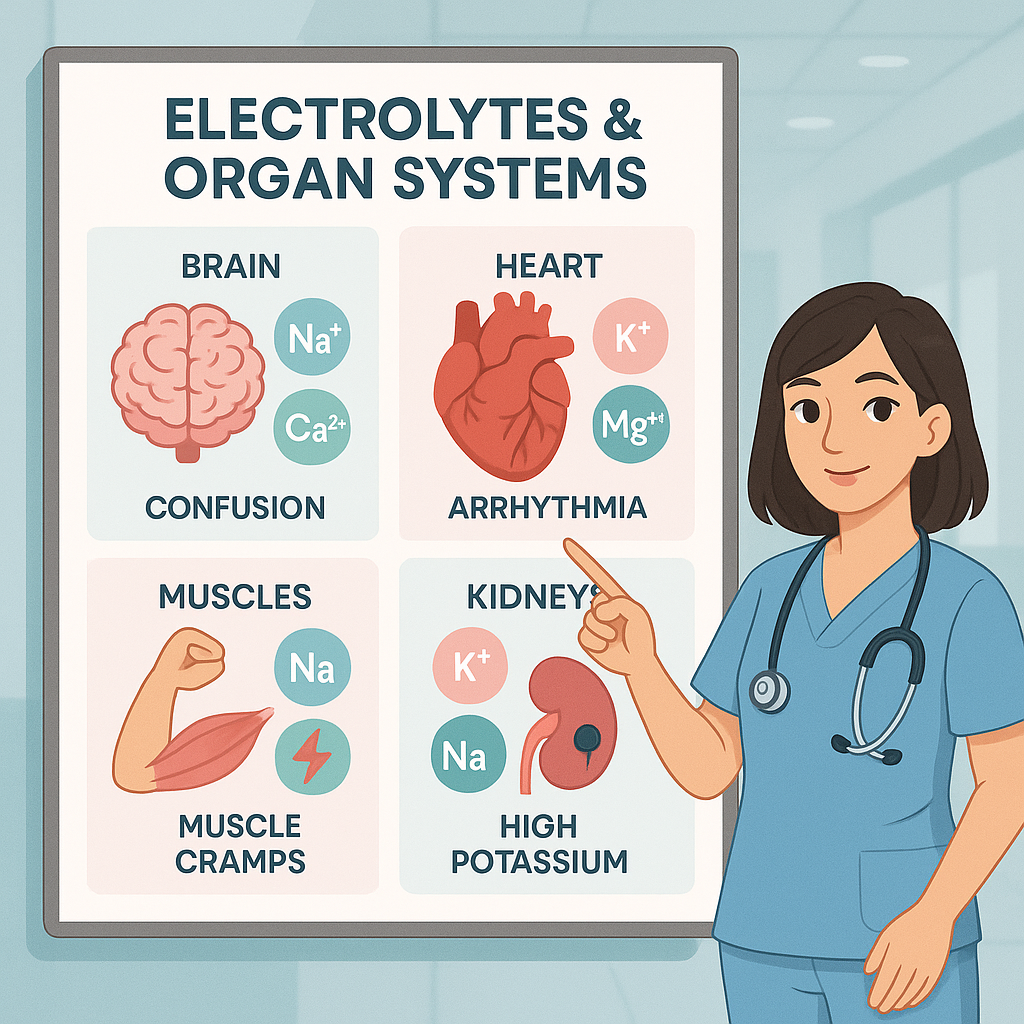
Visual cheat sheets for electrolyte imbalances—signs, symptoms, and nursing interventions in a simplified format.
Phosphate and chloride may not get as much attention as sodium or potassium, but these electrolytes are crucial for metabolism, acid-base balance, and more.
Get a quick and easy fluid and electrolyte cheat sheet for nurses. Learn the signs, labs, and nursing interventions to monitor when giving IV fluids.
Learn about the four key electrolytes—sodium, potassium, calcium, and magnesium. This guide covers normal ranges, signs, causes, and simple nursing actions.
Hypomagnesemia is more than a lab abnormality. In the ICU, low magnesium levels can lead to deadly heart rhythms, seizures, and more. Nurses must act fast.
Understand calcium imbalance in nursing. Learn how to identify and treat hypocalcemia and hypercalcemia with easy signs, causes, and nursing tips.
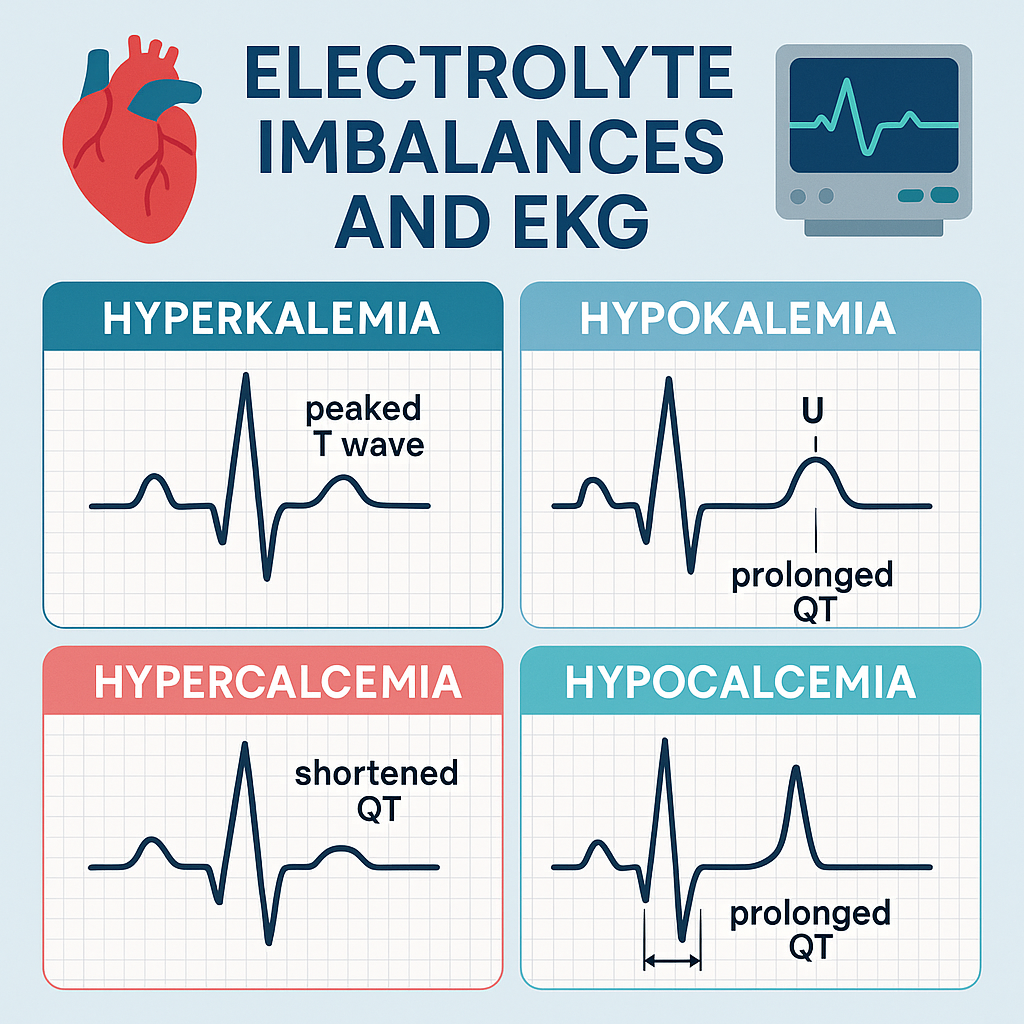
Understand the key differences between hypokalemia and hyperkalemia, including causes, EKG changes, and what nurses should do in emergencies.
What’s the difference between hyponatremia and hypernatremia? This easy guide explains signs, causes, and nursing actions to help patients recover safely.