Hypomagnesemia in the ICU: Why It Can Be Deadly
Hypomagnesemia is more than a lab abnormality. In the ICU, low magnesium levels can lead to deadly heart rhythms, seizures, and more. Nurses must act fast.
Understand calcium imbalance in nursing. Learn how to identify and treat hypocalcemia and hypercalcemia with easy signs, causes, and nursing tips.
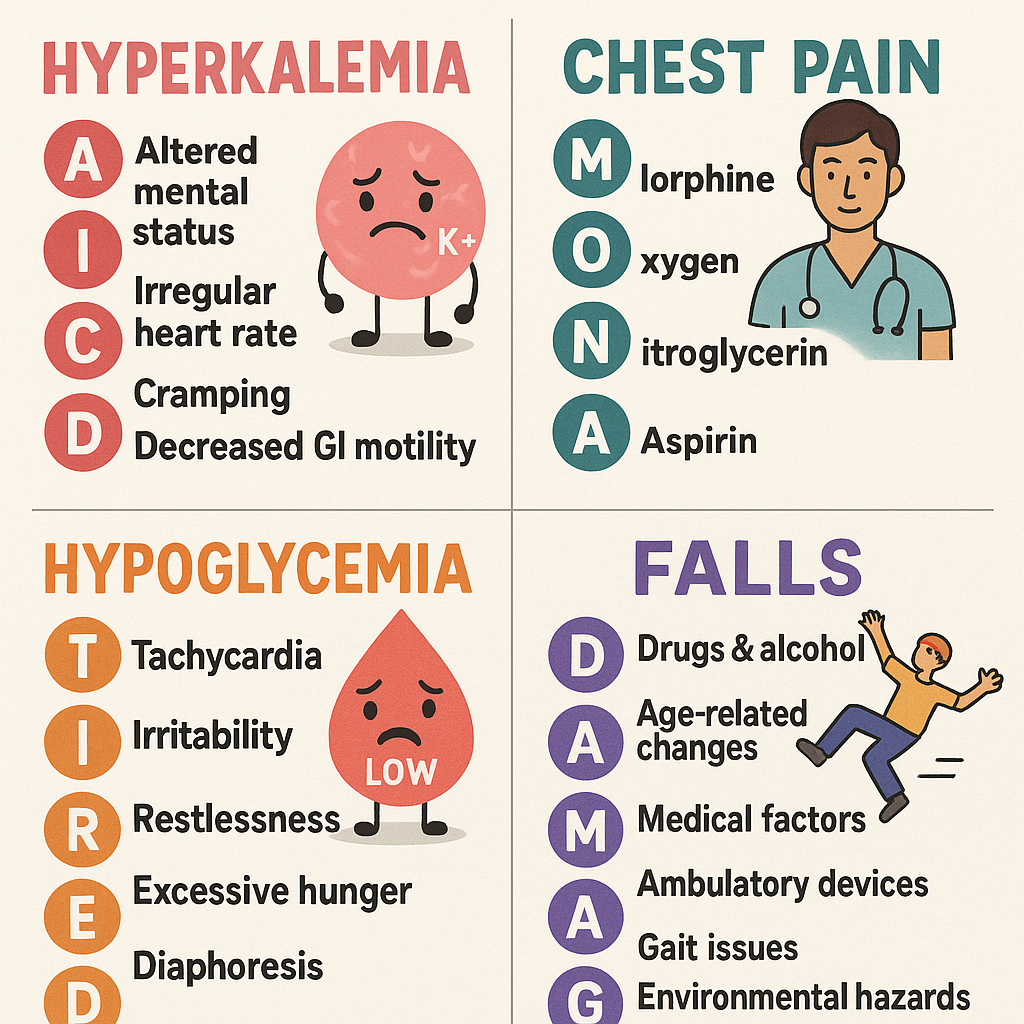
Understand the key differences between hypokalemia and hyperkalemia, including causes, EKG changes, and what nurses should do in emergencies.
What’s the difference between hyponatremia and hypernatremia? This easy guide explains signs, causes, and nursing actions to help patients recover safely.
Renal replacement therapy is life-saving for critically ill patients. This article guides ICU nurses on what to watch for during CRRT to ensure safe, effective care.
Discover how to recognize EKG changes in life-threatening conditions like STEMI, hyperkalemia, and pulmonary embolism. A fast reference guide for nurses and clinicians.
The ABCDE bundle is a powerful ICU strategy that helps nurses and teams prevent delirium, improve patient outcomes, and enhance recovery. Discover how it works.
Lactic acidosis is a serious complication in critically ill patients. Learn how to identify it, monitor lactate, and respond quickly to improve outcomes.
The first two minutes of a Code Blue can mean the difference between life and death. Here’s what every nurse should do immediately during a cardiac arrest.
Discover how nurses play a vital role in managing ARDS in the ICU. Learn key interventions, ventilator tips, and how to support patients and families.