
Introduction
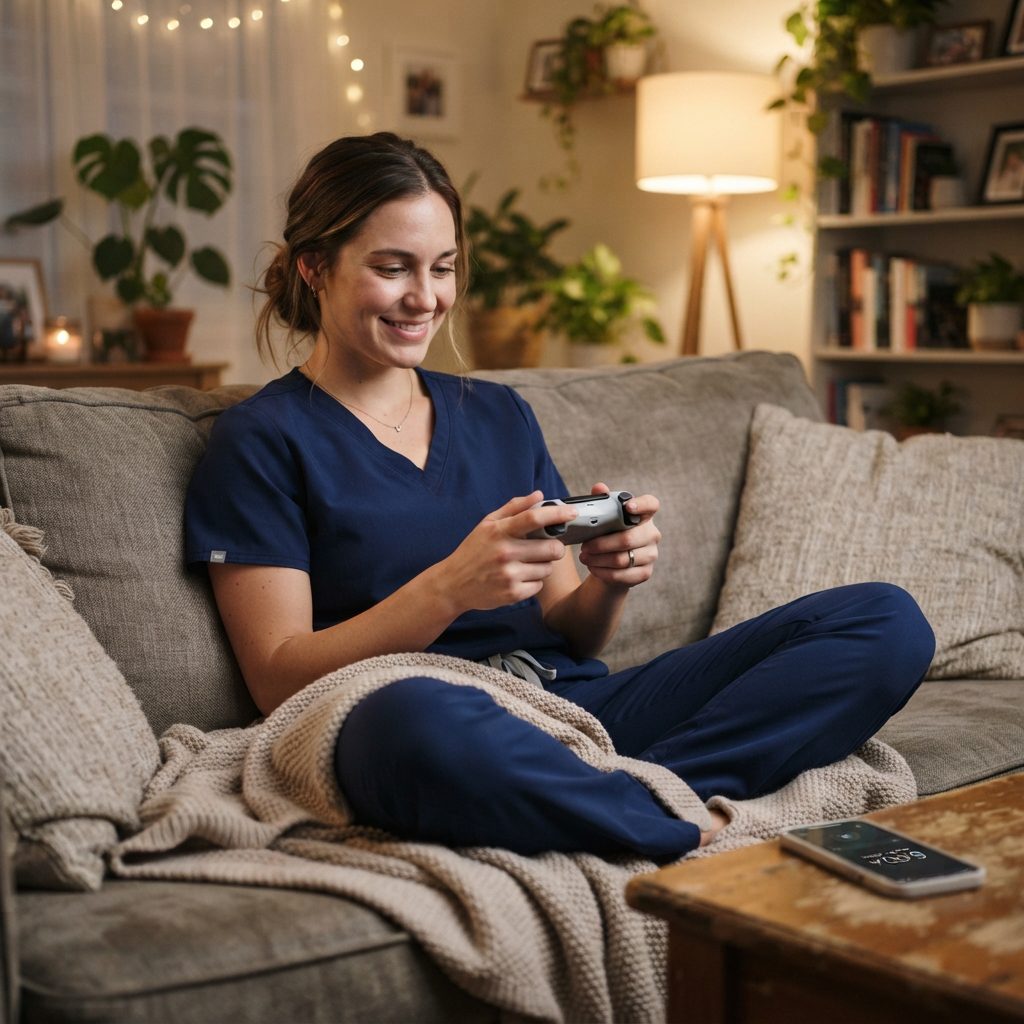
Grand Theft Auto VI is one of the most anticipated games in years. Rockstar plans to release it at midnight local time on November 19, 2026, for PlayStation 5 and Xbox Series X|S, and the game has no PC version at launch. Millions of players will stay up late to start it. Many of them work in healthcare. Nurses and nursing students game too, and a big launch can collide with night shifts, exam weeks, and the need for sleep. ForbesForbes
Launch week offers a useful moment to look at gaming in two ways. First, you are a player who wants to stay healthy. Second, you are a clinician who may meet patients and families with questions about gaming. This guide covers both, and it keeps the focus on health, not on the game itself.
This article is educational. It isn’t affiliated with Rockstar Games or Take-Two Interactive, and Grand Theft Auto is a trademark of its owners.
Table of Contents
- Launch Week Realities
- Protect Your Sleep First
- What Scheduling Guidance Says
- Your Launch Week Game Plan
- Care for Your Body While You Play
- Gaming and Stress Relief
- When Gaming Becomes a Problem
- Talking With Patients and Families
- NCLEX Tips and Memory Tricks
- Clinical Pearls
- Key Takeaways
- FAQs
- References
Launch Week Realities
Release times can surprise you. In the United States, storefronts treat the country as one release region based on Eastern time, so the game can unlock as early as 9 p.m. on the West Coast the night before. As a result, “midnight” may arrive earlier than you expect. If you work nights, check your platform’s unlock time and plan around your shift, not around the hype. Forbes
Protect Your Sleep First
Sleep matters more to nurses than to most workers, because tired nurses make more mistakes. Experts recommend at least seven hours of quality sleep each day, yet shift work and long hours often prevent it. Fatigue also has real patient safety effects. Nurse fatigue can lead to needlestick injuries, documentation errors, and medication errors. cdcvivian
The numbers add up quickly:
- Getting at least six hours of sleep appears to lower error risk, and guidance suggests seven to eight hours of sleep between shifts. wsna
- One review reported a moderate rise in attention lapses after a single 12-hour shift and a five-fold rise after three in a row. annamaria
- Most errors on a 12-hour shift happen during or just after the last two scheduled hours. nann
Still, the research isn’t perfectly consistent. A scoping review found mixed evidence on how shift length affects medication errors, although long hours and overtime predicted more fatigue. The safe takeaway is simple: don’t trade sleep for play before a shift. wiley
What Scheduling Guidance Says
Professional guidance gives clear limits. The ANA advises no more than three consecutive 12-hour shifts, no more than 12 hours in 24, and no more than 40 hours in seven days. It also advises at least 11 hours off between shifts and one to two days off after night shifts. Use those limits as your guide. A late-night gaming session that cuts into your required rest breaks the spirit of that guidance, even if your schedule looks fine on paper. nann
Your Launch Week Game Plan
| Situation | Smart Move |
|---|---|
| Working tonight | Skip the unlock. Play on a day off instead. |
| Just finished a night shift | Sleep first in a dark, quiet room. Play later in the day. |
| Day off tomorrow | Set a stop time, and protect seven or more hours of sleep. |
| Exam week | Wait until after the test. |
| Shifts in the next 24 hours | Keep your normal sleep window, and preload ahead of time. |
A few simple habits help:
- Set a firm stop time before you start
- Use a timer or console limit
- Keep the controller out of bed
- Avoid screens for 30 to 60 minutes before sleep
- Limit caffeine and energy drinks late in the day
- Plan one non-gaming activity with friends or family each week
Some research also explores scheduled naps for nurses on long shifts. A study of ICU nurses working 12-hour shifts reported less drowsiness with scheduled naps. Ask your unit about its fatigue policy before you try this. nih
Care for Your Body While You Play
Long sessions strain more than your sleep:
- Eyes: use the 20-20-20 rule. Every 20 minutes, look at something 20 feet away for 20 seconds
- Hands and wrists: take short breaks, stretch, and keep your wrists neutral
- Posture: sit with back support, and avoid hunching toward the screen
- Circulation: stand and walk every hour. Long, motionless sitting raises the risk of leg clots, although serious cases are rare (see our DVT guide)
- Hydration and food: keep water nearby, and eat real meals instead of only snacks
- Lighting: play in a lit room. Flashing lights can trigger seizures in a small number of people with photosensitive epilepsy, so anyone with a seizure history should ask their provider
Gaming and Stress Relief
Many nurses use games to unwind after hard shifts, and that’s valid. Games can offer a break, a sense of progress, and a way to connect with friends. However, gaming works best as one tool among several. It shouldn’t replace sleep, movement, time outdoors, or real conversations. In addition, if you notice that you play to avoid feelings that keep coming back, talk with a trusted colleague, your employee assistance program, or a mental health professional.
When Gaming Becomes a Problem
Heavy play isn’t automatically a disorder. The World Health Organization lists gaming disorder in ICD-11 under code 6C51. The diagnosis needs a specific pattern. It includes impaired control over gaming, giving gaming increasing priority over other activities, and continuing or escalating play despite negative consequences. The pattern normally lasts at least 12 months. A shorter period can be enough when all requirements are met and symptoms are severe. Identify The Early Warning Signs Of Gaming Addiction +3
Importantly, the criteria focus on loss of control, displaced priorities, harm, and functional impairment, not a set number of hours. Someone can play many hours and function well, while another person can play fewer hours and struggle. bmmc
Ask yourself or a patient these questions:
- Do I plan one hour and play four?
- Has gaming cost me sleep, school, work, or relationships?
- Have I tried to cut back and failed?
- Do I keep playing even when it causes problems?
Two or more “yes” answers over a long period deserve a conversation with a clinician. Screening tools can help, but they don’t diagnose.
Talking With Patients and Families
Nurses often meet teens and young adults who game heavily. Parents may also ask whether a mature-rated game like GTA is appropriate. You can help without lecturing.
Ask about function, not just hours:
- How much do you sleep on school or work nights?
- Does gaming cut into meals, homework, or friends?
- Do you feel irritable or anxious when you can’t play?
- Has anyone worried about your gaming?
- Do you spend money inside games?
- How is your mood, and do you feel supported?
Use screening tools when available. The Gaming Disorder Test is a brief four-item measure built around the ICD-11 model. The GADIS-A was developed to assess gaming disorder in adolescents. A positive screen means “refer for a fuller assessment,” not “diagnosis.” psychologybybogdanovanih
Offer practical advice to families:
- Check the age rating before buying a game
- Play together, or watch a session, to understand the content
- Set clear time limits and keep consoles out of bedrooms at night
- Protect sleep, school, meals, and activity first
- Talk about online safety, in-game spending, and respectful behavior
- Seek help if play causes distress, school problems, or withdrawal from family
Stay nonjudgmental. Teens often hide gaming problems if they expect blame. Therefore, start with curiosity, and listen first. Also screen for depression, anxiety, bullying, and substance use, since these often travel alongside gaming problems.
NCLEX Tips and Memory Tricks
- Gaming disorder needs three features plus impairment: impaired control, priority over other activities, and continued play despite harm.
- It’s about function, not hours.
- Sleep teaching: adults generally need seven or more hours, and consistent routines help.
- Screening ≠ diagnosis. A positive screen leads to referral.
- Use a nonjudgmental, open-ended approach with adolescents.
- Mnemonic — “CPC”: Control is lost, Priority shifts to gaming, Continued play despite consequences.
Clinical Pearls
- Ask about sleep first. Poor sleep often explains mood, attention, and school problems better than the game itself.
- Pay attention to what the patient does instead of gaming. Dropped activities and friends are more telling than playtime.
- Model healthy habits. A nurse who protects sleep and takes breaks teaches more than any handout.
Key Takeaways
- GTA VI launches November 19, 2026, so plan your sleep around your shifts before you plan your play.
- Fatigue raises the risk of nursing errors, and professional guidance sets clear limits on hours and rest.
- Gaming can relieve stress, but it works best alongside sleep, movement, and social connection.
- Gaming disorder means loss of control, displaced priorities, and continued harm, not just long playtime.
- Nurses can screen teens and families with open questions and validated tools, and refer when needed.
FAQs
Can nurses play video games without hurting their sleep?
Yes. Protect seven or more hours of sleep, avoid late sessions before shifts, set a stop time, and play on days off.
What is gaming disorder?
It is a pattern of impaired control over gaming, rising priority given to gaming, and continued play despite negative consequences. It normally lasts at least 12 months. nihmdpi
How much sleep do nurses need between shifts?
Guidance suggests seven to eight hours of sleep between shifts. The ANA also advises at least 11 hours off between shifts. wsnanann
How do nurses screen teens for gaming problems?
Ask open questions about sleep, mood, school, friends, and spending, and use a validated tool such as the Gaming Disorder Test or GADIS-A when appropriate. Refer positive screens for a fuller evaluation.
What should nurses tell parents about mature-rated games?
Check the age rating, play or watch together, set time limits, keep consoles out of bedrooms at night, and talk openly about content, online safety, and spending.
References
- Forbes (Nov 12, 2026) — GTA 6 Unlocks at Midnight on November 19 in Every U.S. Time Zone
- Forbes (Nov 16, 2026) — GTA VI Release Date and Time on PS5 and Xbox Series X
- World Health Organization — ICD-11 Gaming Disorder (6C51), as summarized in the Journal of Clinical Medicine (GADIS-A validation study)
- Psychology by Bogdanova — Gaming Disorder Screening: Questionnaires and Clinical Assessment
- CDC/NIOSH — Policy Brief: Nurse Fatigue, Sleep, and Health
- Wolters Kluwer/NANN — The Effect of Shift Work and Fatigue on Nurses (2026), summarizing ANA guidance
- Journal of Clinical Nursing (2023) — Fatigue in Nurses and Medication Administration Errors: A Scoping Review
- PMC — Scheduled Naps Improve Drowsiness and Quality of Nursing Care Among 12-Hour Shift Nurses
RELATED ARTICLES :