
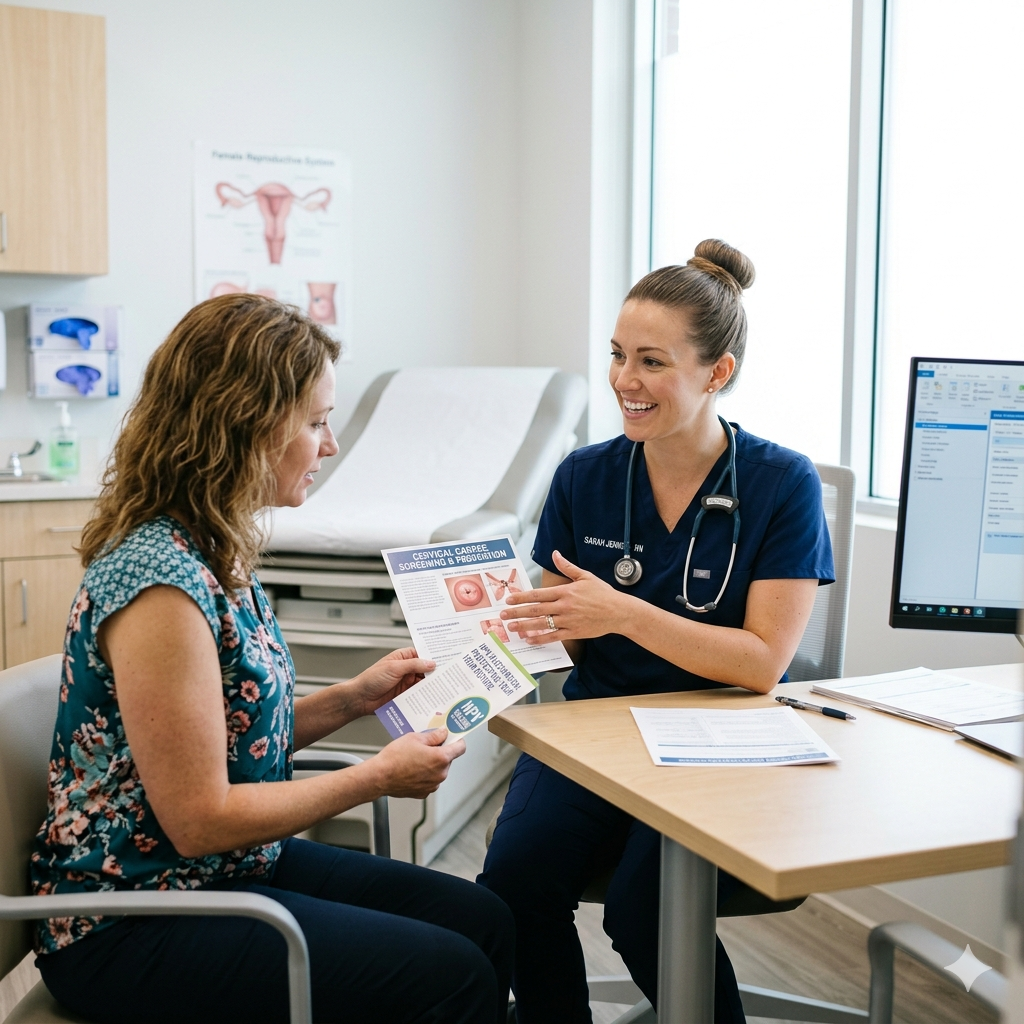
Human papillomavirus (HPV) is the most common sexually transmitted infection in the United States and the primary cause of cervical cancer worldwide. Every registered nurse and nursing student preparing for the NCLEX must understand the pathophysiology of HPV infection, the nurse’s role in prevention and early detection, and the clinical management of patients at risk. From vaccine administration to pap smear counseling, HPV cervical cancer nursing encompasses a critical continuum of care that saves lives. This article covers what every RN nurse needs to know — both at the bedside and on exam day.
What Is HPV and How Does It Cause Cervical Cancer?
Human papillomavirus is a double-stranded DNA virus with over 200 known genotypes. Of these, approximately 40 subtypes are transmitted sexually and affect the genital tract. Genotypes are broadly classified as:
- Low-risk types (e.g., HPV 6, 11): Cause genital warts (condylomata acuminata) but rarely lead to malignancy
- High-risk types (e.g., HPV 16, 18): Responsible for approximately 70% of all cervical cancers; also linked to oropharyngeal, anal, vulvar, vaginal, and penile cancers
When high-risk HPV infects cervical epithelial cells, it integrates its DNA into the host genome. The viral proteins E6 and E7 inactivate tumor suppressor proteins p53 and Rb respectively, disrupting normal cell cycle regulation. This leads to uncontrolled cellular proliferation, producing cervical intraepithelial neoplasia (CIN) — precancerous changes that, if untreated, may progress to invasive cervical carcinoma over 10–20 years.
Understanding this mechanism is foundational for nursing students because the NCLEX frequently tests the relationship between HPV transmission, oncogenesis, and the timing of screening interventions.
HPV Vaccination: The Nurse’s Role in Primary Prevention
Vaccination is the most effective primary prevention strategy against HPV-related disease. The recombinant HPV vaccine (Gardasil 9) is currently the only HPV vaccine available in the United States. It protects against nine HPV types: 6, 11, 16, 18, 31, 33, 45, 52, and 58 — covering approximately 90% of cervical cancers.
Current CDC Advisory Committee on Immunization Practices (ACIP) recommendations:
| Population | Schedule |
|---|---|
| Ages 9–12 (routine) | 2-dose series (0, 6–12 months) |
| Ages 13–26 (catch-up) | 2-dose series if started before age 15; 3-dose if started at 15 or older |
| Ages 27–45 (shared decision-making) | 3-dose series after discussion with provider |
| Immunocompromised individuals | 3-dose series regardless of age at initiation |
As a registered nurse or RN nurse in any outpatient, school health, or clinic setting, you are a frontline vaccine advocate. Nursing interventions include:
- Assessing vaccination history at every preventive care visit
- Counseling patients and parents that the vaccine does not protect against existing HPV infections — emphasizing the importance of administering it before sexual debut
- Monitoring patients for 15 minutes post-injection for syncope, particularly in adolescents
- Documenting administration in the appropriate immunization registry
This content appears frequently in NCLEX pharmacology and public health questions, making it an essential component of any nursing bundle review.
Cervical Cancer Screening: Pap Smear and HPV Co-Testing
Secondary prevention relies on regular cervical cancer screening to detect precancerous lesions before they progress to invasive disease. The two main screening tools are the Papanicolaou (Pap) smear and HPV co-testing.
Current American Cancer Society Screening Guidelines (2020):
| Age Group | Recommended Screening |
|---|---|
| Under 25 | No routine screening |
| 25–65 | Primary HPV test every 5 years (preferred); Pap + HPV co-test every 5 years (acceptable); Pap alone every 3 years (acceptable) |
| Over 65 | Discontinue if adequate prior screening and no high-grade history |
| Post-hysterectomy (no cervix, no history of CIN 2+) | No routine screening |
The RN nurse plays a pivotal role in patient education around screening. Common patient misconceptions include the belief that a hysterectomy eliminates the need for all screening, or that being in a monogamous relationship removes HPV risk. Nurses must deliver accurate, non-judgmental information, particularly to patients with limited health literacy.
Abnormal Pap smear results are graded using the Bethesda System. Key findings the nurse should understand:
- ASCUS (Atypical Squamous Cells of Undetermined Significance): Reflex HPV testing recommended
- LSIL (Low-grade Squamous Intraepithelial Lesion): Often correlates with CIN 1
- HSIL (High-grade Squamous Intraepithelial Lesion): Correlates with CIN 2 or CIN 3 — requires colposcopy
- Cervical adenocarcinoma in situ (AIS): Requires immediate colposcopy and biopsy
Nursing Assessment: Recognizing Clinical Presentations
Most HPV infections are asymptomatic and resolve spontaneously within 1–2 years. However, persistent high-risk HPV infections may produce symptoms that prompt a nursing assessment:
Genital warts (low-risk HPV):
- Soft, flesh-colored, cauliflower-like growths on the vulva, vagina, cervix, penis, anus, or oropharynx
- Often painless but may cause itching, burning, or bleeding
Cervical cancer (late-stage):
- Abnormal vaginal bleeding — especially post-coital bleeding or bleeding between menstrual periods
- Watery or foul-smelling vaginal discharge
- Pelvic pain or pain during intercourse (dyspareunia)
- Hematuria or rectal bleeding if the tumor invades adjacent structures (advanced disease)
The registered nurse must recognize that early cervical cancer is often clinically silent, reinforcing the critical role of screening. During assessment, use therapeutic communication to create a safe, non-stigmatizing environment. Patients may feel shame or anxiety about an STI diagnosis; the nursing approach should be empathetic, factual, and supportive.
Medical and Surgical Management: Nursing Implications
When precancerous or cancerous cervical lesions are detected, management depends on the severity of findings. The RN nurse must be familiar with these interventions to provide appropriate pre- and post-procedure care.
Management of Precancerous Lesions (CIN):
- Observation/surveillance: CIN 1 often regresses spontaneously; close follow-up with repeat testing in 1–2 years
- LEEP (Loop Electrosurgical Excision Procedure): Removes abnormal cervical tissue using a thin wire loop and electrical current — most common outpatient treatment for CIN 2/3
- Cryotherapy: Freezes and destroys abnormal tissue; less commonly used for CIN 2/3
- Cold knife conization (cone biopsy): Surgical removal of a cone-shaped tissue sample; used when LEEP margins are inadequate
Post-LEEP nursing education:
- Expect mild cramping and a watery, bloody discharge for 2–4 weeks
- Avoid tampons, intercourse, and swimming for 4 weeks
- Report heavy bleeding (soaking more than one pad per hour), fever, or foul-smelling discharge immediately
- Adhere to follow-up Pap smear schedule at 6 months
Management of Invasive Cervical Cancer:
Treatment is staged using the FIGO classification and may include:
- Radical hysterectomy with lymph node dissection (early-stage)
- Radiation therapy — external beam + brachytherapy
- Concurrent cisplatin-based chemotherapy with radiation (chemoradiation) for locally advanced disease
- Systemic chemotherapy ± bevacizumab for recurrent or metastatic disease
Nursing care across these modalities involves managing treatment-related side effects, providing emotional support, coordinating with the oncology team, and facilitating palliative care discussions when appropriate.
💡 NCLEX Tips for HPV Cervical Cancer Nursing
- The HPV vaccine does not treat existing infections — it must be given before exposure to be effective. Expect NCLEX to test this distinction.
- Post-coital bleeding is a hallmark early symptom of cervical cancer — prioritize this finding in any clinical scenario.
- A patient who had a total hysterectomy for cervical cancer still requires vaginal cuff screening (vault smear) — routine screening stops only when the cervix is removed for a benign reason.
- LEEP post-procedure discharge is expected for 2–4 weeks. Educate the patient that heavy bleeding or fever requires immediate reporting.
- Immunocompromised patients (HIV-positive, transplant recipients) are at significantly higher risk for persistent HPV infection and require more frequent screening — NCLEX will test this.
Patient Education and Health Promotion: The Nurse’s Core Responsibility
Health promotion is at the heart of HPV cervical cancer nursing. The registered nurse is uniquely positioned to reduce disease burden through community education, individualized counseling, and advocacy for preventive services.
Key patient education topics:
- Vaccination: Clarify that the vaccine is safe, does not cause HPV, and is recommended for males as well as females to reduce community transmission
- Safer sex practices: Consistent condom use reduces — but does not eliminate — HPV transmission
- Tobacco cessation: Smoking impairs local cervical immunity and significantly increases the risk of HPV persistence and cervical cancer progression
- Adherence to screening: Emphasize that screening is recommended even when a patient feels healthy, as early cervical cancer produces no symptoms
- Partner notification: Sensitive but necessary — nurses should provide resources for partner counseling
Nurses who incorporate these topics into routine well-woman visits, school health programs, and community clinics contribute directly to reducing cervical cancer incidence. The nursing bundle framework supports this approach by integrating prevention, education, and surveillance into every patient encounter.
Conclusion
HPV infection and cervical cancer prevention represent one of the great success stories of modern nursing and public health — when screening and vaccination are applied consistently, invasive cervical cancer is largely preventable. Every RN nurse and nursing student must be fluent in the vaccine schedule, screening guidelines, clinical presentations of cervical pathology, and the nursing care required across the continuum from prevention to treatment.
For NCLEX preparation, focus on recognizing abnormal findings that require escalation, understanding the rationale behind screening intervals, and applying patient education principles to realistic clinical scenarios. Strengthen your knowledge further by exploring the nursing bundle resources and NCLEX practice questions at rn-nurse.com/nclex-qcm/, or browse the full library of nursing courses at rn-nurse.com/nursing-courses/.