
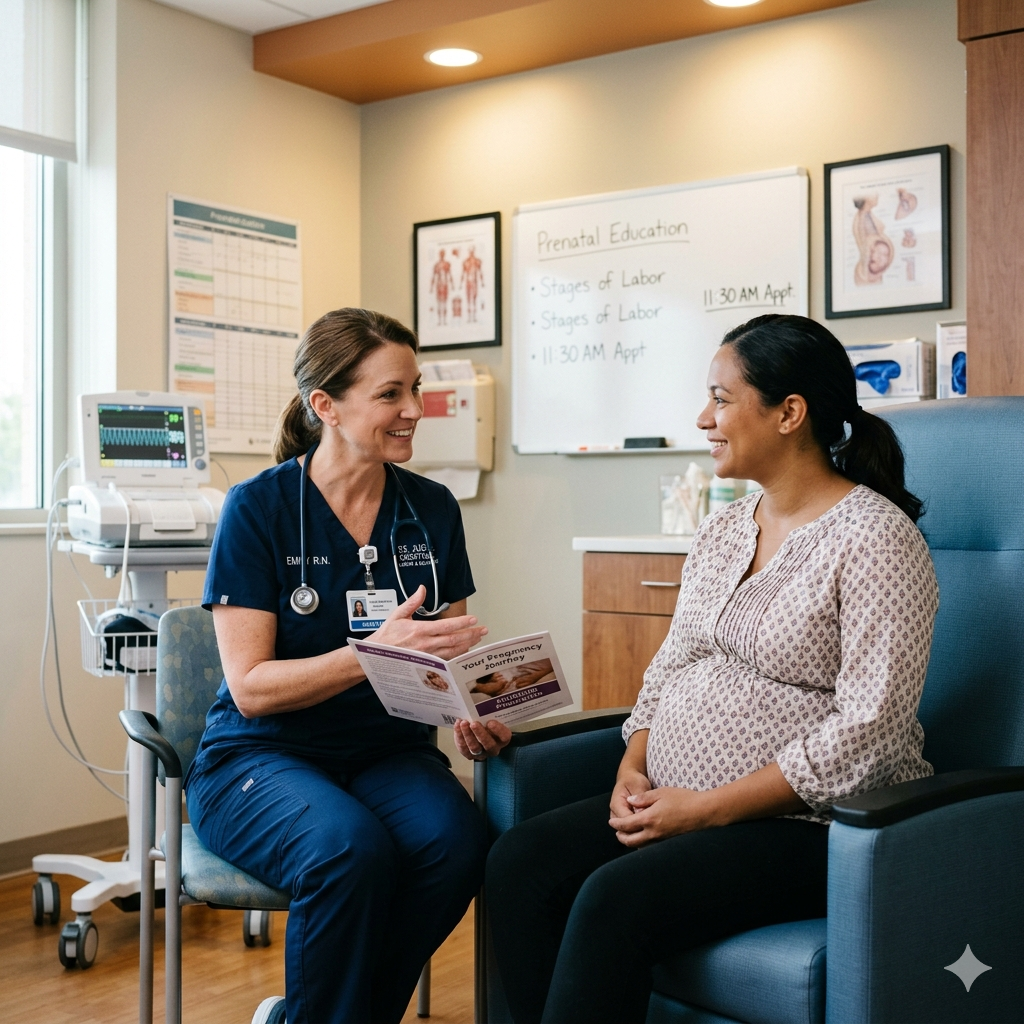
Pregnancy transforms every system of the body — and reproductive and sexual health are no exception. For the registered nurse working in labor and delivery, antepartum care, or women’s health, understanding sexual health changes during pregnancy is essential for delivering patient-centered education and holistic care. These changes are frequently misunderstood by patients, and nurses are uniquely positioned to normalize, explain, and guide. For nursing students preparing for the NCLEX, this topic appears within OB/Maternity content and requires both clinical accuracy and sensitivity in communication.
Why Sexual Health Matters in OB/Maternity Nursing
Sexual health encompasses physical, emotional, and relational well-being — and all three dimensions shift significantly during pregnancy. Patients often hesitate to bring up concerns about intimacy, libido, discomfort, or body image, making it the nurse’s role to proactively open the conversation.
As a registered nurse in an OB setting, recognizing normal physiologic changes versus signs requiring clinical intervention is a core competency. Many patients assume changes in desire, vaginal discharge, or pelvic discomfort are signs of pathology, when in fact they reflect normal hormonal and anatomical adaptation.
From an NCLEX perspective, sexual health questions in OB/Maternity are typically framed around patient teaching, safe practices, and recognizing contraindications to sexual activity during pregnancy. A solid nursing bundle in OB content should cover these trimester-specific changes in detail.
First Trimester: Hormonal Surge and Fatigue
The first trimester (weeks 1–13) is dominated by a rapid rise in human chorionic gonadotropin (hCG) and progesterone, which drive the most recognized early pregnancy symptoms: nausea, vomiting, breast tenderness, and profound fatigue.
Libido during the first trimester is highly variable. Many patients experience a decreased interest in sexual activity due to:
- Nausea and vomiting (affecting up to 80% of pregnant individuals)
- Extreme fatigue from rising progesterone levels
- Heightened breast sensitivity that makes touch uncomfortable
- Anxiety and emotional adjustment to the pregnancy
Conversely, some patients report no change or even an increase in sexual desire, which is equally normal.
Vaginal changes begin early. Increased blood flow to the pelvic region causes vaginal congestion, making the tissues fuller and more sensitive. Leukorrhea — a thin, white, odorless vaginal discharge — increases due to elevated estrogen and cervical gland activity. Nurses must teach patients to distinguish normal leukorrhea from signs of infection such as a foul odor, yellow-green color, or associated pruritus.
Key nursing teaching point: Sexual activity is generally safe in uncomplicated pregnancies throughout the first trimester. Nurses should reassure patients that sexual intercourse does not harm the fetus, which is protected by the amniotic sac, uterine wall, and mucus plug.
Second Trimester: Increased Libido and Physical Changes
The second trimester (weeks 14–27) is often described as the most comfortable period of pregnancy — and this frequently extends to sexual health. As nausea subsides and energy returns, many patients experience a notable increase in sexual desire.
Physiologic reasons include:
- Increased genital blood flow — the labia, clitoris, and vaginal walls remain engorged, heightening sensitivity and arousal
- Reduced anxiety as the risk of miscarriage decreases significantly
- Improved energy levels and reduced nausea
- Body confidence as the pregnancy becomes more visible and accepted
Orgasm may feel more intense due to increased pelvic vascularity. However, some patients notice Braxton Hicks contractions following orgasm, which are generally harmless in uncomplicated pregnancies. The RN nurse should educate patients that these contractions are normal and temporary but should be reported if they become regular, painful, or associated with other symptoms.
Vaginal lubrication increases during the second trimester due to estrogen stimulation. Some patients may experience spotting after intercourse due to cervical sensitivity — a common concern that the nurse must address calmly. Light spotting post-coitus is often benign, but persistent bleeding, pain, or cramping warrants prompt assessment.
Body image becomes a growing consideration. Nurses should approach this with therapeutic communication, acknowledging that changes in physical appearance affect intimacy differently for each patient and partner.
Third Trimester: Discomfort, Positioning, and Precautions
The third trimester (weeks 28–40+) introduces new physical challenges that directly affect sexual comfort and activity. The growing uterus alters center of gravity, compresses pelvic structures, and creates positional limitations.
Common patient concerns in the third trimester include:
- Pelvic pressure and round ligament pain — sharp, stabbing pain with movement that can interrupt intimacy
- Backache and difficulty finding comfortable positions
- Increased Braxton Hicks contractions following sexual activity
- Decreased libido as discomfort, anxiety about labor, and fatigue increase
- Urinary frequency and stress incontinence that affect confidence
Positional adaptations are an important part of nursing education. The supine position should be avoided after 20 weeks due to the risk of aortocaval compression — the gravid uterus compresses the inferior vena cava, reducing venous return and causing supine hypotensive syndrome. Side-lying, rear-entry, or patient-on-top positions reduce uterine pressure and improve comfort.
Nipple stimulation during intimacy can trigger oxytocin release, which may stimulate uterine contractions. In low-risk pregnancies this is generally not harmful, but in patients at risk for preterm labor, this should be avoided and addressed in nursing education.
💡 NCLEX Tips: Sexual Health Changes During Pregnancy
- Leukorrhea is normal throughout pregnancy; teach patients to distinguish it from signs of infection (odor, color change, itching)
- Avoid the supine position during sexual activity after 20 weeks due to aortocaval compression risk
- Braxton Hicks contractions after orgasm are common and generally benign in uncomplicated pregnancies — teach patients when to report contractions (regular, increasing frequency, associated bleeding)
- Nipple stimulation may trigger oxytocin release — use with caution in patients at risk for preterm labor
- Sexual activity is contraindicated in: placenta previa, premature rupture of membranes (PROM), active vaginal bleeding, incompetent cervix, or history of preterm labor
Contraindications to Sexual Activity During Pregnancy
While sexual activity is safe for most pregnant patients, registered nurses must be able to identify and clearly communicate contraindications. This is a high-yield area for NCLEX OB/Maternity questions.
Absolute contraindications include:
| Condition | Rationale |
|---|---|
| Placenta previa | Risk of hemorrhage with cervical stimulation |
| Premature rupture of membranes (PROM) | Ascending infection risk with ruptured membranes |
| Active vaginal bleeding | May indicate placental abruption or other pathology |
| Incompetent (insufficiently dilated) cervix | Increased risk of preterm delivery |
| History of preterm labor (current pregnancy) | Prostaglandins in semen and oxytocin from orgasm may stimulate labor |
| Multiple gestation (with other risk factors) | Individualized — discuss with provider |
The RN nurse must deliver this information without judgment, emphasizing that these restrictions are temporary, protective, and clinically indicated. Framing contraindications within patient education rather than prohibition supports therapeutic communication and patient autonomy.
Nursing Assessment and Communication Strategies
Sexual health is a topic many patients will not raise independently. The nurse must create an environment where the patient feels safe to ask questions by integrating sexual health into routine antepartum assessments.
Effective strategies include:
- Using open-ended, non-judgmental language: “Many patients have questions about intimacy during pregnancy — is that something you’d like to discuss?”
- Documenting patient education provided related to sexual activity, contraindications, and positional changes
- Including partners in education when the patient consents, as partners frequently harbor unfounded fears about harming the fetus
- Referring to certified nurse-midwives or OB providers for complex concerns such as dyspareunia, pelvic girdle pain, or history of sexual trauma
For nursing students, a comprehensive nursing bundle covering OB/Maternity content should include sexual health as a component of holistic antepartum care — not a peripheral topic. The NCLEX tests the ability to apply patient teaching principles, recognize contraindications, and prioritize safety.
Conclusion
Sexual health changes during pregnancy unfold across all three trimesters, shaped by hormonal shifts, anatomical growth, and psychological adaptation. The registered nurse who understands these changes — from first-trimester libido fluctuations to third-trimester positioning precautions — is better equipped to deliver compassionate, evidence-based patient education.
For NCLEX success, focus on the contraindications to sexual activity, the physiologic basis for trimester-specific changes, and the nursing role in patient teaching and assessment. These are recurring themes in OB/Maternity questions and reflect real-world RN nurse competencies.
Strengthen your OB/Maternity knowledge with targeted practice at rn-nurse.com/nclex-qcm/ or explore the full nursing bundle and clinical courses at rn-nurse.com/nursing-courses/.