
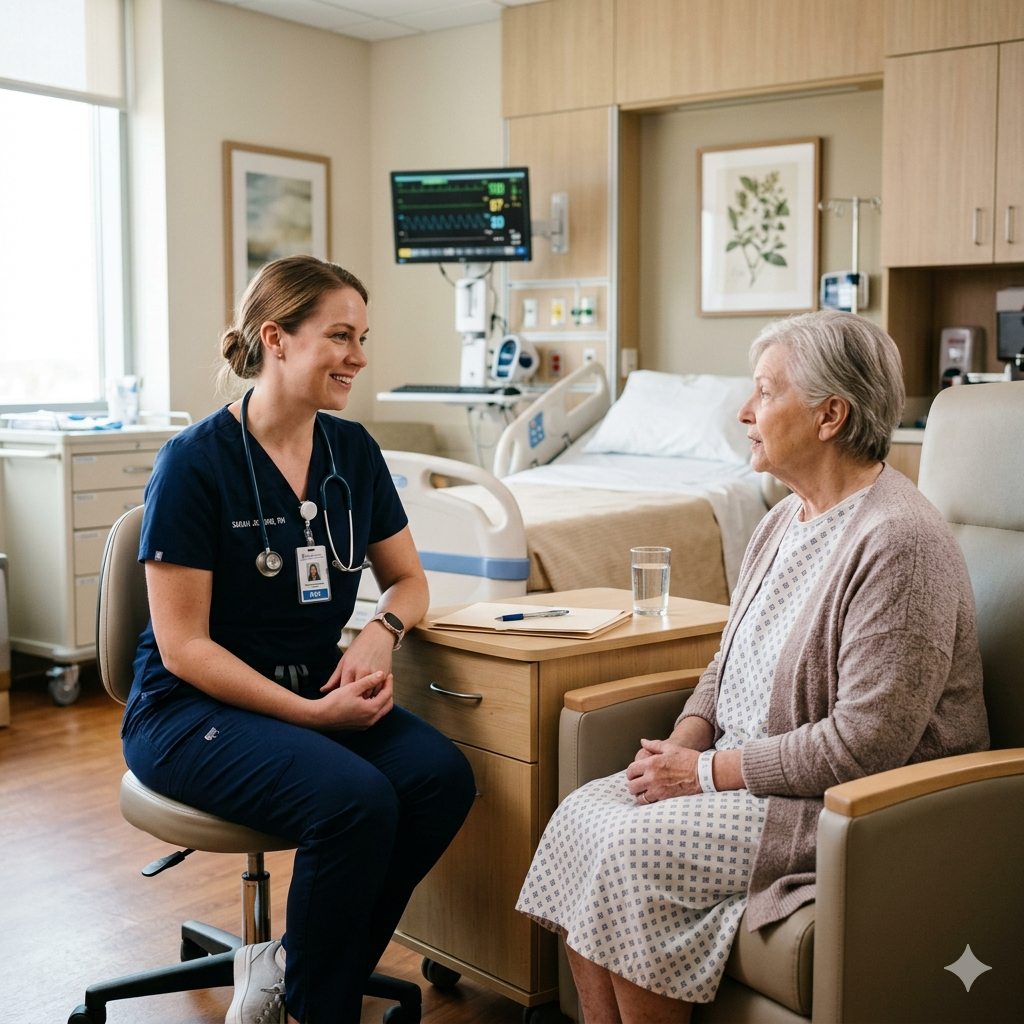
Sexual health is a fundamental dimension of human wellbeing — and yet it remains one of the most underaddressed areas in clinical practice. For nursing students preparing for the NCLEX and for working registered nurses alike, the ability to communicate about sensitive sexual topics with confidence, clarity, and professionalism is a core competency. Discomfort or avoidance on the part of the nurse can leave patients without critical information, delay diagnosis, and erode trust. Nursing communication about sensitive sexual topics demands the same rigor and evidence-based approach applied to any other clinical skill. Mastering this skill is not only relevant to your NCLEX exam — it is essential to holistic, patient-centered care across every clinical setting.
Why Nurses Must Address Sexual Health
Sexual health encompasses far more than reproductive function. The World Health Organization defines it as a state of physical, emotional, mental, and social well-being related to sexuality. For the RN nurse, this means sexual health conversations are relevant across departments — from medical-surgical units and oncology wards to obstetrics, mental health, and geriatrics.
Patients rarely volunteer sexual health concerns unprompted. Research consistently shows that patients wait for the nurse or provider to open the door. When that door stays closed, patients miss information about sexually transmitted infections (STIs), medication effects on sexual function, safe sex after surgery, contraception, sexual dysfunction, and LGBTQ+-affirming care.
The registered nurse who proactively addresses these topics signals that the clinical environment is safe, non-judgmental, and comprehensive. For NCLEX preparation, understanding the nurse’s professional obligation to assess and address sexual health — and the communication strategies to do so — is high-yield content.
The PLISSIT Model: A Framework for Nursing Practice
The most widely used framework for nursing communication about sensitive sexual topics is the PLISSIT model, developed by psychologist Jack Annon. Every nursing student and practicing RN nurse should know its four levels:
- P – Permission: The nurse gives the patient implicit or explicit permission to discuss sexual concerns. This may be as simple as asking, “Many patients have questions about how their condition might affect their sexual health. Is that something you’d like to discuss?”
- LI – Limited Information: The nurse provides brief, factual information relevant to the patient’s concern or condition without entering specialist territory. For example, explaining that certain antihypertensives can cause erectile dysfunction.
- SS – Specific Suggestions: The nurse offers individualized recommendations, such as suggesting alternative positions for cardiac patients or lubricants for patients experiencing vaginal dryness after chemotherapy.
- IT – Intensive Therapy: The nurse recognizes when a referral to a sex therapist, psychologist, or specialist is needed and facilitates that connection.
For most nursing roles, competency at the P and LI levels is expected. This framework translates directly into NCLEX prioritization questions involving therapeutic communication and patient education.
💡 NCLEX Tips for Nursing Communication About Sensitive Sexual Topics
- The PLISSIT model is a high-yield framework — know all four levels and what each nurse role requires.
- Therapeutic communication principles apply fully: use open-ended questions, avoid judgment, and acknowledge the patient’s feelings.
- On the NCLEX, when a patient raises a sexual health concern, the nurse’s first action is typically to acknowledge the concern and create space for discussion — not immediately redirect to a physician.
- Privacy and confidentiality are non-negotiable when discussing sexual health. Ensure the environment is private before initiating.
- Cultural competence matters: the nurse should be aware of cultural and religious perspectives while still fulfilling the professional obligation to provide complete health information.
Therapeutic Communication Techniques in Sexual Health Conversations
Strong nursing communication skills are the foundation of every sexual health interaction. The same therapeutic techniques used in mental health nursing apply here:
Use neutral, clinical language. Avoid slang or euphemisms that could confuse or embarrass. Use anatomically correct terminology, and if a patient uses informal language, gently mirror their phrasing while reinforcing clinical terms.
Begin with normalization statements. Opening with “Many of my patients wonder about…” or “It’s common for people with your condition to experience…” reduces shame and signals that the topic is routine clinical territory.
Ask open-ended questions. “How has your diagnosis affected your intimate relationships?” invites dialogue. “Are you sexually active?” (a closed question) shuts it down.
Acknowledge discomfort without withdrawing. If a patient expresses embarrassment, validate it: “I understand this can feel personal. It’s information that helps me give you the best care.” Then continue — the registered nurse who retreats signals that the topic is too taboo for clinical discussion.
Avoid assumptions. Never assume a patient’s sexual orientation, gender identity, relationship structure, or level of sexual activity based on age, appearance, diagnosis, or marital status. LGBTQ+ patients are particularly sensitive to heteronormative assumptions in nursing assessments.
Special Populations: Adapting Communication Across Settings
Nursing communication about sensitive sexual topics must be tailored to the patient’s clinical context. A few key populations require specific consideration:
Oncology and Chronic Illness
Cancer treatment and chronic conditions profoundly affect sexual function and body image. Chemotherapy can cause vaginal dryness, early menopause, and decreased libido. Prostate cancer treatment frequently causes erectile dysfunction. The RN nurse should proactively introduce sexual health as part of the treatment impact discussion — not wait for the patient to ask.
Older Adults
Ageism in nursing practice leads many nurses to assume that older patients are sexually inactive. This assumption is both incorrect and harmful. Older adults remain sexually active and are at risk for STIs — rates of STIs in adults over 50 have risen significantly in recent decades. The nurse should apply the same sexual health assessment standards regardless of age.
Adolescents
Nursing students should be familiar with legal considerations around adolescent sexual health, including age of consent laws and confidentiality protections. Adolescents are more likely to disclose sexual health concerns if they trust the nurse will maintain confidentiality within legal and ethical limits. Motivational interviewing techniques are particularly effective with this population.
Postoperative and Cardiac Patients
Patients recovering from cardiac events, joint replacements, or abdominal surgery frequently worry about returning to sexual activity but rarely ask. The registered nurse should include sexual activity in all discharge teaching for these patients — energy expenditure guidance, positioning adaptations, and warning signs to watch for.
Overcoming Nurse-Side Barriers
The barriers to nursing communication about sensitive sexual topics are not only on the patient’s side. Nurses commonly report personal discomfort, lack of training, time pressure, and fear of offending patients as reasons they avoid sexual health discussions.
Addressing nurse-side barriers is part of professional development for every RN nurse:
- Self-reflection: Identifying personal values, biases, and discomfort is the first step. Nurses are not required to be personally comfortable with every sexual topic — but they are required to deliver competent, non-judgmental care.
- Education and training: Nursing programs increasingly include sexual health communication modules. Supplement your nursing bundle of study resources with continuing education on LGBTQ+ care, sexual dysfunction, and reproductive health.
- Practice: Like any clinical skill, communication improves with deliberate repetition. Role-playing sexual health conversations with peers in nursing simulation labs builds confidence before real clinical encounters.
- Organizational support: Advocating for policies that normalize sexual health assessment — such as including a sexual health question in routine intake assessments — reduces the burden on individual nurses to initiate these conversations in isolation.
Quick Reference: Communication Do’s and Don’ts
| Do | Don’t |
|---|---|
| Use anatomically correct language | Use slang or vague euphemisms |
| Normalize with “many patients…” | Assume the topic is irrelevant for this patient |
| Ensure a private environment first | Discuss sexual health in shared spaces |
| Ask open-ended questions | Lead with yes/no questions |
| Acknowledge cultural context | Impose personal values on the patient |
| Include sexual health in discharge teaching | Wait for the patient to ask |
| Refer appropriately (PLISSIT – IT level) | Exceed your scope of practice |
Conclusion
Nursing communication about sensitive sexual topics is not a niche skill reserved for sexual health specialists — it is a fundamental nursing competency with direct implications for patient outcomes and NCLEX performance. The RN nurse who applies the PLISSIT model, uses therapeutic communication techniques, and approaches sexual health without judgment provides care that is truly holistic. Every registered nurse has a professional obligation to assess sexual health needs, deliver appropriate education, and refer when necessary.
Build your confidence in this area alongside your broader clinical knowledge. Explore the nursing bundle at rn-nurse.com/nursing-courses/ for structured study resources that cover therapeutic communication, patient education, and NCLEX-style practice. Test your readiness with practice questions at rn-nurse.com/nclex-qcm/ — because the patients who need this conversation deserve a nurse who is ready to have it.