
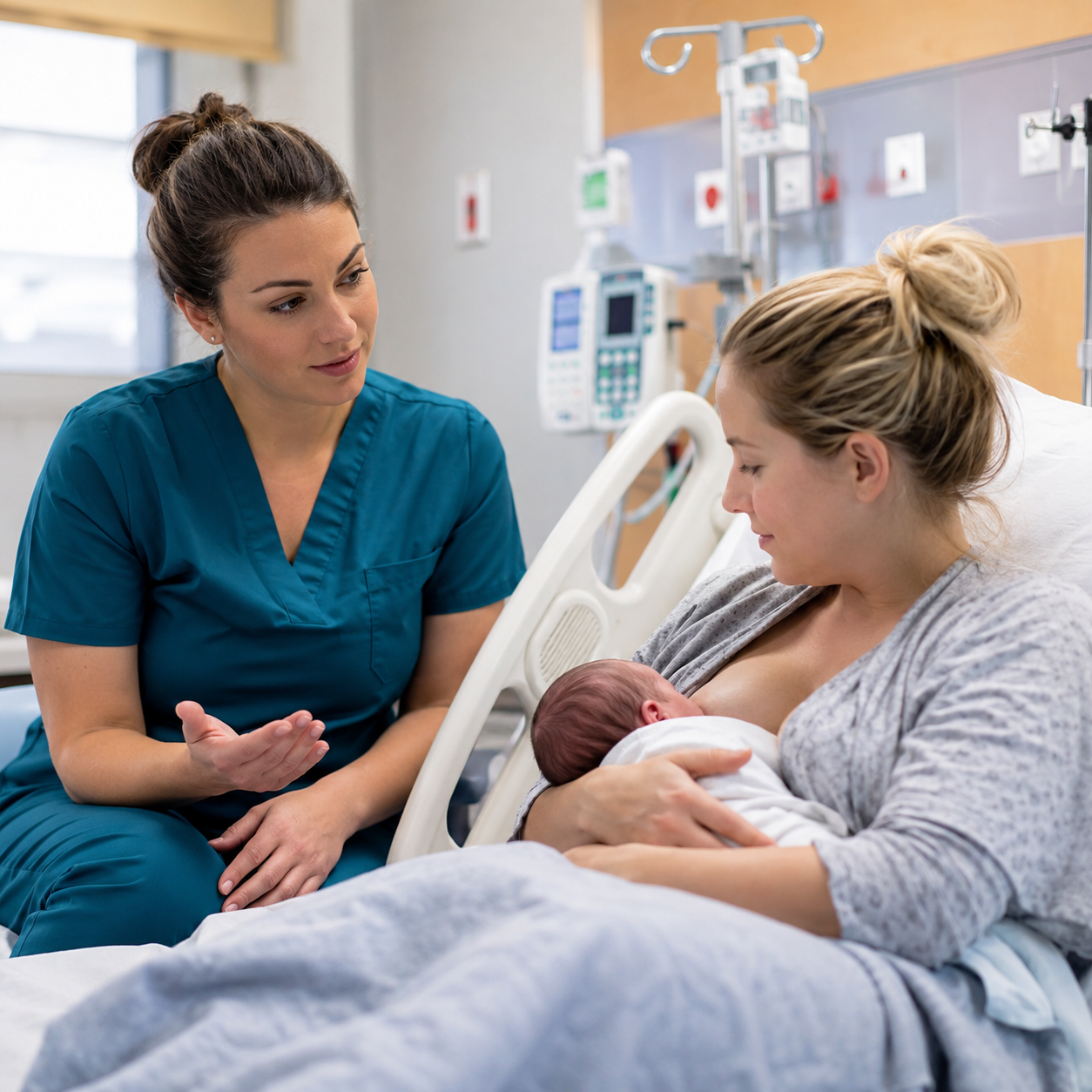
Breastfeeding triggers a cascade of hormonal changes that profoundly suppress the female reproductive axis — a phenomenon nursing students and practicing nurses encounter directly in postpartum care. Understanding the breastfeeding hormonal effects on fertility is not only essential for NCLEX success but also forms the foundation of evidence-based patient education that every registered nurse must be equipped to deliver. From the prolactin-driven inhibition of ovulation to the clinical reality of lactational amenorrhea, the interplay between lactation and reproductive hormones is high-yield content for both the NCLEX exam and real-world OB/Maternity nursing practice. This nursing bundle covers the mechanisms, clinical implications, and patient teaching priorities that RN nurses must master.
The Hormonal Mechanism Behind Lactation and Fertility Suppression
The suppression of fertility during breastfeeding is primarily orchestrated by prolactin, a hormone secreted by the anterior pituitary gland. Each time an infant suckles, sensory nerve impulses travel from the nipple to the hypothalamus, triggering a surge in prolactin release. This is called the neuroendocrine reflex — and it is the central mechanism that connects breastfeeding to altered fertility.
Prolactin exerts its suppressive effect by inhibiting the release of gonadotropin-releasing hormone (GnRH) from the hypothalamus. Reduced GnRH results in decreased secretion of luteinizing hormone (LH) and follicle-stimulating hormone (FSH) from the anterior pituitary. Without adequate LH and FSH:
- Follicular development in the ovary is suppressed
- Ovulation does not occur or occurs irregularly
- Estrogen and progesterone levels remain low
Low estrogen levels lead to vaginal dryness, decreased libido, and delayed return of the menstrual cycle — all findings the nurse should anticipate and address during postpartum assessments.
Lactational Amenorrhea: Clinical Significance for Nurses
Lactational amenorrhea (LAM) refers to the temporary absence of menstruation in a postpartum woman who is exclusively breastfeeding. For nursing students and RN nurses, understanding LAM is essential because it is both a normal physiological finding and a recognized — though imperfect — method of natural contraception.
The Lactational Amenorrhea Method (LAM) is considered up to 98% effective as contraception under three specific conditions:
- The infant is exclusively breastfed (no supplemental feeds, formula, or pacifiers)
- The mother remains amenorrheic (no menstrual bleeding after the first 56 postpartum days)
- The infant is less than 6 months old
When any one of these conditions is no longer met, the contraceptive reliability of LAM drops significantly, and the registered nurse must counsel the patient on transitioning to a reliable contraceptive method.
Nursing documentation should reflect whether the patient is exclusively breastfeeding and whether menses have returned, as both findings directly affect contraception counseling during the postpartum period.
Estrogen, Progesterone, and the Postpartum Hormonal Shift
After delivery of the placenta, estrogen and progesterone levels drop sharply. This hormonal withdrawal is what initiates milk production — prolactin had been present throughout pregnancy but was blocked by high progesterone. Once progesterone falls, prolactin is uninhibited, and lactogenesis stage II (copious milk production) begins, typically within 2–5 days postpartum.
From a nursing standpoint, this dramatic hormonal shift carries several clinical implications:
- Mood disturbances: The sudden drop in estrogen and progesterone contributes to postpartum blues (days 1–5) and, in vulnerable women, postpartum depression. The RN nurse must screen using validated tools such as the Edinburgh Postnatal Depression Scale (EPDS).
- Bone density: Prolonged breastfeeding is associated with temporary, reversible decreases in bone mineral density due to low estrogen. This is important for patient education — calcium and vitamin D intake should be reinforced.
- Atrophic vaginitis: Low estrogen during lactation causes vaginal epithelium thinning, dryness, and dyspareunia. Nurses should counsel patients about topical lubricants and reassure them that these changes reverse after weaning.
Return of Fertility: What Nurses Must Teach
A common misconception among postpartum patients — and a frequent NCLEX scenario — is that breastfeeding guarantees infertility. The nurse must correct this misunderstanding clearly and compassionately.
Key patient education points include:
- Ovulation can occur before the first postpartum menstrual period. This means a woman can conceive before she even realizes her fertility has returned.
- The average return of ovulation in non-breastfeeding women is 4–6 weeks postpartum.
- In exclusively breastfeeding women, ovulation is typically suppressed for 6 months or longer, but this is highly variable.
- Partial breastfeeding or introduction of supplemental feeds reduces suckling frequency, lowers prolactin surges, and significantly increases the likelihood of early ovulation return.
The registered nurse plays a pivotal role in contraception counseling before hospital discharge. The BUBBLE-HE postpartum assessment framework includes emotional status and education components — both of which should incorporate fertility and contraception discussions for every breastfeeding patient.
Contraception Considerations During Breastfeeding: A Nursing Priority
Because breastfeeding hormonal effects on fertility are unreliable as a sole contraceptive strategy, the nurse must guide patients toward appropriate contraception methods that are both safe and compatible with lactation.
Estrogen-containing contraceptives (combined oral contraceptive pills, the patch, the vaginal ring) are generally avoided in the first 4–6 weeks postpartum in breastfeeding women because estrogen can suppress milk supply. The World Health Organization and ACOG advise caution with combined hormonal methods during this window.
Progestin-only options are preferred for breastfeeding patients:
| Contraceptive Method | Breastfeeding Safe? | Notes |
|---|---|---|
| Progestin-only pill (minipill) | Yes | Must be taken at same time daily |
| Depot medroxyprogesterone (Depo-Provera) | Yes | Given at 6-week visit |
| Levonorgestrel IUD (Mirena) | Yes | Can be placed at 4–6 weeks |
| Copper IUD (Paragard) | Yes | Non-hormonal; no effect on milk |
| Combined oral contraceptive pill | Caution | Avoid before 4–6 weeks; may reduce milk |
| Condoms / barrier methods | Yes | Non-hormonal, immediately usable |
The nurse must document contraception education in the nursing care plan and assess patient understanding using teach-back methodology before discharge.
💡 NCLEX Tips for Breastfeeding and Hormonal Fertility
- Remember: prolactin suppresses GnRH → suppresses LH/FSH → suppresses ovulation. This is the core mechanism to master.
- LAM is only reliable when all three conditions are met: exclusive breastfeeding, amenorrhea, and infant under 6 months.
- Ovulation precedes menstruation — a breastfeeding patient can become pregnant before her period returns.
- Low estrogen during lactation causes vaginal dryness and dyspareunia — always include this in patient teaching.
- Progestin-only contraceptives are preferred over combined estrogen-progestin methods for breastfeeding women.
Nursing Assessment and BUBBLE-HE Integration
During postpartum nursing assessments, the BUBBLE-HE framework guides systematic evaluation. Breastfeeding status and fertility-related education are integrated into multiple components:
- Breasts: Assess for engorgement, nipple integrity, latch quality; note whether exclusive breastfeeding is occurring
- Education: Document contraception counseling, LAM limitations, and signs of ovulation return
- Homans/Lower Extremities: Less directly related, but complete assessment supports overall safety
- Emotional: Screen for postpartum depression, especially in women experiencing hormonal lability related to low estrogen
An RN nurse who integrates breastfeeding and fertility education into every postpartum nursing assessment reduces unintended pregnancy, supports informed decision-making, and provides the kind of holistic care that NCLEX questions are designed to test.
Conclusion
The breastfeeding hormonal effects on fertility represent a high-yield, clinically relevant topic that every registered nurse must understand deeply. Prolactin-mediated suppression of the hypothalamic-pituitary-ovarian axis, lactational amenorrhea, the postpartum estrogen drop, and contraception safety during lactation are all testable on the NCLEX and directly applicable at the bedside. Patients rely on their RN nurse to provide accurate, individualized teaching — particularly the critical point that breastfeeding does not guarantee protection from pregnancy.
Strengthen your OB/Maternity knowledge with NCLEX-style practice questions at https://rn-nurse.com/nclex-qcm/ and explore the full nursing bundle of maternal-newborn courses at https://rn-nurse.com/nursing-courses/ to prepare with confidence.