
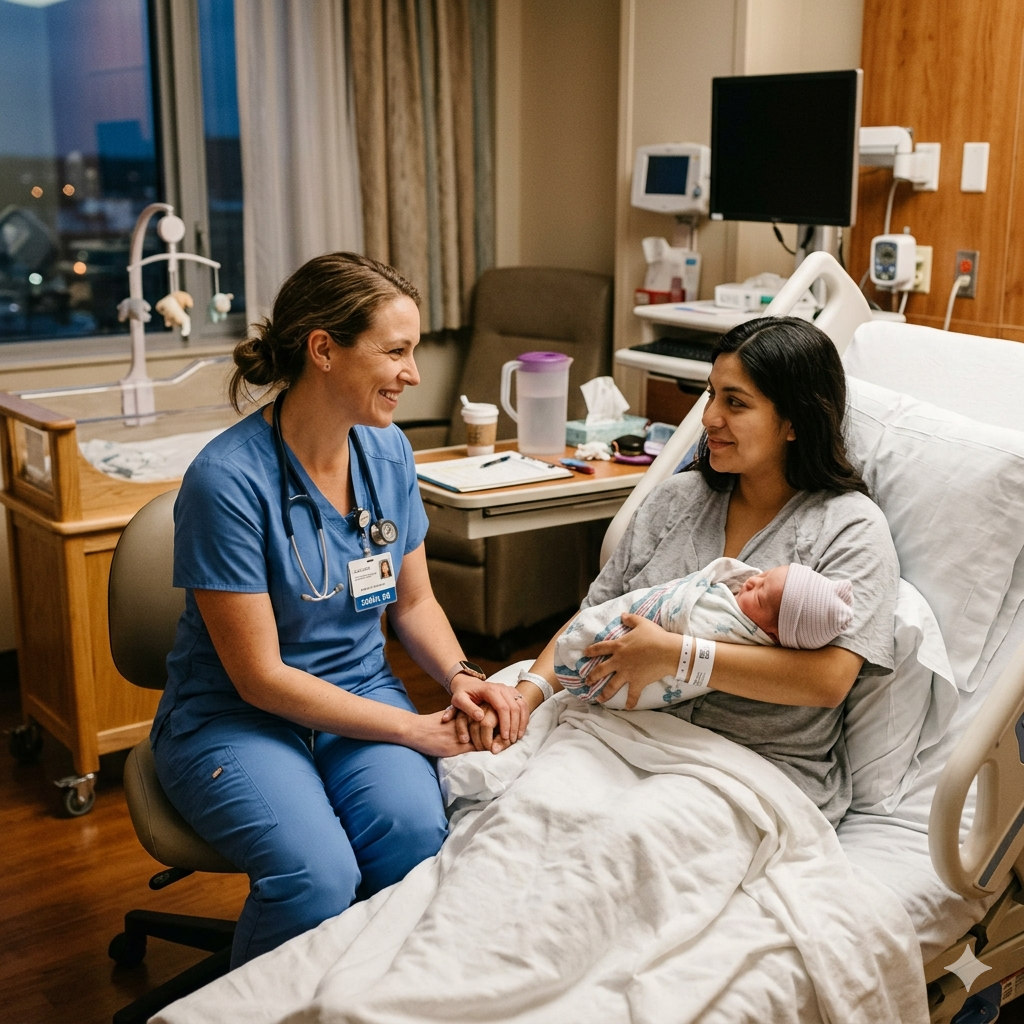
Postpartum depression (PPD) affects approximately 10–15% of new mothers and is one of the most clinically significant complications of the perinatal period. For the registered nurse working in OB/maternity, labor and delivery, or community health settings, understanding PPD — including its profound impact on intimacy and couple relationships — is essential both for NCLEX success and real-world patient care. Early identification, evidence-based nursing interventions, and compassionate therapeutic communication can dramatically alter outcomes for mothers and their families.
What Is Postpartum Depression? A Clinical Overview for Nurses
PPD is classified under the DSM-5 as Major Depressive Disorder with peripartum onset, meaning it begins during pregnancy or within four weeks after delivery — though clinically, symptoms often present up to 12 months postpartum. The nurse must distinguish PPD from two related conditions:
- Postpartum Blues (“Baby Blues”): Mild mood lability, tearfulness, and irritability occurring in up to 80% of mothers within the first 2 weeks postpartum. Self-limiting; resolves without treatment.
- Postpartum Psychosis: A psychiatric emergency characterized by hallucinations, delusions, and disorganized thinking. Onset within the first 2 weeks; requires immediate hospitalization.
Key symptoms of PPD include:
- Persistent sadness or emotional emptiness
- Anhedonia (inability to feel pleasure, including in physical intimacy)
- Sleep disturbances beyond normal newborn disruption
- Feelings of inadequacy as a mother
- Difficulty bonding with the infant
- Withdrawal from partner, family, and social support
- Anxiety, irritability, and in severe cases, suicidal ideation
For NCLEX preparation, the nurse must prioritize safety assessment above all other interventions when suicidal ideation is present.
The Link Between Postpartum Depression and Intimacy
One of the most underaddressed aspects of PPD in nursing education is its significant effect on sexual and emotional intimacy. This intersection is critical for the registered nurse to understand during postpartum follow-up and discharge education.
Physiologically, the postpartum period brings dramatic hormonal shifts. Estrogen and progesterone drop sharply after delivery, contributing to vaginal dryness, dyspareunia (painful intercourse), and decreased libido. In breastfeeding mothers, elevated prolactin further suppresses estrogen, prolonging these effects. When PPD is layered on top of these changes, the result is a compounded loss of interest in physical connection.
Psychologically, PPD erodes self-worth and body image. Mothers may feel disconnected from their pre-pregnancy identity, unattractive, or resentful of partner expectations. Emotional withdrawal — pulling back from previously close relationships — is a hallmark symptom that extends to intimate partnerships.
Partners are often confused, hurt, or unsure how to help. Unaddressed, this dynamic can escalate relationship conflict, increase maternal isolation, and worsen depressive symptoms. The RN nurse who includes partner and couple dynamics in the plan of care takes a genuinely holistic approach to postpartum recovery. Nursing education and discharge planning must explicitly normalize these challenges.
NCLEX-Ready Screening: Tools the Nurse Uses to Identify PPD
Screening is a cornerstone of postpartum depression nursing interventions. The standard tool used across nursing and obstetric practice is the Edinburgh Postnatal Depression Scale (EPDS) — a validated 10-item self-report questionnaire administered at:
- The 2-week postpartum visit
- The 4–6 week well-woman or infant visit
- Any nursing encounter where mood changes are noted
Scoring interpretation:
| EPDS Score | Clinical Interpretation |
|---|---|
| 0–8 | Low risk; reinforce coping and support |
| 9–11 | Borderline; close follow-up, repeat in 2 weeks |
| 12–19 | Likely PPD; refer to mental health provider |
| 20–30 | Severe PPD or postpartum psychosis; urgent referral |
| Any score with suicidal ideation (Q10) | Immediate safety assessment required |
The nurse documents screening results, facilitates referrals, and ensures the mother leaves with crisis resources. In inpatient settings, the BUBBLE-HE assessment framework includes Emotional status — a reminder that psychological wellbeing is assessed alongside uterine involution, lochia, and breastfeeding.
Postpartum Depression Nursing Interventions: A Clinical Framework
Effective postpartum depression nursing interventions address the biological, psychological, and relational dimensions of PPD. The RN nurse individualized the plan of care based on severity, support system, and patient goals.
Biological interventions:
- Educate on the role of hormonal changes in mood, libido, and vaginal dryness
- Encourage consistent sleep (in coordination with partner support or family help)
- Promote physical activity — evidence supports exercise as a mood-regulating intervention
- For dyspareunia: recommend water-based lubricants; coordinate with the provider for topical estrogen if breastfeeding allows
Psychological and therapeutic interventions:
- Use therapeutic communication: open-ended questions, active listening, and nonjudgmental responses
- Validate the mother’s experience — normalizing feelings reduces shame and increases help-seeking
- Assess for suicidal ideation at every encounter using direct, calm language: “Some mothers feel so overwhelmed they have thoughts of hurting themselves. Have you had any thoughts like that?”
- Facilitate referral to cognitive-behavioral therapy (CBT) or interpersonal therapy, both evidence-based first-line treatments for PPD
Pharmacological support (nursing considerations):
- SSRIs (e.g., sertraline, paroxetine) are first-line pharmacologic treatment; sertraline is preferred in breastfeeding mothers due to minimal transfer into breast milk
- Monitor for therapeutic response (4–6 weeks), side effects (nausea, insomnia, sexual dysfunction), and discontinuation syndrome
- Educate the patient: medication does not reflect failure; it corrects a neurochemical imbalance
Relational and intimacy-focused interventions:
- Include the partner in discharge education and postpartum visits when possible
- Normalize that a return to intimacy takes time and varies by individual
- Encourage couples to reconnect emotionally before physically — shared meals, verbal affirmation, non-sexual touch
- Provide written resources on postpartum sexuality; refer to couples counseling if relationship strain is significant
Patient and Family Education: What the Registered Nurse Must Cover
Education is a primary nursing intervention for PPD. The registered nurse should cover the following before discharge and at follow-up:
- PPD is not a character flaw — it is a medical condition with effective treatment
- Signs to watch for and report: worsening sadness, inability to care for self or infant, thoughts of self-harm or harming the baby
- When and how to call for help: provide the Postpartum Support International helpline (1-800-944-4773) and local mental health resources
- Return to intimacy: reassure that reduced libido and discomfort are normal; they improve with time and treatment
- Partner education: partners may also experience paternal postnatal depression (PPND) — approximately 10% of new fathers are affected
- Breastfeeding and medication safety: reinforce that most antidepressants are compatible with breastfeeding with provider guidance
For nursing students building their clinical knowledge base, the nursing bundle at rn-nurse.com includes structured OB/Maternity modules covering perinatal mental health in depth.
💡 NCLEX Tips for Postpartum Depression
- The EPDS is the gold-standard screening tool for PPD — know its scoring thresholds.
- Postpartum blues resolve within 2 weeks without treatment; PPD persists longer and requires intervention.
- When a patient expresses suicidal ideation, the priority nursing action is always safety assessment — before teaching, before referral.
- Sertraline is the preferred SSRI during breastfeeding due to its low transfer into breast milk.
- PPD impairs maternal-infant bonding — always assess the mother-infant relationship as part of your care.
Conclusion
Postpartum depression is a multidimensional condition that reaches beyond mood into every aspect of a new mother’s life — including her sense of self, her relationship with her infant, and her intimate connection with her partner. Skilled postpartum depression nursing interventions require the RN nurse to screen systematically, communicate therapeutically, educate comprehensively, and coordinate care across disciplines. For the registered nurse, this means treating the whole person — not just the postpartum uterus.
Whether you are preparing for the NCLEX or caring for patients in a real-world setting, mastering PPD assessment and management is a clinical imperative. Strengthen your OB/Maternity knowledge with the full nursing bundle at rn-nurse.com/nursing-courses/ or challenge yourself with postpartum NCLEX practice questions at rn-nurse.com/nclex-qcm/.