
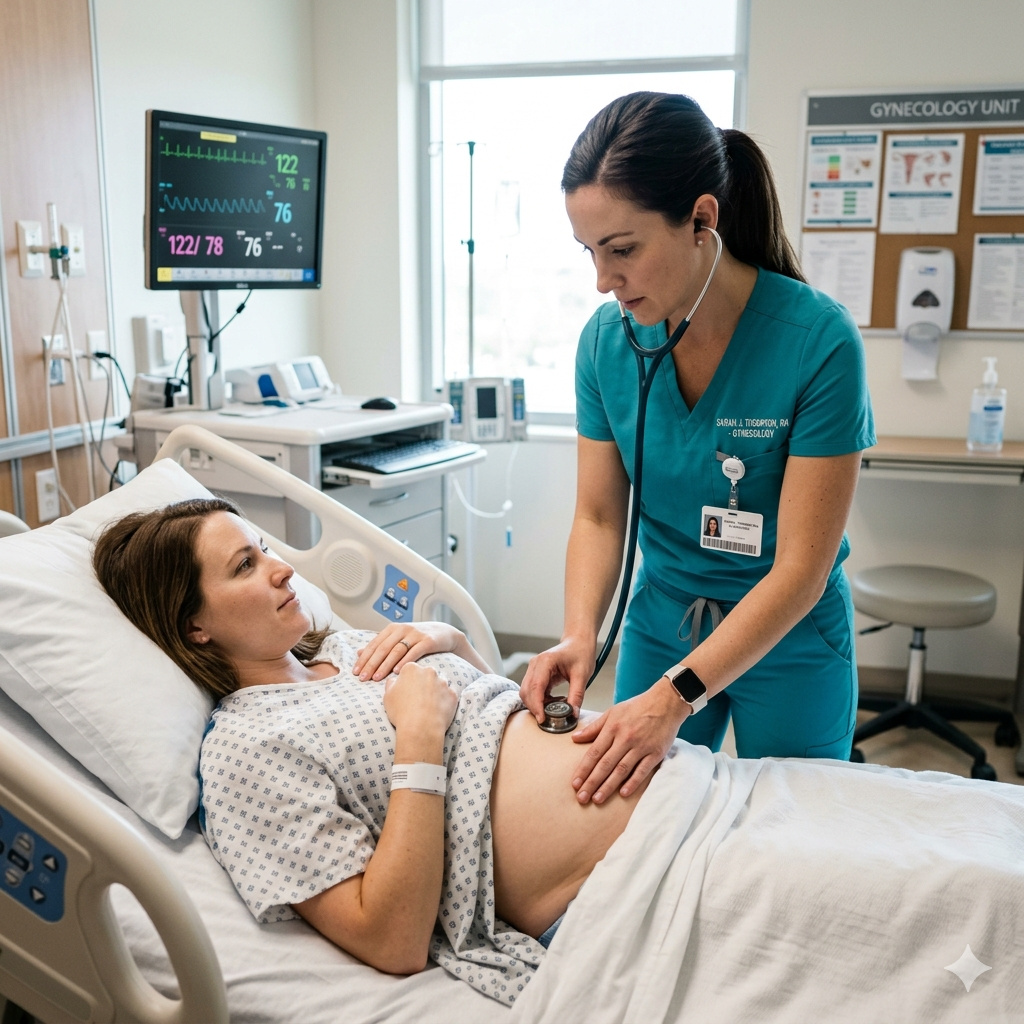
Pelvic inflammatory disease (PID) is one of the most clinically significant infections affecting the female reproductive tract, and it appears frequently on the NCLEX. Every registered nurse working in OB/maternity, women’s health, or medical-surgical settings must recognize PID early, implement appropriate nursing interventions promptly, and provide thorough patient education to prevent long-term complications. Understanding PID nursing assessment and treatment is not just an exam competency — it is a skill that directly impacts patient outcomes.
What Is Pelvic Inflammatory Disease?
PID is an ascending infection of the upper female reproductive tract, involving the uterus, fallopian tubes, ovaries, and surrounding pelvic structures. It most commonly results from sexually transmitted organisms, particularly Neisseria gonorrhoeae and Chlamydia trachomatis, though polymicrobial infections involving anaerobes and gram-negative bacteria are also common.
When bacteria ascend from the vagina and cervix into the upper reproductive tract, they trigger an inflammatory response that, if left untreated, leads to salpingitis (fallopian tube inflammation), endometritis, tubo-ovarian abscess (TOA), and ultimately pelvic adhesions. Long-term consequences include chronic pelvic pain, ectopic pregnancy, and infertility — outcomes that nursing intervention and early treatment can help prevent.
Risk factors the nurse must recognize include:
- Multiple sexual partners or a new sexual partner
- History of prior PID or sexually transmitted infections (STIs)
- Use of an intrauterine device (IUD), particularly within the first 3 weeks after insertion
- Age under 25 years
- Inconsistent barrier contraception use
PID Nursing Assessment: Recognizing the Clinical Picture
Accurate and timely nursing assessment is the cornerstone of PID management. The classic presentation includes lower abdominal and pelvic pain — typically bilateral and described as dull or crampy — that is worsened by movement or intercourse (dyspareunia). Onset often follows menstruation, as cervical pathogens can ascend more readily when the endometrial barrier is compromised.
Key assessment findings the RN nurse must document include:
Subjective data:
- Lower abdominal or pelvic pain (unilateral or bilateral)
- Abnormal vaginal discharge (mucopurulent or malodorous)
- Dyspareunia
- Abnormal uterine bleeding or irregular menstrual cycles
- Dysuria or urinary frequency (from adjacent bladder inflammation)
- Nausea and vomiting (in severe cases)
- Fever and chills
Objective data:
- Low-grade to high-grade fever (≥38.3°C / 101°F suggests systemic involvement)
- Cervical motion tenderness (CMT) — the hallmark sign, elicited during pelvic examination
- Uterine tenderness on bimanual exam
- Adnexal tenderness, with or without a palpable mass (suggesting TOA)
- Elevated WBC (leukocytosis), elevated ESR and CRP
- Positive cervical or vaginal cultures for gonorrhea or chlamydia
- Elevated beta-hCG must be checked to rule out ectopic pregnancy
The minimum diagnostic criteria per CDC guidelines include uterine tenderness, adnexal tenderness, or cervical motion tenderness — any one of these in a sexually active woman with no other identified cause warrants treatment.
Diagnostic Workup: What the Nurse Should Anticipate
The registered nurse plays a key role in facilitating the diagnostic process. Anticipate orders for:
- Urine pregnancy test (beta-hCG) — mandatory to exclude ectopic pregnancy before proceeding
- CBC with differential — leukocytosis supports infectious etiology
- ESR and CRP — markers of systemic inflammation
- NAAT (nucleic acid amplification test) for gonorrhea and chlamydia from cervical or vaginal swabs
- Vaginal wet prep — presence of WBCs supports PID diagnosis
- Pelvic ultrasound — to evaluate for TOA, free fluid, or thickened fallopian tubes
- Laparoscopy — the gold standard for definitive diagnosis, though rarely used for routine cases
When reviewing results, the nurse should note that normal laboratory values do not exclude PID. The diagnosis is primarily clinical. Nursing documentation should reflect objective findings, vital sign trends, and the patient’s reported pain level using a standardized scale.
PID Nursing Interventions and Medical Treatment
Treatment of PID depends on severity and whether the patient meets criteria for hospitalization. The nurse must understand both outpatient and inpatient management to deliver safe, evidence-based care.
Criteria for inpatient treatment include:
- Inability to rule out surgical emergency (e.g., appendicitis, ectopic pregnancy)
- Tubo-ovarian abscess
- Pregnancy
- Severe illness (high fever, vomiting, inability to tolerate oral medications)
- Failure to respond to outpatient oral antibiotics within 72 hours
- Immunocompromised state
Inpatient antibiotic regimens (per CDC guidelines) typically include:
- Cefoxitin or cefotetan (IV) + doxycycline (PO or IV)
- Alternatively, clindamycin (IV) + gentamicin (IV)
Outpatient regimens include:
- Ceftriaxone (IM, single dose) + doxycycline (PO × 14 days) ± metronidazole (PO × 14 days)
Nursing interventions for the hospitalized patient:
- Administer IV antibiotics as ordered; monitor for adverse reactions (e.g., nephrotoxicity with gentamicin — assess BUN, creatinine, urine output)
- Manage pain with NSAIDs or prescribed analgesics; reassess pain scale every 2–4 hours
- Position patient in semi-Fowler’s to promote pelvic drainage and reduce discomfort
- Monitor vital signs closely for signs of sepsis: hypotension, tachycardia, altered mental status
- Maintain IV access; administer IV fluids as ordered for hydration
- Obtain cultures before initiating antibiotics whenever possible
- Provide emotional support — PID carries significant reproductive implications and psychosocial impact
Patient Education: A Priority Nursing Responsibility
Patient education is one of the most critical components of PID nursing care. The RN nurse must address the following before discharge:
- Complete the full antibiotic course, even if symptoms resolve early
- Abstain from sexual activity for at least 7 days after treatment is initiated and until the patient and all partners are treated
- Partner notification and treatment — sexual partners from the preceding 60 days must be evaluated and treated for STIs
- Inform the patient about potential long-term complications: ectopic pregnancy risk, infertility, and chronic pelvic pain
- Discuss STI prevention: consistent condom use, routine STI screening, and limiting the number of sexual partners
- Advise follow-up within 72 hours if outpatient treatment is prescribed — failure to improve is a clinical red flag requiring reassessment
- Recommend follow-up testing for gonorrhea and chlamydia at 3 months
This is also an appropriate time to address the nursing bundle of reproductive health topics — linking the patient to resources that support comprehensive sexual health care and NCLEX-aligned patient teaching competencies.
Quick Reference: PID Assessment and Treatment Summary
| Feature | Key Details |
|---|---|
| Classic symptom | Bilateral lower abdominal/pelvic pain |
| Hallmark sign | Cervical motion tenderness (CMT) |
| Priority lab | Beta-hCG (rule out ectopic pregnancy) |
| Fever threshold | ≥38.3°C / 101°F = systemic involvement |
| First-line outpatient Tx | Ceftriaxone IM + doxycycline PO × 14 days |
| Positioning | Semi-Fowler’s to promote pelvic drainage |
| Partner treatment | Required for last 60 days |
| Follow-up (outpatient) | Within 72 hours to assess treatment response |
| High-risk complication | Tubo-ovarian abscess (TOA) |
| Long-term risks | Ectopic pregnancy, infertility, chronic pelvic pain |
💡 NCLEX Tips for PID
- Always rule out ectopic pregnancy first — obtain a urine or serum beta-hCG before any other intervention. This is a priority safety action.
- Cervical motion tenderness = PID until proven otherwise in a sexually active woman with pelvic pain — memorize this for NCLEX.
- Culture before antibiotics — the nurse should obtain specimens before initiating antibiotic therapy whenever feasible.
- Semi-Fowler’s positioning promotes dependent drainage and reduces peritoneal irritation — a high-yield nursing intervention.
- Outpatient follow-up at 72 hours is mandatory — failure to improve is an indication for hospitalization, a classic NCLEX decision-making scenario.
Conclusion
PID is a serious, potentially life-altering infection that demands sharp clinical assessment, timely antibiotic management, and comprehensive patient education. The registered nurse is central to each of these functions — from identifying cervical motion tenderness and obtaining cultures to administering IV antibiotics and counseling patients on STI prevention and long-term reproductive risks.
Mastering PID nursing assessment and treatment means understanding both the pathophysiology and the nursing process that drives evidence-based care. Use this content as part of your nursing bundle preparation for both clinical practice and NCLEX success.
Ready to test your knowledge? Practice with PID and OB/Maternity NCLEX questions at rn-nurse.com/nclex-qcm/ — or explore the full nursing courses library at rn-nurse.com/nursing-courses/ to strengthen every clinical area before exam day.