
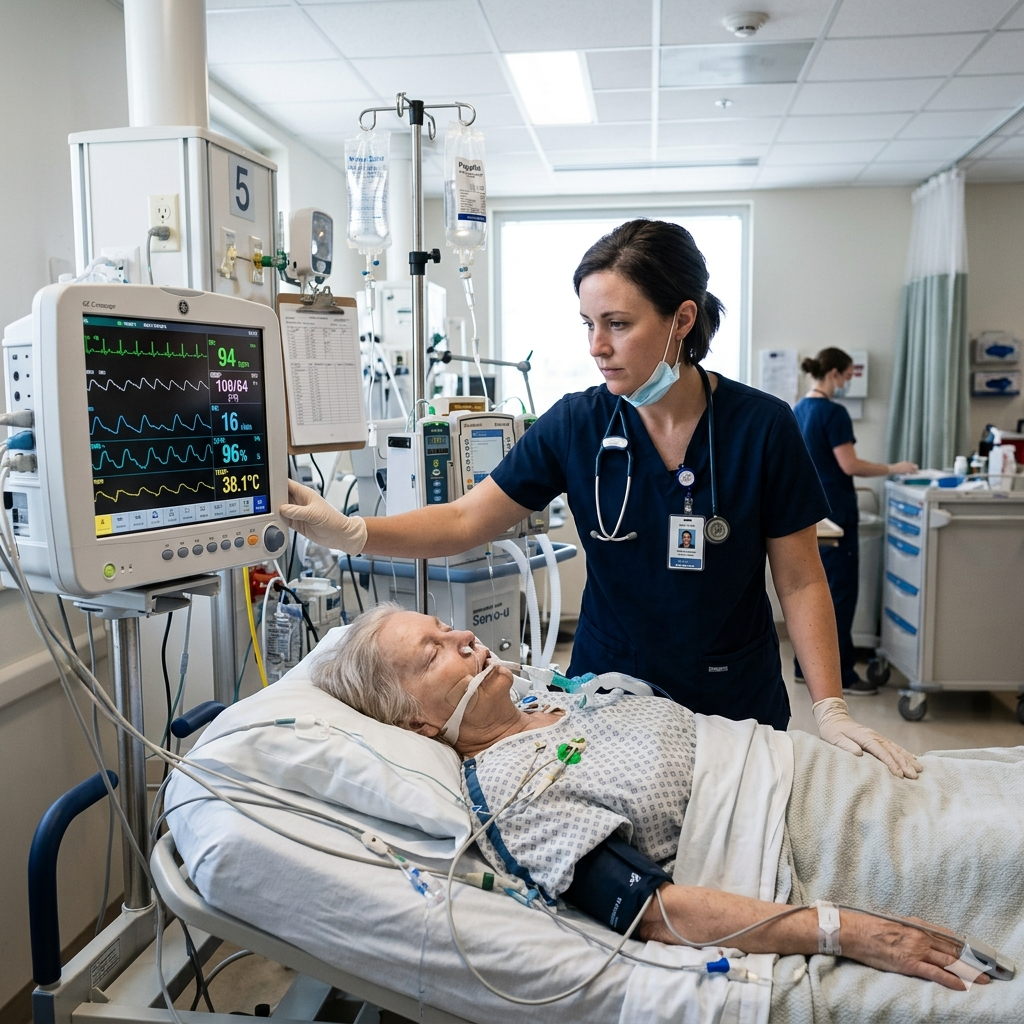
Systemic Inflammatory Response Syndrome (SIRS) represents one of the most clinically significant conditions a registered nurse will encounter in acute and critical care settings. Recognizing its hallmark criteria early can be the difference between timely intervention and rapid patient deterioration. SIRS nursing assessment is not just an NCLEX topic — it is a foundational skill that drives clinical decision-making at the bedside. Consequently, every RN nurse working in the ICU, emergency department, or medical-surgical unit must be able to identify SIRS, understand its pathophysiology, and act with precision.
What Is SIRS? Understanding the Pathophysiology
SIRS is a widespread, nonspecific inflammatory response that both infectious and non-infectious stimuli can trigger. Unlike sepsis, which requires a confirmed or suspected infection, SIRS can arise from trauma, burns, pancreatitis, major surgery, or ischemia. In response to any of these insults, the body’s immune system releases pro-inflammatory mediators — including cytokines, interleukins, and tumor necrosis factor (TNF-alpha) — that simultaneously affect multiple organ systems.
The cascade begins when the immune system detects tissue damage or pathogen-associated molecular patterns (PAMPs). This detection triggers mast cell activation, complement system engagement, and vasodilatory substance release. As a result, vascular permeability increases, fluids shift into the third space, and cellular oxygen delivery becomes impaired. Furthermore, if the nurse and care team do not intervene quickly, SIRS can progress to sepsis, severe sepsis, septic shock, and ultimately multi-organ dysfunction syndrome (MODS).
Therefore, nursing students preparing for the NCLEX must understand this progression clearly. Although the 2016 Sepsis-3 definitions updated clinical terminology, SIRS criteria remain widely used as a clinical screening tool across nursing practice worldwide.
The 4 SIRS Criteria Every Nurse Must Know
SIRS requires the presence of two or more of the following four criteria. These thresholds form the cornerstone of SIRS nursing assessment and appear frequently on the NCLEX:
| Parameter | SIRS Threshold |
|---|---|
| Temperature | > 38°C (100.4°F) or < 36°C (96.8°F) |
| Heart Rate | > 90 beats per minute |
| Respiratory Rate | > 20 breaths per minute OR PaCO₂ < 32 mmHg |
| WBC Count | > 12,000 cells/mm³ or < 4,000 cells/mm³ or > 10% band forms |
Each of these parameters reflects a distinct physiologic stress response. Specifically, tachycardia develops as the heart compensates for reduced stroke volume. Similarly, tachypnea emerges as the body attempts to blow off CO₂ and buffer metabolic acidosis. Fever reflects the hypothalamic response to pyrogens, while hypothermia — particularly in elderly or immunocompromised patients — signals a blunted immune response and carries a worse prognosis. Meanwhile, leukocytosis indicates active immune mobilization, and leukopenia suggests immune exhaustion.
As a result, a registered nurse must document these findings precisely, trend them over time, and escalate to the provider as soon as two or more criteria appear.
SIRS vs. Sepsis: What the RN Nurse Must Differentiate
A common NCLEX question stem requires nurses to distinguish SIRS from sepsis. This clinical differentiation is critical:
- SIRS: Two or more SIRS criteria present — the patient may or may not have an identified infection
- Sepsis: SIRS criteria + a confirmed or suspected infection source
- Severe Sepsis: Sepsis + evidence of organ dysfunction (elevated creatinine, altered mentation, hypotension)
- Septic Shock: Severe sepsis + persistent hypotension despite adequate fluid resuscitation
Under the Sepsis-3 framework, the Sequential Organ Failure Assessment (SOFA) score and quick SOFA (qSOFA) now supplement older SIRS-based definitions for sepsis. Nevertheless, nursing practice in many institutions still applies SIRS criteria as an early warning screening tool. Consequently, this content remains highly testable on the NCLEX and is a vital part of any nursing bundle covering critical care.
Above all, the RN nurse serves as the first line of detection. Early recognition of SIRS, followed by rapid communication using SBAR (Situation, Background, Assessment, Recommendation), allows the interdisciplinary team to initiate care bundles before organ failure sets in.
Priority Nursing Interventions for SIRS
Once the nurse identifies SIRS criteria, interventions follow a systematic, priority-driven approach. The care team carries out the following actions in collaboration with the provider:
1. Obtain Blood Cultures Before Antibiotics First and most importantly, if the nurse suspects infection, the team must collect two sets of blood cultures from two separate sites before giving any antibiotics. Collecting cultures first preserves the ability to identify the causative organism. The nurse must also document the culture collection time precisely.
2. Administer IV Fluids Next, fluid resuscitation forms a cornerstone of early SIRS and sepsis management. The nurse actively monitors for fluid overload by assessing lung sounds, urine output, and extremity edema — especially in patients with cardiac or renal impairment.
3. Monitor Urine Output Closely Throughout resuscitation, the nurse tracks urine output, with a target of ≥ 0.5 mL/kg/hour as a key indicator of end-organ perfusion. For accurate measurement, the team inserts a Foley catheter. Oliguria signals impending renal involvement and demands prompt escalation.
4. Continuous Vital Sign Monitoring Concurrently, the nurse reassesses temperature, heart rate, blood pressure, respiratory rate, and oxygen saturation at frequent intervals. Trending these values over time allows the nurse to detect improvement or deterioration early and adjust the plan of care accordingly.
5. Antipyretic and Temperature Management For fever, the nurse typically administers acetaminophen per protocol. In contrast, hypothermic patients require warming blankets and potentially heated IV fluids. In either case, the nurse tracks the temperature trajectory rather than treating a single isolated value.
6. Oxygen Therapy and Airway Management Additionally, the nurse initiates supplemental oxygen to maintain SpO₂ ≥ 94%. If the patient develops increasing respiratory distress or a declining PaO₂/FiO₂ ratio, the team escalates to high-flow nasal cannula or mechanical ventilation without delay.
SIRS in Non-Infectious Conditions: What Nurses Often Miss
One area where nursing assessment commonly falters is recognizing SIRS in the absence of infection. In fact, several non-infectious triggers can produce a full SIRS response:
- Acute pancreatitis: Pancreatic enzyme release directly activates the inflammatory cascade
- Trauma and burns: Tissue destruction releases DAMPs (Damage-Associated Molecular Patterns) into circulation
- Post-surgical states: Major surgery induces transient but significant systemic inflammation
- Transfusion reactions: Blood product administration can trigger SIRS within hours of infusion
- Autoimmune flares: Conditions such as lupus or rheumatoid arthritis can closely mimic SIRS criteria
Because of this, an RN nurse who assumes infection always drives SIRS may delay appropriate treatment or administer unnecessary antibiotics. Therefore, the nursing assessment must always include a comprehensive patient history to identify the true underlying trigger.
💡 NCLEX Tips for SIRS
- SIRS requires ≥ 2 of 4 criteria — memorize the exact thresholds for temperature, heart rate, respiratory rate, and WBC
- Hypothermia (< 36°C) is a SIRS criterion — do not overlook it; it often indicates a worse prognosis
- SIRS can occur without infection — pancreatitis, burns, and trauma are classic non-infectious triggers
- On the NCLEX, the first nursing action after identifying SIRS is typically to notify the provider and prepare for further assessment and blood cultures
- Know the SIRS → Sepsis → Severe Sepsis → Septic Shock continuum — progression questions are high-yield
Laboratory and Diagnostic Findings in SIRS
Beyond the four classic criteria, nurses must also review several laboratory values to support SIRS identification and track organ function:
| Lab / Diagnostic | Significance in SIRS |
|---|---|
| Lactate | > 2 mmol/L suggests tissue hypoperfusion; > 4 mmol/L indicates septic shock risk |
| Procalcitonin (PCT) | Elevated in bacterial infection; helps differentiate infectious vs. non-infectious SIRS |
| C-Reactive Protein (CRP) | Nonspecific marker of systemic inflammation |
| Creatinine / BUN | Rising levels signal acute kidney injury (AKI) from reduced perfusion |
| ABG | Respiratory alkalosis (low PaCO₂) appears early; metabolic acidosis develops as SIRS progresses |
| Platelet Count | Falling platelets may indicate disseminated intravascular coagulation (DIC) |
Nurses must review these results promptly, report critical values to the provider, and integrate them into the overall clinical picture. Moreover, a comprehensive nursing bundle for critical care typically incorporates these values into the patient’s ongoing assessment framework so that the team can detect deterioration at the earliest opportunity.
Conclusion
SIRS nursing assessment is a high-stakes clinical competency that every registered nurse must master — both for the NCLEX and for real-world practice. Identifying the four SIRS criteria accurately, understanding the pathophysiology behind each parameter, and executing rapid, evidence-based nursing interventions together prevent patients from progressing to septic shock and multi-organ failure.
Whether managing a post-surgical patient, a burn victim, or a patient with acute pancreatitis, the RN nurse who understands SIRS acts early, communicates effectively, and advocates decisively. Build your critical care confidence by exploring the full nursing bundle at RN-Nurse.com/nursing-courses and test your knowledge with NCLEX-style practice questions at RN-Nurse.com/nclex-qcm.