
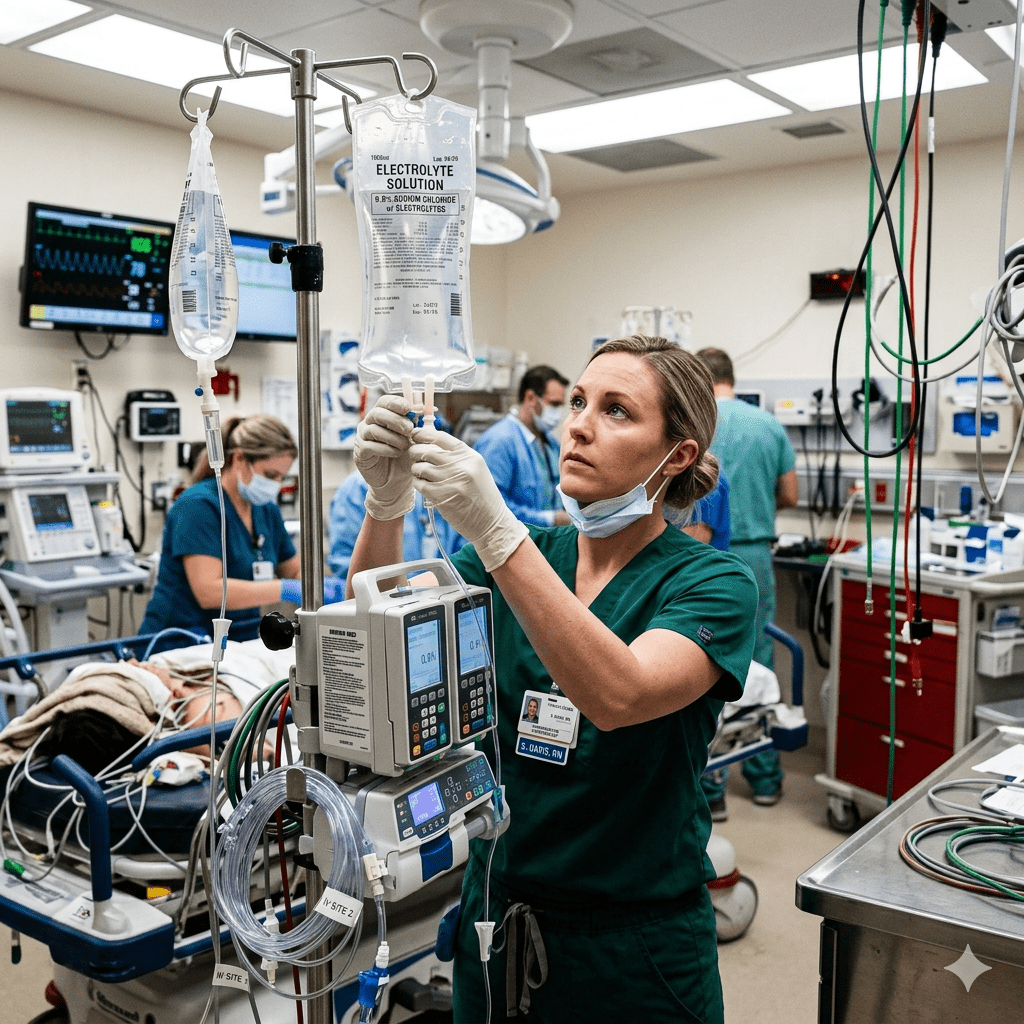
Massive trauma resuscitation is one of the most electrolyte-chaotic environments a registered nurse will ever manage. Within minutes of a high-acuity traumatic injury, the body’s fluid and electrolyte balance can be completely disrupted — and the interventions used to save a patient’s life can simultaneously create dangerous imbalances. For nursing students preparing for the NCLEX and for practicing RN nurses working in trauma centers or ICUs, a solid command of electrolyte changes during trauma resuscitation is non-negotiable. This knowledge is a cornerstone of any critical care nursing bundle and a high-yield topic on board exams.
Why Electrolyte Imbalances Are Inevitable in Massive Trauma
Massive trauma triggers a cascade of physiological responses that directly alter electrolyte homeostasis. Massive hemorrhage, crush injuries, burns, and traumatic shock all disrupt the normal distribution of ions across cellular membranes. At the same time, resuscitation with large volumes of crystalloids and packed red blood cells (PRBCs) introduces additional electrolyte loads that the injured, often hypoperfused kidneys cannot always compensate for.
The result: nursing teams frequently encounter simultaneous or rapidly shifting imbalances in potassium, calcium, sodium, and magnesium. Recognizing these patterns early — and knowing when to intervene — is what separates reactive nursing care from expert trauma nursing.
Hyperkalemia: The Most Immediately Life-Threatening Imbalance
Hyperkalemia (serum potassium > 5.0 mEq/L) is the electrolyte disturbance most likely to kill a trauma patient quickly. It develops through three converging mechanisms:
- Massive cellular destruction: Crush injuries, rhabdomyolysis, and hemolysis from damaged red blood cells release intracellular potassium into the bloodstream.
- Metabolic acidosis: In hemorrhagic shock, lactic acidosis causes hydrogen ions to shift into cells and potassium to shift out — raising serum K⁺ rapidly.
- Transfusion-related load: Stored PRBCs have elevated extracellular potassium due to cell membrane breakdown during storage. Massive transfusion amplifies this load significantly.
Nursing interventions for trauma-related hyperkalemia include continuous cardiac monitoring (widened QRS, peaked T waves, sine wave pattern), anticipating orders for calcium gluconate (to stabilize the myocardium), sodium bicarbonate (to shift K⁺ intracellularly), and insulin with dextrose. The registered nurse must also ensure urine output is monitored closely, as potassium elimination depends on renal function.
Hypocalcemia: The Silent Danger of Massive Transfusion
Hypocalcemia (ionized calcium < 1.1 mmol/L) is nearly universal in massive trauma resuscitation and is one of the most underrecognized causes of refractory hypotension. It develops because:
- Citrate toxicity: Blood products are preserved with citrate, which chelates (binds) free calcium. During massive transfusion, citrate infuses faster than the liver can metabolize it, causing ionized calcium to plummet.
- Dilutional effect: High-volume crystalloid resuscitation dilutes circulating calcium.
- Alkalosis: Resuscitation with sodium bicarbonate or from hyperventilation causes calcium to bind more tightly to albumin, decreasing the ionized (active) fraction.
Clinical signs include Trousseau’s sign, Chvostek’s sign, prolonged QT interval, tetany, muscle cramping, and hypotension. Nursing priority is to monitor ionized calcium (not total calcium) during active resuscitation, as ionized levels more accurately reflect functional status. Anticipate IV calcium chloride or calcium gluconate replacement as ordered — and know that calcium chloride delivers three times more elemental calcium than gluconate.
Hypomagnesemia and Sodium Shifts in the Trauma Setting
Hypomagnesemia
Magnesium (normal: 1.7–2.2 mg/dL) is often depleted in trauma through hemorrhage, aggressive fluid resuscitation, and renal losses. This matters clinically because magnesium is necessary for proper functioning of the sodium-potassium ATPase pump, meaning hypomagnesemia can make hypokalemia refractory to replacement. If potassium is not correcting despite adequate supplementation, the RN nurse must assess magnesium levels and anticipate replacement.
Sodium Dysregulation
Hyponatremia can result from large volumes of hypotonic fluids, while hypernatremia may occur with the use of hypertonic saline (3% NaCl) — increasingly used in traumatic brain injury (TBI) resuscitation to reduce cerebral edema. The registered nurse must understand the indication: in TBI, a controlled elevation of serum sodium (target 145–155 mEq/L) is therapeutic, not a complication. Overly rapid correction of sodium in either direction carries serious neurological risks, including osmotic demyelination syndrome.
The Lethal Triad: Where Electrolytes Meet Coagulation and Temperature
Every nurse managing massive trauma must understand the lethal triad of trauma: hypothermia, acidosis, and coagulopathy. These three factors interact directly with electrolyte disturbances:
- Hypothermia suppresses enzyme function and worsens cardiac dysrhythmias caused by hyperkalemia or hypocalcemia.
- Acidosis drives potassium out of cells, worsening hyperkalemia.
- Coagulopathy is amplified by hypocalcemia, since ionized calcium is a required cofactor for the coagulation cascade.
Damage control resuscitation (DCR) — using blood products in a balanced 1:1:1 ratio of PRBCs, fresh frozen plasma, and platelets — is the current standard to combat the lethal triad. From a nursing standpoint, warming all fluids and blood products, monitoring arterial blood gases frequently, and tracking serial electrolyte panels are essential components of this approach. These elements should be part of every critical care nursing bundle for trauma patients.
Quick Reference Table: Electrolyte Imbalances in Massive Trauma
| Electrolyte | Common Imbalance | Key Cause | Nursing Action |
|---|---|---|---|
| Potassium (K⁺) | Hyperkalemia | Rhabdomyolysis, acidosis, transfusions | Cardiac monitor, calcium gluconate, insulin/dextrose |
| Calcium (Ca²⁺) | Hypocalcemia | Citrate chelation, dilution, alkalosis | Monitor ionized Ca²⁺, IV calcium chloride/gluconate |
| Magnesium (Mg²⁺) | Hypomagnesemia | Hemorrhage, fluid resuscitation | Replace Mg²⁺ before persistent hypokalemia corrects |
| Sodium (Na⁺) | Variable | Fluid type, TBI management | Monitor serum Na⁺ q4–6h; avoid rapid corrections |
| Bicarbonate (HCO₃⁻) | Low (acidosis) | Hemorrhagic shock, lactic acid | Serial ABGs, guided bicarbonate use |
💡 NCLEX Tips for Electrolyte Changes During Trauma Resuscitation
- Citrate + massive transfusion = hypocalcemia — always link these two concepts on NCLEX questions involving blood transfusions.
- Ionized calcium, not total calcium, is the clinically meaningful value in active resuscitation — a common NCLEX distractor.
- Correct magnesium first when potassium isn’t responding to replacement — this is a classic NCLEX priority question setup.
- Peaked T waves on EKG + trauma history = hyperkalemia until proven otherwise — recognize the rhythm strip pattern.
- Hypertonic saline in TBI intentionally raises sodium — don’t confuse therapeutic hypernatremia with a nursing error.
Nursing Assessment and Monitoring Priorities
The RN nurse in a trauma resuscitation setting must maintain a systematic assessment approach. Key monitoring priorities include:
- Cardiac monitor: Continuous ECG to detect dysrhythmias from K⁺ and Ca²⁺ changes
- Serial labs: Electrolytes, ABG, ionized calcium, lactate, and CBC every 30–60 minutes in active resuscitation
- Urine output: Target ≥ 0.5 mL/kg/hr as a surrogate for renal perfusion and potassium excretion
- Temperature: Core temperature monitoring to prevent and detect hypothermia
- Fluid balance: Meticulous intake and output tracking, including all blood products
Effective nursing documentation of trends — not just single data points — allows the trauma team to detect deteriorating electrolyte trajectories before they become cardiac events.
Conclusion
Electrolyte changes during massive trauma resuscitation are rapid, multifactorial, and potentially fatal if not recognized and managed promptly. For the RN nurse, mastering the interplay of hyperkalemia, hypocalcemia, hypomagnesemia, and sodium shifts — alongside the lethal triad — is an essential clinical skill. These concepts are heavily tested on the NCLEX and directly applicable in critical care practice. Investing in a comprehensive nursing bundle that covers trauma electrolytes, ABG interpretation, and hemodynamic monitoring will strengthen both exam performance and bedside competency.
Practice these high-yield concepts with NCLEX-style questions at rn-nurse.com/nclex-qcm/ or explore our full critical care courses at rn-nurse.com/nursing-courses/.