
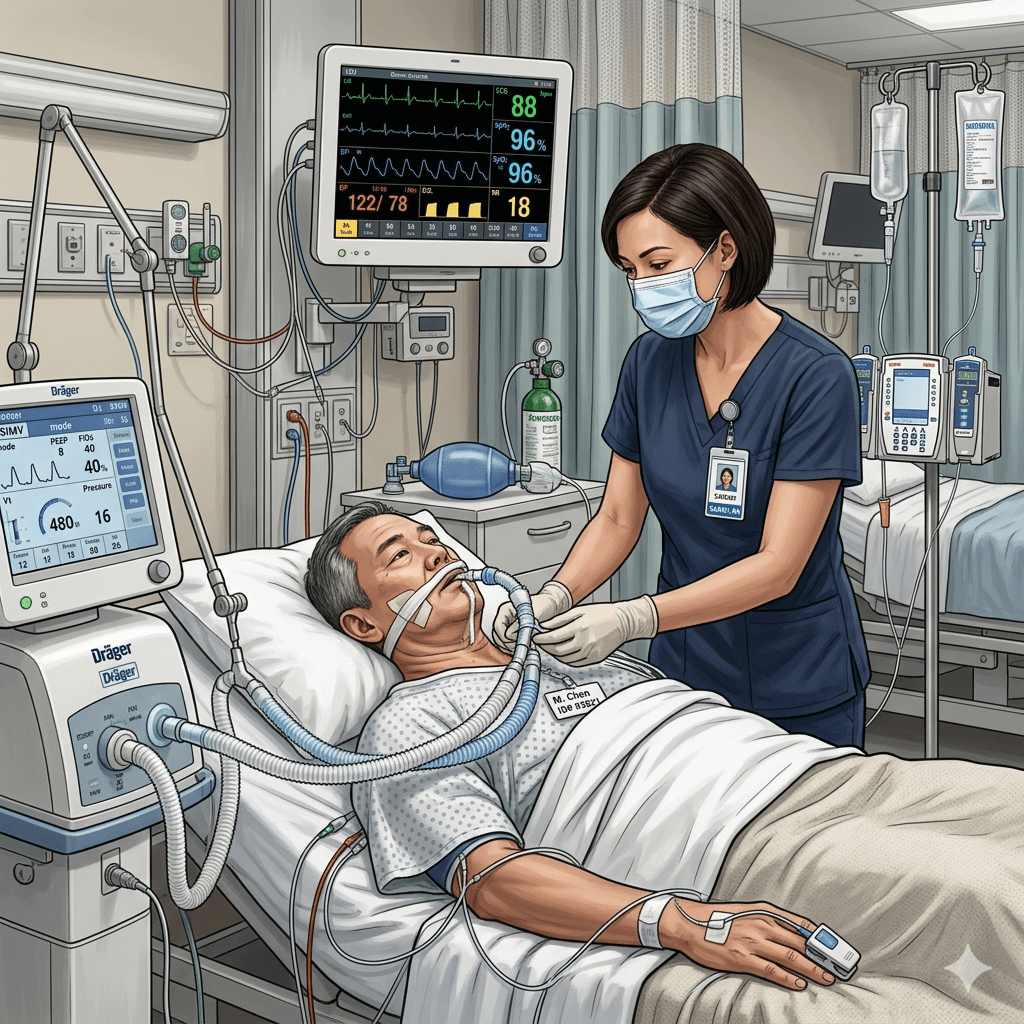
Sedation is commonly used in intensive care units (ICUs) to help critically ill patients tolerate mechanical ventilation, reduce anxiety, and prevent discomfort. However, prolonged sedation can lead to complications such as delirium, longer ventilator dependence, and extended ICU stays. Therefore, healthcare providers often use a strategy known as sedation interruption, also called Daily Awakening Trials (DAT).
Understanding sedation interruption is important for every nurse and registered nurse (RN nurse) working in critical care environments. In addition, this concept is frequently discussed in NCLEX preparation materials and many nursing bundle study guides that focus on ICU patient care.
In this article, we will explain what sedation interruption is, why it is used in ICU patients, and the important nursing safety protocols involved in performing daily awakening trials.
What Is Sedation Interruption?
Sedation interruption refers to the temporary stopping of sedative medications each day to allow the patient to wake up and be evaluated. This process helps healthcare providers assess neurological status, respiratory function, and readiness to reduce ventilator support.
During a Daily Awakening Trial, sedative medications are paused while the patient is closely monitored. If the patient tolerates the interruption well, clinicians may adjust sedation levels or consider beginning ventilator weaning.
Because these trials involve critically ill patients, the RN nurse plays a key role in monitoring safety throughout the procedure.
Why Sedation Interruption Is Important
In the past, many ICU patients remained deeply sedated for long periods. However, research has shown that continuous sedation can cause several complications.
Potential risks of prolonged sedation include:
- Increased risk of delirium
- Longer mechanical ventilation duration
- Extended ICU stays
- Muscle weakness
- Delayed neurological assessment
Consequently, sedation interruption has become a recommended practice in many critical care units. By allowing patients to wake briefly each day, healthcare providers can better evaluate recovery progress.
For students studying for the NCLEX, sedation interruption is an important topic in critical care nursing.
Goals of Daily Awakening Trials
Daily Awakening Trials serve several important purposes in ICU patient care.
Primary goals include:
- Assessing neurological function
- Determining sedation needs
- Evaluating readiness for ventilator weaning
- Reducing risk of sedation-related complications
Because these goals directly affect patient recovery, careful monitoring by the registered nurse is essential during the process.
Nursing Responsibilities During Sedation Interruption
The nurse plays a central role in safely performing sedation interruption. Proper assessment and observation help ensure the patient tolerates the awakening trial without complications.
1. Pre-Trial Patient Assessment
Before stopping sedative medications, the RN nurse must evaluate whether the patient is stable enough for a sedation interruption.
Important checks include:
- Stable blood pressure
- Acceptable oxygen levels
- No active seizures
- No severe agitation
- No recent use of neuromuscular blocking agents
If the patient is unstable, sedation interruption may be delayed until conditions improve.
2. Monitoring During the Awakening Trial
Once sedative medications are paused, the nurse closely observes the patient for signs of distress or instability.
Key monitoring parameters include:
- Respiratory rate
- Heart rate
- Oxygen saturation
- Blood pressure
- Level of consciousness
During this time, the registered nurse also evaluates the patient’s ability to follow simple commands or respond to stimuli.
3. Identifying Signs of Intolerance
Not all patients tolerate sedation interruption well. Therefore, the RN nurse must recognize signs that the trial should be stopped.
Warning signs may include:
- Severe agitation
- Rapid breathing
- Oxygen desaturation
- Significant blood pressure changes
- Patient distress
If these symptoms occur, sedation medications may be restarted to stabilize the patient.
Recognizing these situations is an important skill tested in NCLEX critical care nursing questions.
4. Communication With the Healthcare Team
Throughout the process, the nurse communicates findings to physicians and respiratory therapists.
Important information includes:
- Patient response to awakening
- Neurological status
- Ability to follow commands
- Respiratory tolerance
This information helps guide decisions about ventilator weaning and sedation management.
Sedation Interruption and Ventilator Weaning
Daily Awakening Trials are often combined with Spontaneous Breathing Trials (SBT). These tests evaluate whether a patient can breathe independently without full ventilator support.
If the patient successfully completes both trials, clinicians may consider removing the breathing tube.
Because of this connection, sedation interruption plays a major role in reducing ventilator days and improving ICU recovery outcomes.
The registered nurse must carefully coordinate with respiratory therapists during this process.
Benefits of Daily Awakening Trials
Research has shown that sedation interruption offers several advantages for ICU patients.
Key benefits include:
- Shorter mechanical ventilation duration
- Reduced ICU length of stay
- Lower risk of delirium
- Improved neurological assessment
- Faster patient recovery
These benefits explain why sedation interruption is widely recommended in modern critical care nursing protocols.
Potential Risks of Sedation Interruption
Although sedation interruption has many benefits, it must be performed carefully to avoid complications.
Possible risks include:
- Accidental removal of medical devices
- Increased patient anxiety
- Temporary agitation
- Cardiovascular instability
Because of these risks, the RN nurse must monitor the patient closely and follow established ICU safety guidelines.
Importance for NCLEX Preparation
Sedation management is an important topic in modern nursing education. Therefore, many NCLEX questions test a student’s ability to recognize safe sedation practices and ICU monitoring priorities.
For example, the registered nurse may need to identify:
- Appropriate sedation interruption protocols
- Signs that a patient cannot tolerate an awakening trial
- Nursing priorities during ventilator weaning
- Interventions for ICU delirium
Understanding these concepts helps nursing students build strong clinical reasoning skills.
How Nursing Study Bundles Support Learning
Critical care topics such as sedation interruption can be complex for students. Fortunately, organized study resources like a nursing bundle can simplify these concepts.
A comprehensive nursing bundle often includes:
- Simplified ICU care guides
- Sedation and ventilator management charts
- NCLEX-style practice questions
- Quick reference sheets for critical care topics
Using these materials helps future registered nurses develop confidence when managing critically ill patients.
Final Thoughts
Sedation interruption, also known as Daily Awakening Trials, is an important strategy used in modern ICU care. By temporarily stopping sedative medications each day, healthcare providers can assess neurological function, evaluate ventilator readiness, and reduce complications related to prolonged sedation.
Because this process requires careful observation and rapid response, the nurse plays a vital role in ensuring patient safety. Through continuous monitoring and teamwork, the RN nurse helps optimize recovery for critically ill patients.
For students preparing for the NCLEX, understanding sedation interruption protocols is also essential for mastering critical care nursing concepts. With consistent practice and the support of structured learning tools like a nursing bundle, future registered nurses can build the knowledge needed to safely manage ICU sedation and patient recovery.