
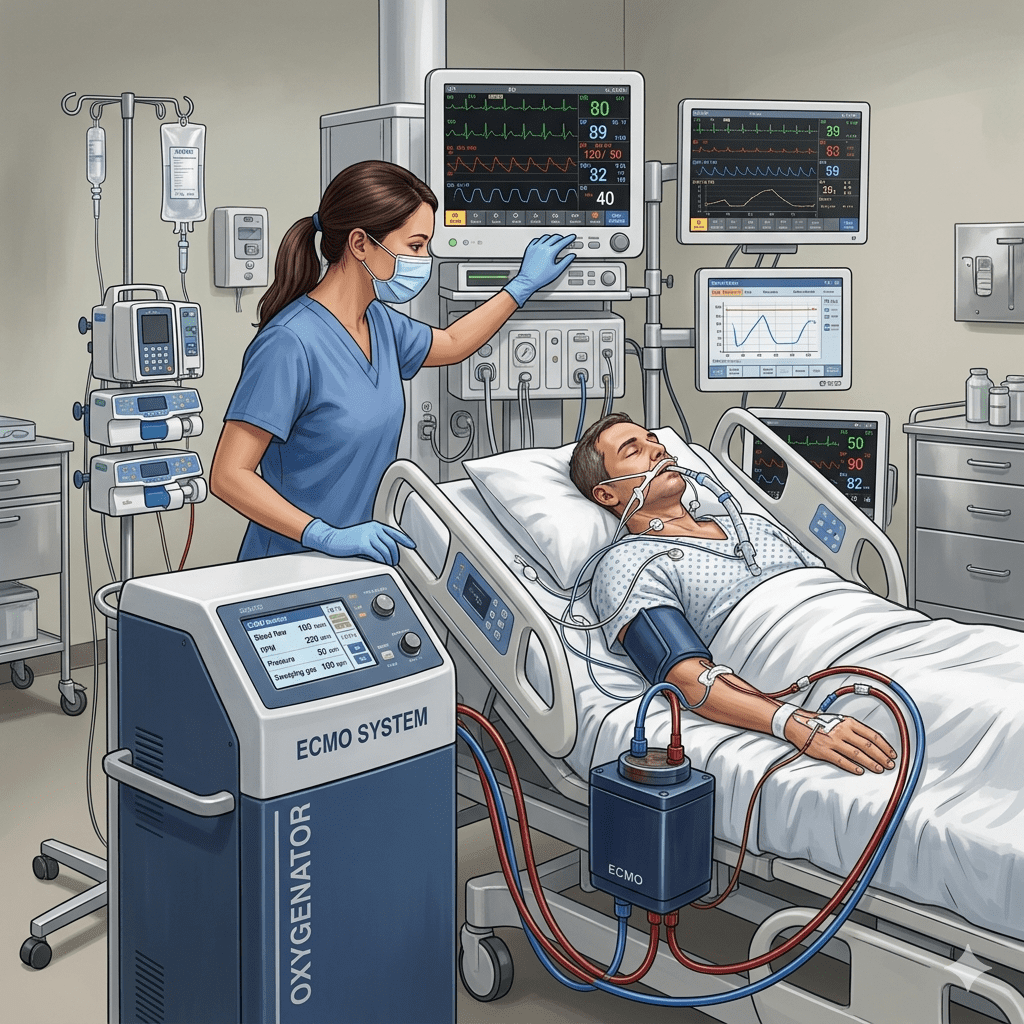
Extracorporeal Membrane Oxygenation (ECMO) is an advanced life-support technology used for patients with severe heart or lung failure. When conventional treatments such as mechanical ventilation or medications are not enough, ECMO can temporarily take over the function of the heart and lungs. Therefore, understanding the basics of ECMO is important for every nurse and registered nurse (RN nurse) working in critical care environments.
Although ECMO is a highly specialized therapy, the concept is increasingly included in NCLEX preparation and modern nursing education. Additionally, many comprehensive nursing bundle study guides introduce ECMO to help nursing students understand advanced critical care treatments.
In this article, we will explore what ECMO is, how it works, and the essential nursing responsibilities when caring for patients receiving ECMO support.
What Is ECMO?
Extracorporeal Membrane Oxygenation is a form of extracorporeal life support that temporarily replaces the function of the heart and lungs. The word “extracorporeal” means outside the body.
During ECMO therapy, blood is removed from the patient’s body, oxygenated through a machine, and then returned to the bloodstream. As a result, the device allows the heart and lungs to rest and recover.
ECMO is often used in critical situations such as:
- Severe Acute Respiratory Distress Syndrome (ARDS)
- Cardiac failure
- Severe pneumonia
- Pulmonary embolism
- Complications after heart surgery
Because ECMO patients are critically ill, the RN nurse must perform continuous monitoring and collaborate closely with the intensive care team.
How ECMO Works
The ECMO system functions similarly to a heart-lung bypass machine used during cardiac surgery. However, ECMO can support patients for longer periods, sometimes for several days or weeks.
The basic ECMO circuit includes:
- Cannulas inserted into large blood vessels
- A pump that circulates blood
- A membrane oxygenator that adds oxygen and removes carbon dioxide
- Tubing that connects the components
In simple terms, blood flows out of the body, passes through the oxygenator where gas exchange occurs, and then returns to the patient.
Because this system directly interacts with the bloodstream, careful monitoring by the nurse is essential to prevent complications.
Types of ECMO
There are two primary types of ECMO used in critical care nursing practice.
Veno-Venous (VV) ECMO
VV ECMO is used primarily for severe respiratory failure. In this setup, blood is removed from a vein, oxygenated, and returned to another vein.
This type supports lung function but does not assist the heart.
Common indications include:
- Severe ARDS
- Respiratory failure from infection
- Lung injury from trauma
Veno-Arterial (VA) ECMO
VA ECMO provides support for both heart and lung function.
In this configuration, blood is removed from a vein and returned to an artery, allowing the machine to assist with circulation.
VA ECMO may be used in cases such as:
- Cardiogenic shock
- Cardiac arrest
- Severe heart failure
Recognizing these ECMO types is important for NCLEX preparation and advanced nursing education.
Nursing Responsibilities in ECMO Care
Patients receiving ECMO require intensive monitoring and specialized care. Therefore, the registered nurse plays a critical role in maintaining patient safety.
Key nursing responsibilities include:
Continuous Vital Sign Monitoring
The RN nurse must frequently assess:
- Blood pressure
- Heart rate
- Oxygen saturation
- Respiratory status
Any abnormal changes may indicate complications with the ECMO circuit or the patient’s condition.
Monitoring the ECMO Circuit
Because ECMO involves blood circulating outside the body, the nurse must monitor the system carefully.
Important observations include:
- Blood flow rate
- Oxygenator function
- Presence of air bubbles
- Clot formation in tubing
Early detection of circuit problems can prevent life-threatening complications.
Managing Anticoagulation Therapy
Patients on ECMO usually receive anticoagulant medications to prevent blood clots within the circuit.
The registered nurse must monitor laboratory values such as:
- Activated clotting time (ACT)
- Partial thromboplastin time (PTT)
Maintaining proper anticoagulation balance is essential to prevent both clotting and bleeding risks.
Assessing Organ Perfusion
Another important responsibility in critical care nursing is evaluating tissue perfusion.
The RN nurse should monitor:
- Urine output
- Skin color and temperature
- Mental status
- Capillary refill
These assessments help determine whether ECMO support is effectively maintaining circulation.
Potential Complications of ECMO
Although ECMO can save lives, it carries several potential risks. Consequently, close observation by the nurse is essential.
Possible complications include:
- Bleeding due to anticoagulation therapy
- Blood clots within the ECMO circuit
- Infection at cannula insertion sites
- Air embolism
- Organ dysfunction
Recognizing these complications early allows the registered nurse to respond quickly and protect patient safety.
These scenarios are often included in NCLEX questions related to advanced nursing care.
ECMO and the Role of the Interdisciplinary Team
ECMO therapy requires collaboration among multiple healthcare professionals. The care team often includes:
- Critical care physicians
- Perfusionists
- Respiratory therapists
- ICU nurses
Each team member contributes specialized knowledge to manage the complex ECMO system.
Therefore, communication and teamwork are essential components of successful ECMO patient care.
Why ECMO Knowledge Is Important for NCLEX Preparation
While many nurses may not operate ECMO machines directly, understanding the basics of this therapy helps build strong critical care knowledge.
For example, the NCLEX may test a registered nurse’s ability to:
- Identify advanced life-support therapies
- Recognize complications of extracorporeal circulation
- Understand oxygenation and perfusion concepts
Because of this, ECMO is sometimes included in critical care topics within nursing bundle study materials.
How Nursing Study Bundles Support Advanced Learning
Critical care therapies like ECMO can feel complex for many students. However, structured learning tools such as a nursing bundle can make these concepts easier to understand.
A comprehensive nursing bundle often provides:
- Simplified critical care explanations
- Visual diagrams of medical devices
- NCLEX-style practice questions
- Quick review guides for ICU topics
These materials help future registered nurses strengthen their knowledge and prepare for challenging clinical situations.
Final Thoughts
Extracorporeal Membrane Oxygenation (ECMO) is a powerful life-support technology used when the heart or lungs cannot function properly on their own. By temporarily performing the work of these organs, ECMO allows the body time to recover from severe illness.
Because patients receiving ECMO require constant monitoring, the nurse plays a vital role in maintaining safety and detecting complications. Careful observation, teamwork, and strong critical care skills are essential for successful ECMO management.
For students studying advanced nursing topics, understanding ECMO is also valuable for NCLEX preparation. With the help of organized learning tools such as a nursing bundle, every future RN nurse can build the knowledge needed to care for critically ill patients.