
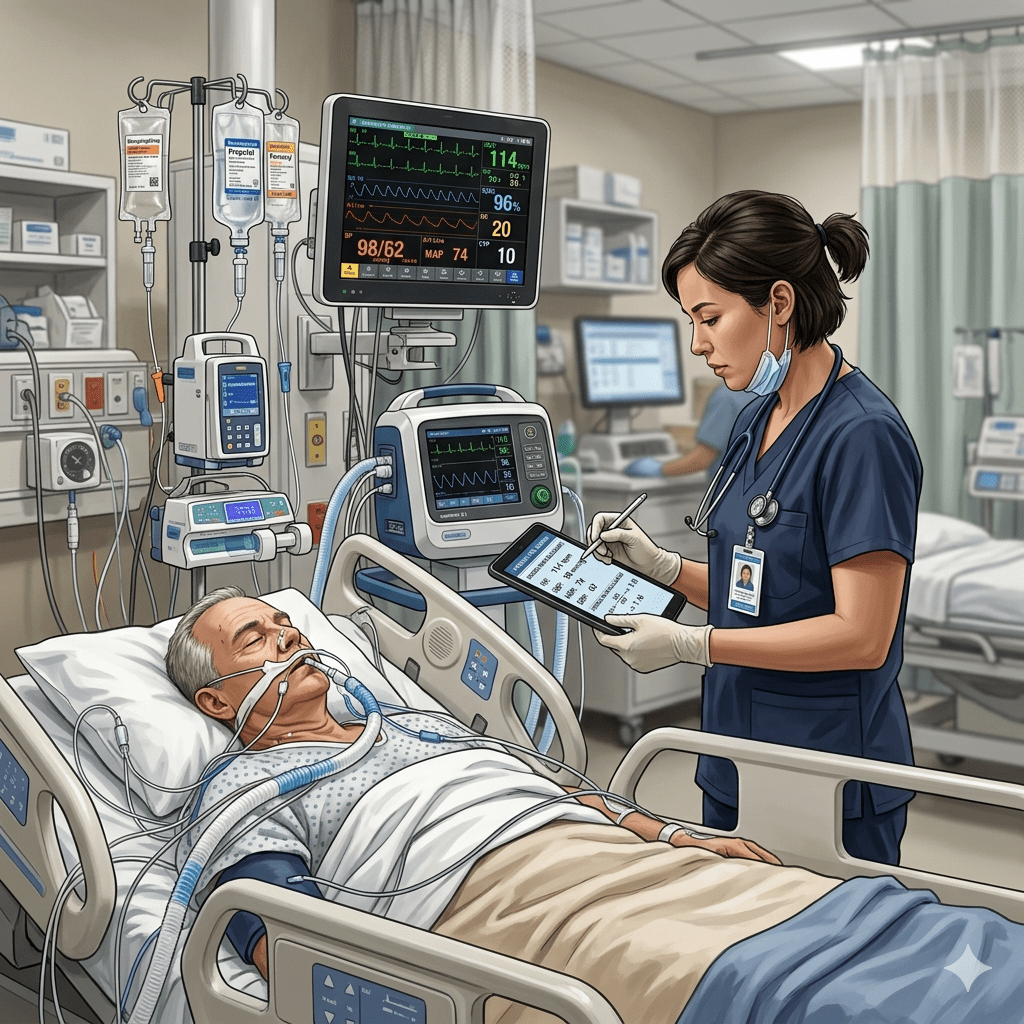
Early recognition of patient deterioration is one of the most important responsibilities in nursing. In critical care environments, subtle changes in vital signs can signal serious underlying problems. Therefore, tools that help detect early hemodynamic instability are extremely valuable for every nurse and registered nurse (RN nurse).
One such tool is the Shock Index (SI). This simple calculation uses heart rate and systolic blood pressure to help identify patients who may be developing circulatory shock. Because of its clinical importance, the concept frequently appears in NCLEX preparation and many nursing bundle study guides used by nursing students.
In this article, we will explain what the Shock Index is, how to calculate it, and why it is an important assessment tool in critical care nursing.
What Is the Shock Index?
The Shock Index is a quick clinical indicator used to assess the relationship between heart rate and systolic blood pressure. It helps healthcare providers detect early signs of hemodynamic instability before severe shock develops.
The formula is simple:
Shock Index=Heart RateSystolic Blood PressureShock\ Index = \frac{Heart\ Rate}{Systolic\ Blood\ Pressure}Shock Index=Systolic Blood PressureHeart Rate
In normal healthy adults, the Shock Index typically ranges between 0.5 and 0.7. However, values higher than this range may indicate that the body is compensating for reduced blood circulation.
Because the calculation is simple and quick, the RN nurse can easily perform it at the bedside when assessing critically ill patients.
Why the Shock Index Matters in Critical Care
Traditional vital signs sometimes fail to reveal early shock. For example, a patient may maintain a normal blood pressure while the body compensates for internal bleeding or dehydration.
However, the Shock Index can reveal hidden instability earlier than blood pressure alone.
When the Shock Index increases, it may indicate:
- Early hypovolemic shock
- Internal bleeding
- Severe dehydration
- Sepsis
- Trauma-related blood loss
Therefore, many emergency departments and intensive care units use this tool to help the registered nurse identify patients who need rapid medical intervention.
For students studying for the NCLEX, understanding the Shock Index helps strengthen knowledge of cardiovascular assessment in nursing practice.
How to Calculate the Shock Index
Calculating the Shock Index requires two vital signs:
- Heart Rate (HR)
- Systolic Blood Pressure (SBP)
Example Calculation
Imagine a patient with the following vital signs:
- Heart rate: 110 bpm
- Systolic blood pressure: 100 mmHg
Shock Index:
110 ÷ 100 = 1.1
Because the value is greater than 0.9, this result may suggest possible circulatory instability.
Consequently, the nurse should immediately reassess the patient and notify the healthcare provider if necessary.
Normal vs Abnormal Shock Index Values
Understanding normal and abnormal ranges is essential for safe nursing practice.
| Shock Index Value | Interpretation |
|---|---|
| 0.5 – 0.7 | Normal range |
| 0.7 – 0.9 | Possible early concern |
| > 0.9 | Possible hemodynamic instability |
| ≥ 1.0 | High risk of shock |
Therefore, a value above 0.9 should alert the RN nurse to closely monitor the patient for signs of deterioration.
In trauma and emergency settings, the Shock Index has proven to be a strong predictor of hemorrhagic shock and poor outcomes.
Clinical Situations Where Shock Index Is Useful
The Shock Index can be applied in many medical settings. Consequently, critical care teams often rely on it for rapid decision-making.
Common clinical uses include:
Trauma Assessment
Patients with internal bleeding may maintain normal blood pressure temporarily. However, the Shock Index may rise early, allowing the registered nurse to recognize hidden blood loss.
Sepsis Monitoring
In septic patients, the body often increases heart rate to maintain circulation. Therefore, an elevated Shock Index may signal worsening infection or septic shock.
Emergency Department Triage
Emergency departments sometimes use the Shock Index to identify high-risk patients who require immediate attention.
Postoperative Monitoring
After surgery, changes in vital signs may indicate bleeding or complications. Thus, calculating the Shock Index can help the nurse detect problems early.
These clinical applications make the Shock Index a valuable tool in both emergency and critical care nursing.
Nursing Responsibilities When Shock Index Is Elevated
If the Shock Index suggests possible hemodynamic instability, the RN nurse must act quickly. Early intervention can prevent serious complications.
Important nursing actions include:
- Reassessing vital signs frequently
- Monitoring urine output
- Evaluating mental status
- Assessing skin perfusion and capillary refill
- Reporting abnormal findings to the healthcare provider
Additionally, the nurse should prepare for possible emergency interventions such as IV fluid resuscitation, blood transfusion, or vasopressor therapy.
These clinical decisions are commonly included in NCLEX questions related to shock and critical care nursing.
Advantages of Using the Shock Index
Several factors make the Shock Index useful in clinical practice.
First, it is quick and simple to calculate. Second, it uses vital signs that the registered nurse already measures during routine patient assessment. Furthermore, it can identify circulatory problems earlier than blood pressure alone.
Additional advantages include:
- Early detection of shock
- Useful in emergency and trauma settings
- No specialized equipment required
- Supports rapid clinical decision-making
Because of these benefits, the Shock Index is frequently discussed in nursing bundle educational materials designed to prepare students for the NCLEX exam.
Limitations of the Shock Index
Although the Shock Index is helpful, it should not replace a complete patient assessment.
Certain factors may influence the results, including:
- Medications such as beta-blockers
- Chronic hypertension
- Cardiac conditions
- Age-related physiological changes
Therefore, the RN nurse must always interpret the Shock Index in combination with the patient’s clinical condition and other vital signs.
How Nursing Study Bundles Help Students Learn Critical Care Concepts
Understanding tools like the Shock Index can be challenging for new students. Fortunately, structured learning materials such as a nursing bundle can make these concepts easier to understand.
A well-designed nursing bundle often includes:
- Simplified cardiovascular assessment guides
- Visual explanations of shock types
- NCLEX-style practice questions
- Quick reference sheets for critical care topics
These resources help future registered nurses strengthen their clinical reasoning and prepare for the NCLEX examination.
Final Thoughts
The Shock Index is a simple but powerful tool for detecting early signs of hemodynamic collapse. By comparing heart rate and systolic blood pressure, the nurse can quickly identify patients who may be developing shock.
In critical care and emergency settings, early recognition can significantly improve patient outcomes. Therefore, every RN nurse should understand how to calculate and interpret the Shock Index during patient assessment.
For nursing students preparing for the NCLEX, mastering this concept is an important step in building strong critical care nursing skills. With practice and the support of comprehensive study tools such as a nursing bundle, future registered nurses can confidently recognize and respond to life-threatening circulatory emergencies.