
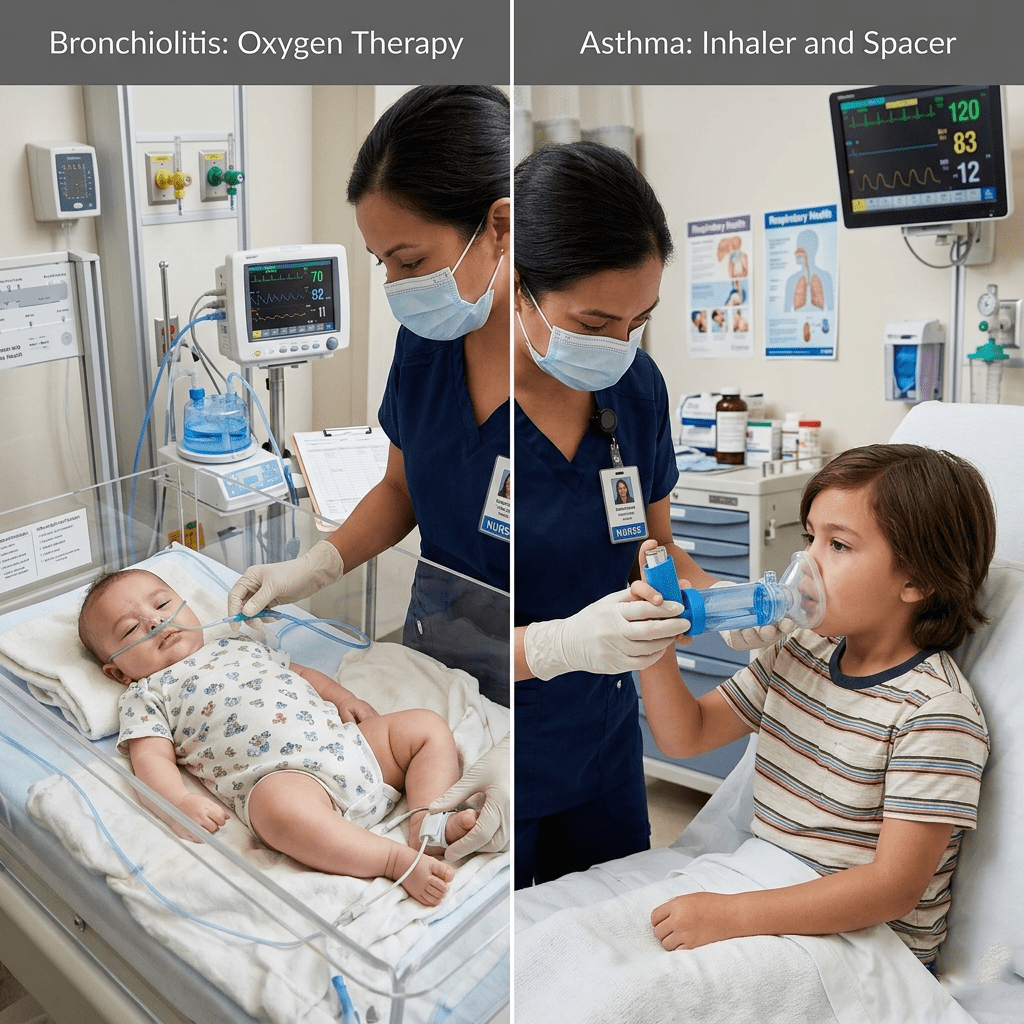
Respiratory illnesses are among the most common conditions affecting pediatric patients. Two conditions that often cause confusion are bronchiolitis and asthma, because both can produce symptoms such as wheezing, coughing, and difficulty breathing. However, these diseases have different causes, treatments, and clinical management strategies.
For a registered nurse, understanding the differences between bronchiolitis and asthma is essential for accurate patient assessment and safe care. These conditions frequently appear in NCLEX pediatric nursing questions, and they are commonly managed using structured nursing bundle protocols in pediatric and emergency settings. Therefore, every RN nurse must be able to recognize the clinical features that distinguish these respiratory disorders.
This guide explains the key clinical differences between bronchiolitis and asthma, helping nurses deliver effective pediatric respiratory care.
What Is Bronchiolitis?
Bronchiolitis is a viral infection that causes inflammation of the small airways (bronchioles) in the lungs. It most commonly affects infants and children under two years old.
The infection causes swelling, mucus buildup, and airway obstruction, which leads to breathing difficulties.
The most common cause of bronchiolitis is respiratory syncytial virus (RSV).
Because infants have smaller airways, even mild inflammation can significantly affect breathing. Therefore, the registered nurse must carefully monitor respiratory status in young patients with bronchiolitis.
What Is Asthma?
Asthma is a chronic inflammatory disease of the airways characterized by airway hyperreactivity and reversible airway obstruction.
Asthma can affect children of any age, although it is more commonly diagnosed in older infants, children, and adolescents.
In asthma, triggers such as allergens, infections, exercise, or environmental irritants cause airway inflammation and narrowing.
Unlike bronchiolitis, asthma is not caused by a single infection and often involves recurrent episodes of wheezing and respiratory distress.
The RN nurse must identify triggers and monitor symptom patterns when caring for pediatric patients with asthma.
Key Differences Between Bronchiolitis and Asthma
Although bronchiolitis and asthma share similar respiratory symptoms, several clinical features help differentiate them.
Age of Onset
Bronchiolitis usually occurs in infants younger than two years old, especially those under one year.
Asthma typically develops in older children, although symptoms may appear earlier in some cases.
Cause of the Condition
Bronchiolitis is primarily caused by viral infection, particularly RSV.
Asthma is a chronic inflammatory airway condition often triggered by allergens, exercise, cold air, or respiratory infections.
Disease Pattern
Bronchiolitis usually occurs as a single acute illness that resolves within several days or weeks.
Asthma is a chronic condition with recurring episodes of symptoms.
Response to Bronchodilators
Bronchiolitis may show limited improvement with bronchodilator medications.
Asthma typically responds well to bronchodilators, which help open the airways.
Recognizing these differences helps the registered nurse determine the appropriate treatment approach.
Common Symptoms of Bronchiolitis
Bronchiolitis symptoms usually develop after a mild upper respiratory infection.
Typical symptoms include:
- Runny nose
- Mild fever
- Wheezing
- Rapid breathing
- Difficulty feeding
- Chest retractions
Because infants may tire quickly during breathing, the RN nurse must monitor oxygen levels and feeding ability carefully.
Common Symptoms of Asthma
Asthma symptoms often occur during episodes triggered by environmental factors.
Common symptoms include:
- Wheezing
- Persistent cough
- Chest tightness
- Shortness of breath
- Difficulty breathing during exercise
These symptoms may worsen at night or during exposure to triggers.
The registered nurse should assess the frequency and severity of asthma attacks.
Nursing Assessment in Pediatric Respiratory Conditions
The registered nurse plays a critical role in evaluating respiratory status in children with bronchiolitis or asthma.
Important assessments include:
- Respiratory rate
- Oxygen saturation
- Presence of wheezing
- Use of accessory muscles
- Skin color and oxygenation
- Hydration status
Many hospitals include these steps in a pediatric respiratory nursing bundle, which standardizes monitoring and treatment.
Treatment Differences
Treatment strategies differ depending on the condition.
Bronchiolitis Treatment
Bronchiolitis management is primarily supportive care.
Treatment may include:
- Oxygen therapy
- Hydration support
- Nasal suctioning
Because the illness is viral, antibiotics are usually not required.
Asthma Treatment
Asthma treatment focuses on controlling airway inflammation and preventing attacks.
Common treatments include:
- Bronchodilators
- Corticosteroids
- Trigger avoidance strategies
The RN nurse must monitor patient response to medications and assess breathing improvement.
Nursing Responsibilities
The registered nurse is responsible for monitoring respiratory status and implementing appropriate interventions.
Key nursing responsibilities include:
Continuous Respiratory Monitoring
Nurses must assess breathing patterns and oxygen saturation frequently.
Medication Administration
Asthma medications such as bronchodilators and corticosteroids must be administered accurately.
Patient and Family Education
Parents should understand how to recognize respiratory distress and when to seek medical care.
Following established nursing bundle protocols helps improve safety and consistency in pediatric respiratory care.
NCLEX Tips for Bronchiolitis vs Asthma
For NCLEX exam preparation, remember these key points:
- Bronchiolitis commonly affects infants under two years old
- Asthma is a chronic respiratory condition
- Bronchiolitis is usually caused by viral infection
- Asthma typically responds to bronchodilator medications
Understanding these concepts helps nursing students and RN nurses answer pediatric respiratory questions correctly.
Conclusion
Bronchiolitis and asthma are two common respiratory conditions in children that can present with similar symptoms. However, they differ in causes, disease patterns, and treatment strategies.
The registered nurse plays a vital role in assessing respiratory symptoms, providing appropriate treatment, and educating families. Early recognition and accurate differentiation help ensure effective patient care and prevent complications.
For both clinical nursing practice and NCLEX preparation, understanding the clinical differences between bronchiolitis and asthma is essential for every RN nurse involved in pediatric respiratory care.