Umbilical cord blood gas analysis is an important diagnostic tool used immediately after birth to evaluate a newborn’s oxygenation, ventilation, and acid–base status. Understanding how to interpret these values is essential for every registered nurse, especially those working in labor and delivery, neonatal intensive care units (NICU), and maternal-child health settings.
For NCLEX preparation, umbilical cord blood gas interpretation is a high-yield topic because it helps nurses recognize fetal distress, birth asphyxia, and potential complications that require urgent intervention. A skilled RN nurse integrates this data into the broader nursing bundle for newborn assessment and stabilization.
What Is Umbilical Cord Blood Gas Analysis?
Umbilical cord blood gas testing measures the pH, oxygen levels, carbon dioxide levels, and base excess in blood obtained from the umbilical cord immediately after delivery.
This test helps determine whether the baby experienced hypoxia or acidosis during labor.
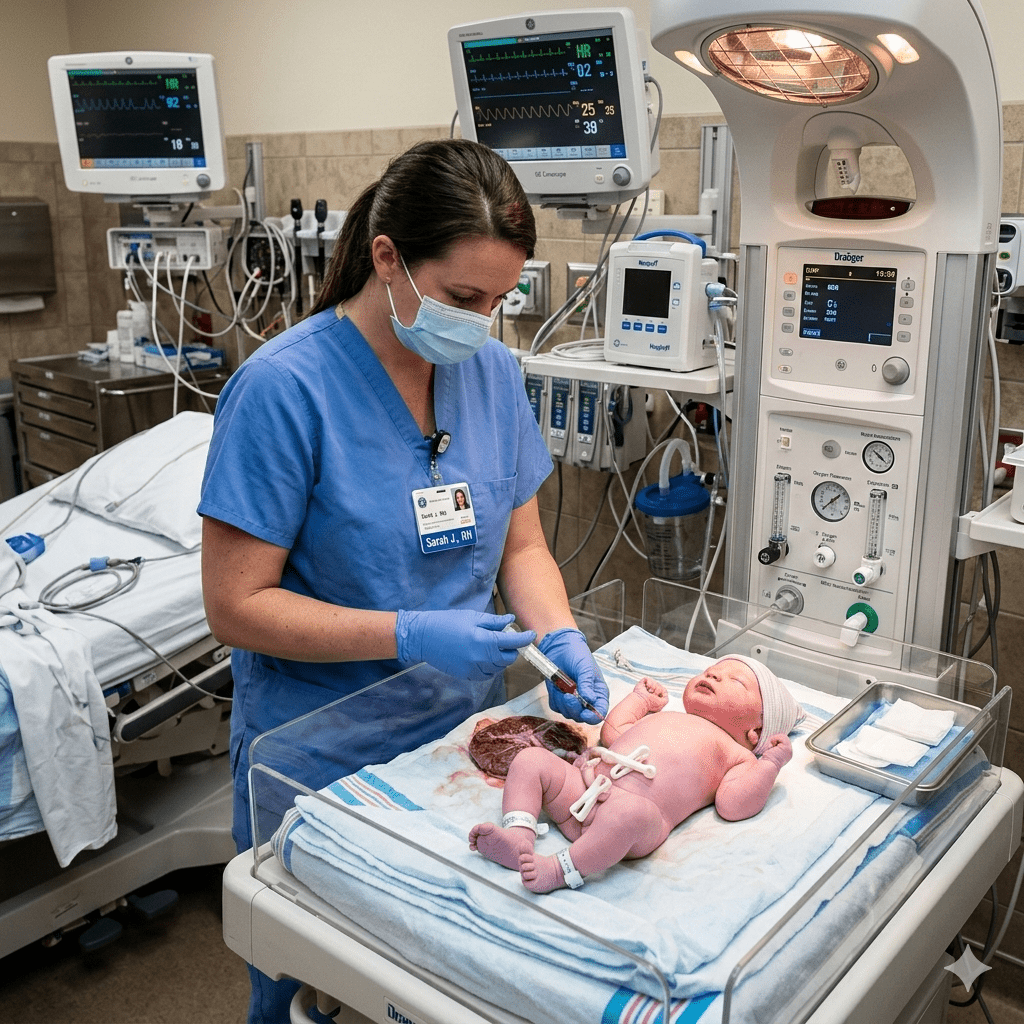
Cord blood is typically drawn from two vessels:
- Umbilical artery
- Umbilical vein
The umbilical artery reflects the baby’s metabolic condition, while the umbilical vein reflects oxygenated blood coming from the placenta.
For a nurse or nursing student preparing for the NCLEX, remembering this distinction is essential when interpreting results.
Normal Umbilical Cord Blood Gas Values
A registered nurse should understand the normal ranges for arterial cord blood gases.
Umbilical Artery Normal Values
| Parameter | Normal Range |
|---|---|
| pH | 7.20 – 7.30 |
| PaCO₂ | 45 – 55 mmHg |
| PaO₂ | 15 – 25 mmHg |
| HCO₃⁻ | 18 – 22 mEq/L |
| Base Excess | –2 to –6 |
Umbilical Vein Normal Values
| Parameter | Normal Range |
|---|---|
| pH | 7.25 – 7.35 |
| PaCO₂ | 35 – 45 mmHg |
| PaO₂ | 25 – 35 mmHg |
These ranges help the RN nurse determine whether the newborn experienced metabolic acidosis, respiratory acidosis, or normal transition after birth.
Why Cord Blood Gas Testing Is Important
Umbilical cord blood gas analysis provides critical information about fetal oxygenation before birth.
Key clinical uses include:
- Detecting fetal hypoxia
- Diagnosing birth asphyxia
- Evaluating complications during labor
- Supporting neonatal resuscitation decisions
- Documenting fetal condition at delivery
In many hospitals, cord gas evaluation is included in the nursing bundle for high-risk deliveries.
For NCLEX exam preparation, remember that low pH and high CO₂ suggest acidosis and possible fetal distress.
Types of Acidosis in Newborns
A knowledgeable registered nurse must differentiate between two types of acidosis.
Respiratory Acidosis
Occurs when carbon dioxide builds up in the blood.
Findings
- Low pH
- High PaCO₂
- Normal base excess
Causes
- Short-term hypoxia
- Temporary respiratory compromise
Respiratory acidosis often resolves quickly once the baby begins breathing effectively.
Metabolic Acidosis
More serious and associated with prolonged oxygen deprivation.
Findings
- Low pH
- Low bicarbonate
- Negative base excess
Causes
- Placental insufficiency
- Prolonged labor complications
- Severe fetal distress
Recognizing metabolic acidosis early allows the RN nurse to initiate appropriate neonatal monitoring and supportive care.
Nursing Responsibilities During Cord Blood Collection
Proper collection technique is essential for accurate results.
The registered nurse plays a vital role in ensuring that cord blood gases are obtained correctly.
Key Nursing Steps
- Clamp the umbilical cord immediately after birth.
- Identify the artery and vein correctly.
- Use a heparinized syringe for sample collection.
- Remove air bubbles from the sample.
- Send the sample to the laboratory quickly.
These steps are part of the nursing bundle for safe newborn assessment.
For NCLEX review, remember that delayed analysis can alter blood gas results.
Nursing Assessment Based on Cord Blood Gas Results
Once results are available, the RN nurse must assess the newborn’s clinical status.
Nursing Assessment Priorities
- Respiratory effort
- Heart rate
- Muscle tone
- Skin color
- Level of responsiveness
These findings are often evaluated alongside Apgar scores to determine the baby’s condition.
A nurse specializing in neonatal care must be prepared to initiate emergency interventions if severe acidosis is present.
Nursing Interventions for Abnormal Cord Blood Gases
If abnormal values indicate fetal distress or acidosis, immediate action is required.
Nursing Interventions
- Provide oxygen support
- Assist with neonatal resuscitation
- Maintain thermoregulation
- Monitor vital signs continuously
- Prepare for NICU transfer
These interventions form part of the nursing bundle used to stabilize newborns after complicated deliveries.
For NCLEX scenarios, remember that the priority is always airway, breathing, and circulation (ABC).
Risk Factors Associated With Abnormal Cord Blood Gases
Certain maternal and labor conditions increase the likelihood of abnormal cord blood gas values.
Common Risk Factors
- Prolonged labor
- Placental insufficiency
- Maternal hypertension
- Umbilical cord compression
- Meconium-stained amniotic fluid
- Shoulder dystocia
A vigilant registered nurse monitors these risk factors during labor and prepares the team for possible neonatal complications.
NCLEX Tips for Umbilical Cord Blood Gas Interpretation
For nursing students studying for the NCLEX, focus on these key points:
- Umbilical artery reflects fetal status
- Low pH indicates acidosis
- High CO₂ suggests respiratory acidosis
- Negative base excess indicates metabolic acidosis
- Severe acidosis may require immediate neonatal resuscitation
These concepts frequently appear in maternal-newborn nursing exam questions.
Conclusion
Umbilical cord blood gas interpretation is a critical skill for every registered nurse involved in maternal and neonatal care. By understanding the normal ranges, recognizing abnormal patterns, and initiating appropriate interventions, the RN nurse plays a vital role in protecting newborn health.
Incorporating cord blood gas analysis into the nursing bundle for newborn assessment helps ensure early identification of hypoxia and metabolic complications. For those preparing for the NCLEX, mastering this topic strengthens both clinical judgment and exam performance in maternal-child nursing.