
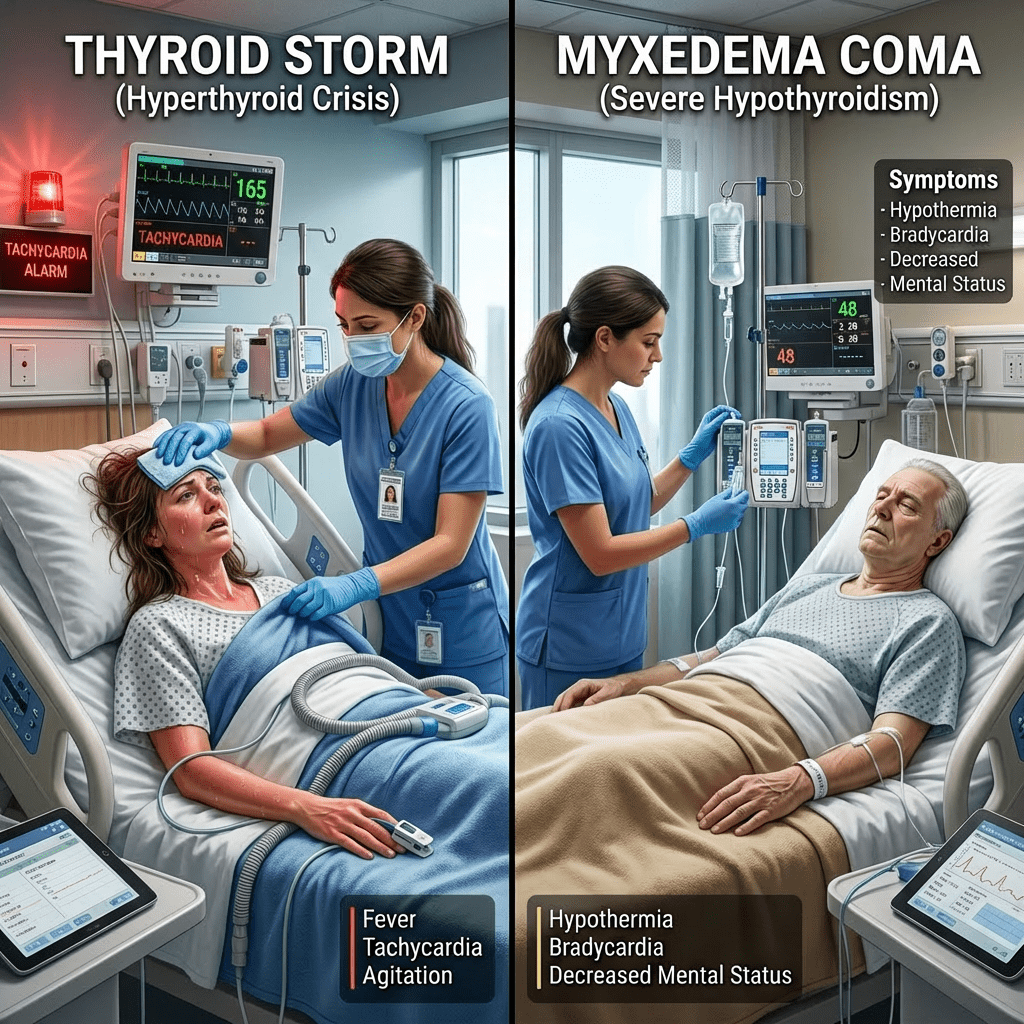
Thyroid emergencies are among the most dangerous endocrine conditions encountered in clinical practice. Two of the most critical are thyroid storm and myxedema coma, which represent opposite extremes of thyroid hormone imbalance. Thyroid storm occurs when thyroid hormone levels become dangerously high, while myxedema coma results from severe hypothyroidism.
For every nurse, especially those preparing for the NCLEX, understanding how to differentiate these two conditions is essential. Both emergencies require rapid intervention, and early recognition by a registered nurse (RN nurse) can save a patient’s life.
Many endocrine topics such as these are frequently highlighted in NCLEX preparation materials and nursing bundle study guides, making them important areas of focus for nursing students and practicing clinicians.
Understanding Thyroid Function
The thyroid gland regulates metabolism through the hormones thyroxine (T4) and triiodothyronine (T3). These hormones affect nearly every system in the body, including:
- Heart rate
- Body temperature
- Energy production
- Oxygen consumption
- Metabolism of carbohydrates, fats, and proteins
When thyroid hormone levels become severely imbalanced, life-threatening complications can occur.
For a registered nurse, recognizing abnormal thyroid activity is an important part of endocrine nursing assessment and patient monitoring.
What Is Thyroid Storm?
Thyroid storm is a severe and life-threatening form of hyperthyroidism. It occurs when the body is exposed to extremely high levels of thyroid hormones, causing an extreme increase in metabolic activity.
Common triggers include:
- Untreated hyperthyroidism
- Infection
- Surgery
- Trauma
- Severe stress
- Discontinuation of antithyroid medications
For NCLEX nursing scenarios, thyroid storm is usually associated with patients who have a history of Graves’ disease or untreated hyperthyroidism.
Symptoms of Thyroid Storm
Thyroid storm produces dramatic and rapidly worsening symptoms.
Common signs include:
- High fever (often above 40°C / 104°F)
- Severe tachycardia
- Hypertension
- Agitation or confusion
- Tremors
- Diarrhea
- Vomiting
- Profuse sweating
- Heart failure in severe cases
A RN nurse must recognize that fever and extreme tachycardia in a hyperthyroid patient may indicate thyroid storm.
These symptoms frequently appear in NCLEX case-based questions.
What Is Myxedema Coma?
Myxedema coma is the most severe form of hypothyroidism and is considered a medical emergency. It occurs when thyroid hormone levels become extremely low, causing a dangerous slowing of body functions.
Unlike thyroid storm, which speeds up metabolism, myxedema coma causes metabolic shutdown.
Common causes include:
- Long-standing untreated hypothyroidism
- Severe infection
- Exposure to cold temperatures
- Sedative or opioid use
- Stroke or trauma
A registered nurse must understand that myxedema coma often develops gradually but can quickly become fatal without treatment.
Symptoms of Myxedema Coma
Myxedema coma presents with symptoms related to severely slowed metabolism.
Key signs include:
- Hypothermia
- Bradycardia
- Hypotension
- Extreme fatigue
- Confusion or decreased consciousness
- Hypoventilation
- Puffy face and skin swelling
- Dry, coarse skin
For NCLEX preparation, remember the classic clue:
Myxedema coma = cold, slow, and depressed body functions.
A knowledgeable nurse should quickly identify these warning signs.
Key Differences: Thyroid Storm vs Myxedema Coma
| Feature | Thyroid Storm | Myxedema Coma |
|---|---|---|
| Thyroid Hormones | Extremely high | Extremely low |
| Temperature | High fever | Hypothermia |
| Heart Rate | Severe tachycardia | Bradycardia |
| Mental Status | Agitation, delirium | Confusion, coma |
| Metabolism | Hypermetabolic | Severely slowed |
| Blood Pressure | Hypertension | Hypotension |
For NCLEX test strategies, remembering these opposite patterns helps nursing students quickly identify the condition.
Diagnostic Evaluation
Diagnosis is based on clinical findings and laboratory tests.
Important labs include:
- TSH levels
- Free T3 and T4 levels
- Electrolytes
- Blood glucose
- Arterial blood gases
Typical findings:
Thyroid Storm
- High T3 and T4
- Very low TSH
Myxedema Coma
- Low T3 and T4
- Very high TSH
Understanding these laboratory results is an essential skill for a registered nurse working in endocrine or critical care nursing practice.
Medical Treatment
Treatment of Thyroid Storm
The goal is to reduce thyroid hormone activity and control symptoms.
Common treatments include:
- Antithyroid drugs (Propylthiouracil or Methimazole)
- Beta blockers (Propranolol)
- Corticosteroids
- Cooling measures
- IV fluids
A RN nurse must monitor heart rate, temperature, and neurological status closely.
Treatment of Myxedema Coma
Treatment focuses on restoring thyroid hormone levels and supporting vital functions.
Typical treatments include:
- IV levothyroxine
- Oxygen therapy
- Mechanical ventilation if needed
- IV fluids
- Passive rewarming
Because patients may have respiratory depression, careful monitoring by the nursing team is essential.
Nursing Assessment
Nurses play a key role in early detection and management.
Important assessments include:
- Monitoring vital signs frequently
- Observing mental status changes
- Checking body temperature
- Monitoring heart rhythm
- Assessing respiratory status
A skilled registered nurse can detect subtle changes before the patient deteriorates.
These assessment skills are commonly tested on the NCLEX.
Nursing Interventions
Effective nursing care focuses on stabilization and monitoring.
Key nursing interventions include:
For Thyroid Storm
- Administer antithyroid medications
- Provide cooling blankets
- Monitor cardiac rhythm
- Maintain hydration
For Myxedema Coma
- Administer thyroid hormone replacement
- Provide respiratory support
- Prevent hypothermia complications
- Monitor electrolyte levels
These priorities are frequently emphasized in nursing bundle study materials for endocrine emergencies.
NCLEX Tips for Nurses
For NCLEX success, remember these key patterns:
- Thyroid storm = hyperthyroidism emergency
- Myxedema coma = hypothyroidism emergency
Quick memory trick:
Storm = Hot and Fast
Myxedema = Cold and Slow
Recognizing these patterns allows a RN nurse to prioritize care quickly during critical situations.
Conclusion
Thyroid storm and myxedema coma represent opposite but equally dangerous endocrine emergencies. Rapid recognition and treatment are essential for patient survival.
A well-trained registered nurse understands how to identify symptoms, interpret laboratory findings, and initiate urgent interventions. For NCLEX preparation, mastering the differences between these conditions strengthens clinical reasoning and prepares nursing students for real-world emergency care.
Using high-quality study resources such as a nursing bundle, practicing NCLEX questions, and reviewing endocrine nursing concepts can help every nurse and RN nurse confidently manage thyroid emergencies.