
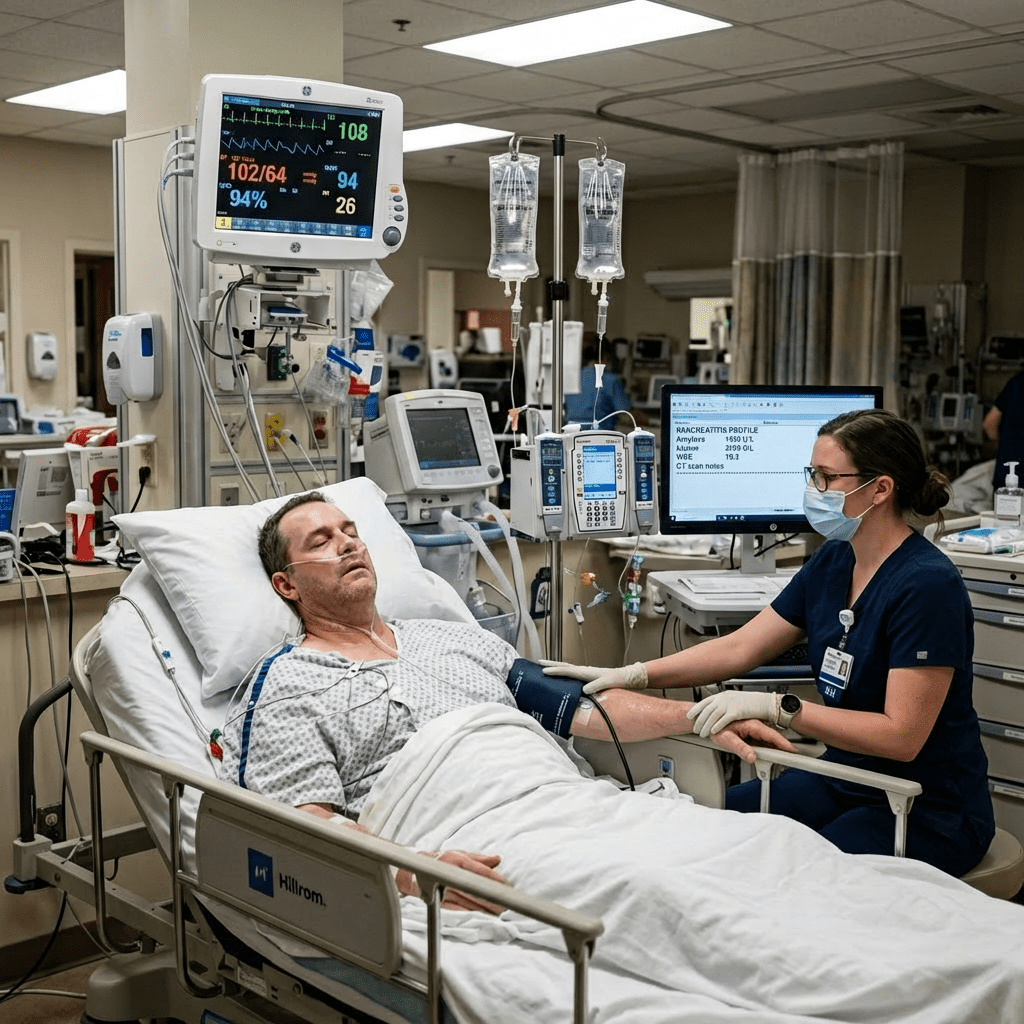
Acute pancreatitis can range from mild inflammation to life-threatening multi-organ failure. For every nurse, registered nurse (RN nurse), and nursing student preparing for the NCLEX, understanding pancreatitis severity scoring and proper nursing monitoring is essential.
Early recognition of severe pancreatitis saves lives. Strong assessment skills and accurate interpretation of severity scores help guide safe nursing interventions.
What Is Acute Pancreatitis?
Acute pancreatitis is inflammation of the pancreas caused by premature activation of digestive enzymes. These enzymes begin digesting pancreatic tissue, leading to inflammation, edema, and sometimes necrosis.
Common Causes (Think NCLEX)
- Gallstones (most common)
- Alcohol use
- Hypertriglyceridemia
- Abdominal trauma
- Certain medications
- Post-ERCP complication
NCLEX tip: Gallstones + alcohol = Top causes.
Why Severity Scoring Matters
Not all pancreatitis cases are the same.
- Mild pancreatitis → resolves with supportive care
- Moderate pancreatitis → local complications
- Severe pancreatitis → organ failure, ICU admission
Severity scoring systems help healthcare providers determine:
- Risk of complications
- Need for ICU admission
- Mortality risk
- Aggressiveness of treatment
For the registered nurse, understanding these scores improves clinical judgment and prioritization.
Major Pancreatitis Severity Scoring Systems
1️⃣ Ranson’s Criteria
Ranson’s criteria evaluates severity using specific lab values at:
- Admission
- 48 hours after admission
Parameters include:
- Age
- WBC count
- Blood glucose
- AST
- LDH
- Hematocrit drop
- Calcium levels
- BUN increase
The higher the score, the higher the mortality risk.
NCLEX reminder: You don’t need to memorize every value — understand that more abnormal findings = more severe disease.
2️⃣ BISAP Score (Common in Clinical Practice)
BISAP stands for:
- B – BUN > 25
- I – Impaired mental status
- S – SIRS
- A – Age > 60
- P – Pleural effusion
Score ≥ 3 indicates increased mortality risk.
For the RN nurse, noticing these early warning signs is critical for escalation of care.
3️⃣ APACHE II (Used in ICU)
APACHE II is a complex scoring system used in critical care settings to assess overall illness severity.
It considers:
- Vital signs
- Oxygenation
- Electrolytes
- Renal function
- Neurological status
In ICU settings, nurses frequently monitor trends contributing to this score.
Clinical Signs of Severe Pancreatitis
A nurse must watch for signs of deterioration:
- Persistent tachycardia
- Hypotension
- Decreased urine output
- Respiratory distress
- Hypoxia
- Confusion
- Increasing abdominal pain
- Fever
Severe pancreatitis can lead to:
- ARDS
- Acute kidney injury
- Sepsis
- Pancreatic necrosis
- Shock
Nursing Monitoring Priorities
For every nurse caring for pancreatitis patients:
1️⃣ Pain Assessment
- Severe epigastric pain radiating to the back
- Monitor response to analgesics
2️⃣ Fluid Status Monitoring
Pancreatitis causes third-spacing and massive fluid shifts.
Monitor:
- Strict intake and output
- Urine output (goal ≥ 30 mL/hr)
- Daily weight
- Blood pressure trends
NCLEX alert: Hypotension + low urine output = possible severe pancreatitis.
3️⃣ Respiratory Monitoring
Severe pancreatitis can lead to ARDS.
Monitor:
- Oxygen saturation
- Respiratory rate
- Breath sounds
- Signs of distress
Early oxygen support may be required.
4️⃣ Laboratory Monitoring
Important labs include:
- Amylase and lipase
- BUN
- Hematocrit
- Calcium
- Glucose
- Liver enzymes
- Electrolytes
Trending labs is more important than a single value.
5️⃣ Nutritional Support
Patients are often kept NPO initially.
- IV fluids aggressively
- Enteral feeding preferred over TPN if prolonged
- Monitor blood glucose
Registered nurses play a major role in preventing malnutrition.
Nursing Interventions
Key interventions include:
- Aggressive IV fluid resuscitation
- Pain management (opioids commonly used)
- Oxygen therapy
- Electrolyte correction
- Monitoring for complications
- Infection prevention
- Emotional support
Treatment is mostly supportive unless complications develop.
NCLEX-Style Practice Question
A patient with acute pancreatitis develops hypotension, tachycardia, and decreased urine output. What is the nurse’s priority action?
A. Administer antiemetics
B. Increase IV fluids
C. Provide oral fluids
D. Encourage ambulation
Correct Answer: B. Increase IV fluids
Rationale: Severe pancreatitis causes significant fluid shifts requiring aggressive IV resuscitation.
Why This Topic Matters for NCLEX and Nursing Practice
Pancreatitis questions test:
- Fluid and electrolyte knowledge
- Multi-system assessment
- Shock recognition
- Respiratory monitoring
- Prioritization skills
Including pancreatitis severity scoring in your nursing bundle strengthens exam performance and clinical confidence for every RN nurse.
Key Takeaways for Every Registered Nurse
- Severity scoring predicts complications and mortality.
- BISAP ≥ 3 suggests higher risk.
- Fluid monitoring is critical.
- Watch for organ failure.
- Trend labs and vital signs carefully.
- Early intervention improves outcomes.
For every nurse and nursing student, recognizing severe pancreatitis early can prevent ICU transfer, multi-organ failure, and death.