
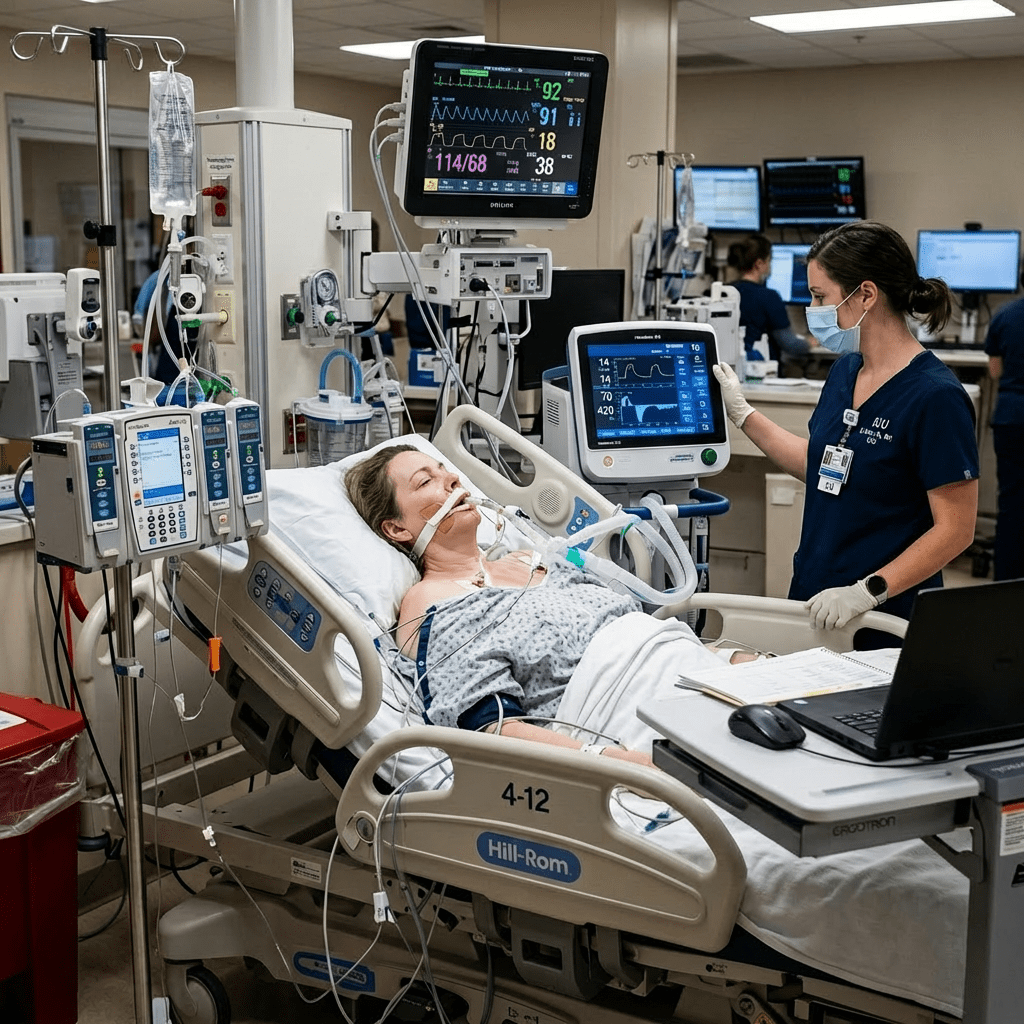
Acute Respiratory Distress Syndrome (ARDS) is a life-threatening form of respiratory failure that every nurse, registered nurse, and RN nurse must recognize early. It is heavily tested on the NCLEX, particularly in critical care, prioritization, oxygenation, and ventilation management scenarios.
Understanding ARDS pathophysiology allows the nursing professional to anticipate complications, implement timely interventions, and improve patient outcomes. A strong critical care section in any comprehensive nursing bundle should thoroughly cover ARDS management.
What Is Acute Respiratory Distress Syndrome (ARDS)?
ARDS is a severe inflammatory lung condition characterized by:
- Rapid onset of respiratory failure
- Non-cardiogenic pulmonary edema
- Refractory hypoxemia (low oxygen despite oxygen therapy)
- Bilateral infiltrates on chest imaging
It is not caused by heart failure — this distinction is critical for the NCLEX.
Pathophysiology of ARDS
To understand ARDS, the registered nurse must understand what happens at the alveolar level.
1️⃣ Initial Injury Phase
ARDS begins with direct or indirect lung injury such as:
- Sepsis
- Pneumonia
- Aspiration
- Trauma
- Pancreatitis
Inflammatory mediators are released, causing:
- Increased capillary permeability
- Damage to alveolar-capillary membrane
- Fluid leakage into alveoli
2️⃣ Pulmonary Edema Formation
Fluid accumulates in the alveoli, leading to:
- Impaired gas exchange
- Decreased lung compliance
- Increased work of breathing
Unlike cardiogenic pulmonary edema, ARDS edema is due to inflammation — not fluid overload.
3️⃣ Surfactant Dysfunction
Damage to type II alveolar cells reduces surfactant production.
This leads to:
- Alveolar collapse (atelectasis)
- Stiff lungs
- Severe hypoxemia
:highlight
4️⃣ Fibrotic Phase (Late Stage)
If prolonged, ARDS can progress to:
- Lung fibrosis
- Decreased lung elasticity
- Long-term oxygen dependency
Clinical Manifestations
The RN nurse must recognize early signs:
- Severe dyspnea
- Tachypnea
- Use of accessory muscles
- Crackles
- Hypoxemia despite oxygen
- Cyanosis (late sign)
Arterial blood gases (ABGs) often show:
- Low PaO₂
- Respiratory alkalosis initially
- Respiratory acidosis if worsening
Diagnostic Criteria (Berlin Definition Overview)
ARDS is diagnosed based on:
- Acute onset (within 1 week of insult)
- Bilateral opacities on chest imaging
- Respiratory failure not explained by cardiac cause
- PaO₂/FiO₂ ratio severity classification
These criteria are commonly tested on the NCLEX.
Nursing Care of ARDS
The nurse plays a central role in managing ARDS patients, especially in ICU settings.
1️⃣ Airway & Oxygenation Management
Interventions include:
- High-flow oxygen
- Mechanical ventilation
- Positive end-expiratory pressure (PEEP)
PEEP prevents alveolar collapse and improves oxygenation.
The registered nurse must monitor:
- Oxygen saturation
- ABGs
- Ventilator settings
- Signs of ventilator-associated complications
2️⃣ Prone Positioning
Prone positioning improves oxygenation by:
- Enhancing alveolar recruitment
- Improving ventilation-perfusion matching
The RN nurse must:
- Protect pressure points
- Monitor skin integrity
- Ensure airway security
Prone positioning is a high-yield NCLEX topic.
3️⃣ Fluid Management
Careful fluid balance is critical.
Too much fluid worsens pulmonary edema.
The nursing team monitors:
- Intake and output
- Daily weights
- Lung sounds
- Hemodynamics
4️⃣ Sedation and Comfort
Patients on ventilators often require:
- Sedation
- Analgesia
The nurse must:
- Monitor sedation level
- Prevent over-sedation
- Assess neurological status
5️⃣ Prevention of Complications
The registered nurse must prevent:
- Ventilator-associated pneumonia (VAP)
- Pressure injuries
- Deep vein thrombosis
- Stress ulcers
VAP prevention bundle includes:
✔ Elevate head of bed 30–45 degrees
✔ Daily sedation interruption
✔ Oral care
✔ Suctioning as needed
This is commonly included in any ICU-focused nursing bundle.
ARDS vs Cardiogenic Pulmonary Edema (NCLEX Tip)
| Feature | ARDS | Cardiogenic Edema |
|---|---|---|
| Cause | Inflammation | Heart failure |
| Wedge Pressure | Normal | Elevated |
| Response to Diuretics | Limited | Improves |
| Onset | Acute after injury | Gradual |
The NCLEX often tests this distinction.
Prioritization for RN Nurses
Which patient should the nurse see first?
✔ Patient with increasing oxygen requirements
✔ Patient with dropping oxygen saturation
✔ Patient with restlessness and confusion
Early hypoxia causes mental status changes.
Patient & Family Education
The registered nurse should explain:
- Why mechanical ventilation is necessary
- Expected ICU course
- Potential complications
- Long recovery timeline
Clear communication reduces anxiety and improves trust.
NCLEX Practice Question
A patient with ARDS is receiving mechanical ventilation with PEEP. What is the purpose of PEEP?
A. Increase heart rate
B. Reduce inflammation
C. Prevent alveolar collapse
D. Remove excess fluid
Correct Answer: C
PEEP prevents alveoli from collapsing at end expiration.
Key Takeaways for Nurses and RN Nurses
✔ ARDS is inflammatory, not cardiac
✔ Causes severe hypoxemia
✔ Requires mechanical ventilation
✔ PEEP and prone positioning improve oxygenation
✔ Fluid balance is critical
✔ Early recognition improves survival
Understanding ARDS strengthens critical care judgment for every nurse and improves NCLEX performance.
If your comprehensive nursing bundle includes ventilator management, ABG interpretation, ICU prioritization, and oxygenation disorders, you’ll be well prepared for both exams and bedside practice as a confident registered nurse.