
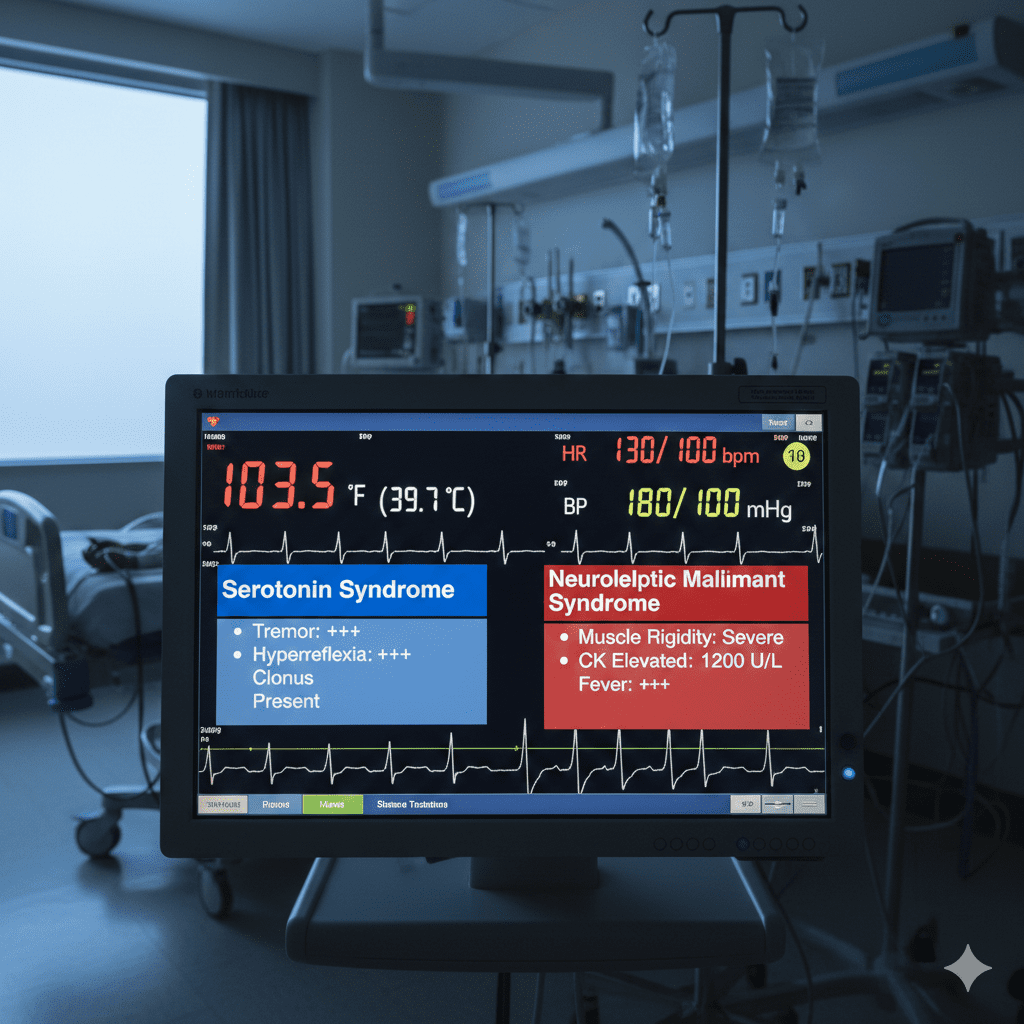
Serotonin Syndrome and Neuroleptic Malignant Syndrome (NMS) are two life-threatening medication reactions every nurse must recognize. Both can present with fever and altered mental status, but their causes, timing, and management are very different.
For the registered nurse (RN nurse) preparing for the NCLEX, understanding this comparison is essential.
:highlight
This simple rule can help you quickly differentiate them during exams and in real-world nursing practice.
What Is Serotonin Syndrome?
Serotonin Syndrome is a potentially fatal condition caused by excess serotonin activity in the central nervous system.
Common Causes (NCLEX High-Yield)
- SSRIs
- SNRIs
- MAOIs
- Tramadol
- Linezolid
- St. John’s Wort
- Combining antidepressants
It often occurs after:
- Starting a new serotonergic medication
- Increasing the dose
- Combining multiple serotonin-enhancing drugs
For a vigilant RN nurse, medication reconciliation is critical.
Clinical Features of Serotonin Syndrome
Serotonin Syndrome develops rapidly (within hours).
Classic Triad
1️⃣ Mental status changes
2️⃣ Autonomic instability
3️⃣ Neuromuscular hyperactivity
Key Symptoms
- Agitation
- Confusion
- High fever
- Diaphoresis
- Tachycardia
- Hypertension
- Hyperreflexia
- Clonus (very important clue)
- Tremors
Nursing Memory Tip
Serotonin Syndrome = HOT and HYPER
Hyperreflexia and clonus strongly suggest serotonin toxicity.
What Is Neuroleptic Malignant Syndrome (NMS)?
Neuroleptic Malignant Syndrome is a severe reaction to dopamine-blocking medications, especially antipsychotics.
Common Causes
- Haloperidol
- Risperidone
- Other antipsychotics
- Abrupt withdrawal of dopamine agonists
Unlike serotonin syndrome, NMS develops slowly over 1–3 days.
This timing difference is frequently tested on the NCLEX.
Clinical Features of NMS
Classic Symptoms
- Severe muscle rigidity (“lead-pipe rigidity”)
- High fever
- Altered mental status
- Autonomic instability
Additional Findings
- Bradyreflexia (not hyperreflexia)
- Elevated CK (due to muscle breakdown)
- Risk of acute kidney injury
Nursing Memory Tip
NMS = SLOW and STIFF
Serotonin Syndrome vs NMS: Quick Comparison Table
| Feature | Serotonin Syndrome | Neuroleptic Malignant Syndrome |
|---|---|---|
| Cause | Excess serotonin | Dopamine blockade |
| Onset | Rapid (hours) | Gradual (1–3 days) |
| Reflexes | Hyperreflexia, clonus | Normal or decreased |
| Muscle Tone | Tremors | Severe rigidity |
| CK Levels | Mild elevation | Very high |
| Medications | SSRIs, SNRIs, MAOIs | Antipsychotics |
| Treatment | Stop drug, supportive care | Stop drug, supportive care |
This comparison is extremely helpful when reviewing psychiatric emergencies in a comprehensive nursing bundle.
Treatment Differences (Critical for NCLEX)
Serotonin Syndrome Treatment
- Discontinue serotonergic medications
- Supportive care
- IV fluids
- Benzodiazepines for agitation
- Cooling measures
- Cyproheptadine (antidote)
Neuroleptic Malignant Syndrome Treatment
- Discontinue antipsychotic
- IV fluids
- Cooling measures
- Dantrolene
- Bromocriptine
For every registered nurse, early recognition and provider notification are life-saving actions.
Nursing Priorities in Both Conditions
When either condition is suspected, the RN nurse should:
- Monitor vital signs closely
- Initiate cardiac monitoring
- Assess level of consciousness
- Monitor temperature
- Check CK levels (especially in NMS)
- Provide aggressive cooling if febrile
Rapid intervention prevents complications such as renal failure or shock.
NCLEX Practice Question
A patient recently started on an SSRI presents with agitation, high fever, tremors, and hyperreflexia. What should the nurse suspect?
A. Neuroleptic Malignant Syndrome
B. Serotonin Syndrome
C. Malignant hyperthermia
D. Heat stroke
Correct Answer: B
Hyperreflexia and rapid onset are key clues.
Key Takeaways for Nurses and RN Nurses
For your NCLEX and clinical practice:
- Serotonin Syndrome = rapid onset + hyperreflexia + clonus
- NMS = gradual onset + severe rigidity + high CK
- Both require immediate medication discontinuation
- Both are medical emergencies
Mastering this comparison strengthens your psychiatric nursing knowledge and prepares you for real-life emergencies as a confident registered nurse.