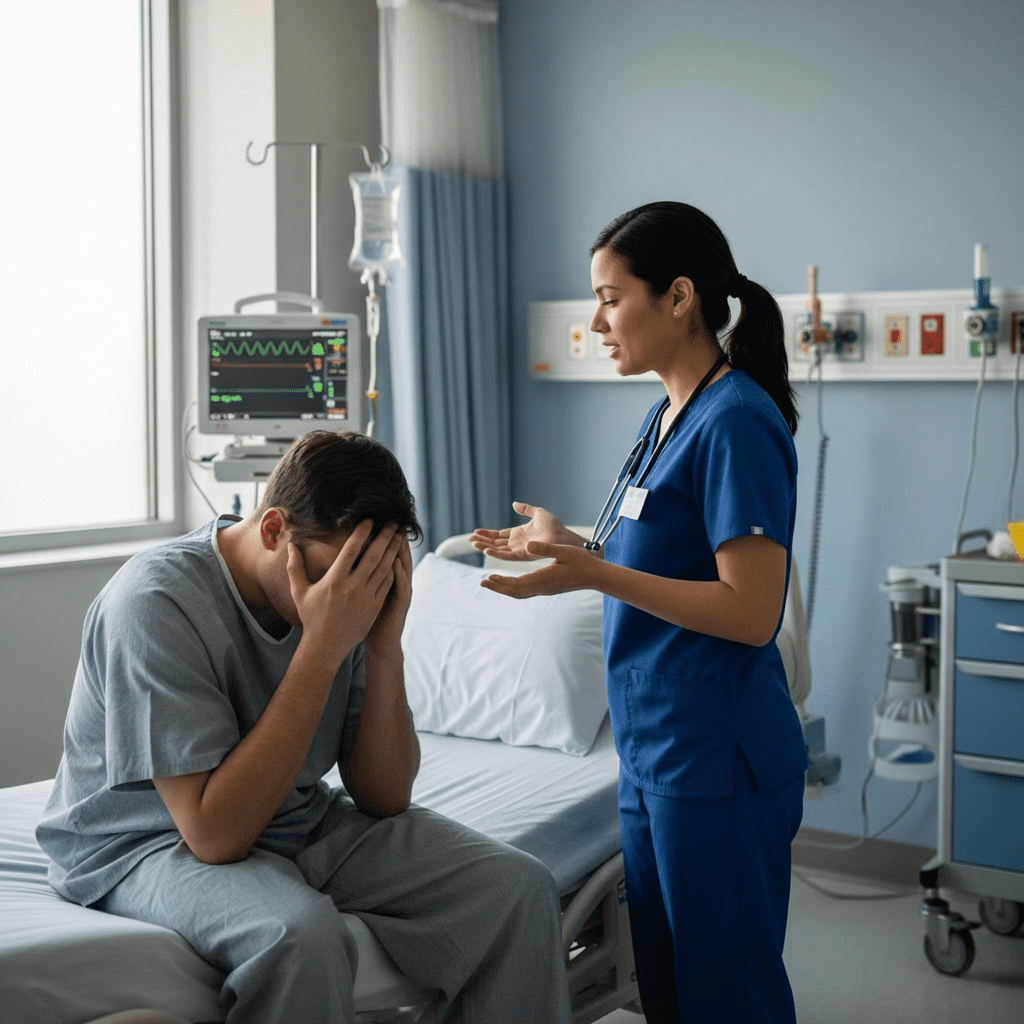
Mental health crises frequently present in emergency departments, making mental health nursing a critical skill for every nurse. In these fast-paced environments, the registered nurse plays a key role in ensuring safety, stabilizing patients, and providing compassionate care. For nursing students preparing for the NCLEX, understanding emergency psychiatric nursing is essential.
This article explores the responsibilities, priorities, and nursing interventions involved in mental health nursing in emergency settings.
Why Mental Health Emergencies Matter in the ER
Emergency departments often serve as the first point of care for patients experiencing acute psychiatric distress. These situations require immediate attention because they can involve risk to the patient, staff, or others.
Common mental health emergencies include:
- Acute psychosis
- Severe anxiety or panic attacks
- Suicidal thoughts or behaviors
- Aggression or agitation
- Substance-related mental health crises
Because symptoms may escalate quickly, nursing interventions must focus on rapid assessment and safety.
The Nurse’s Role in Emergency Mental Health Care
In emergency settings, the RN nurse often encounters psychiatric patients before any specialist. Therefore, early recognition and intervention significantly influence outcomes.
Primary responsibilities include:
- Performing rapid mental status assessments
- Maintaining a safe environment
- Using therapeutic communication
- Implementing de-escalation techniques
- Administering and monitoring medications
- Collaborating with the interdisciplinary team
Above all, the nurse must balance empathy with vigilance.
Rapid Mental Health Assessment
Although time is limited in emergencies, nurses must gather essential mental health data efficiently.
Key assessment areas:
- Level of consciousness and orientation
- Speech pattern and thought process
- Mood, affect, and behavior
- Presence of hallucinations or delusions
- Risk of harm to self or others
Importantly, direct questions about suicide are appropriate and encouraged in nursing practice and on the NCLEX.
Safety: The Top Priority in Emergency Nursing
Safety always comes first in emergency mental health nursing. A calm and controlled environment can prevent escalation.
Nursing Safety Strategies
- Remove potential weapons or harmful items
- Maintain appropriate physical distance
- Keep exits clear for staff
- Use calm body language and tone
- Request assistance early when needed
When de-escalation fails, restraints or seclusion may be required. However, the registered nurse must follow strict policies and provide continuous monitoring.
Therapeutic Communication During Crisis
Effective communication is a powerful nursing tool in psychiatric emergencies. Words, tone, and attitude can either calm or escalate a situation.
Therapeutic Techniques Nurses Should Use
- Speak slowly and clearly
- Offer reassurance without false promises
- Acknowledge emotions
- Avoid arguing with delusions
- Set clear, respectful limits
These strategies are frequently tested in NCLEX questions and emphasized in every mental health nursing bundle.
Managing Agitation and Aggressive Behavior
Agitation often results from fear, confusion, or altered perception. Therefore, nurses must respond promptly and professionally.
Nursing Interventions
- Reduce noise and stimulation
- Use verbal de-escalation first
- Avoid sudden movements
- Involve security if safety is threatened
- Administer prescribed medications appropriately
Medication use should always follow the least restrictive approach.
Emergency Psychiatric Medications: Nursing Focus
Medications may be required to control severe symptoms in emergency settings.
Common classes include:
- Antipsychotics
- Benzodiazepines
- Sedatives
RN Nurse Responsibilities
- Confirm correct medication and dose
- Monitor vital signs and oxygenation
- Assess for adverse effects
- Document patient response clearly
Medication safety remains a high-priority topic for both clinical practice and the NCLEX.
Suicide Risk Management in the Emergency Department
Suicide prevention is a core responsibility of emergency mental health nursing.
Warning Signs Nurses Must Recognize
- Verbal expressions of hopelessness
- Previous suicide attempts
- Sudden mood changes
- Substance use
- Social withdrawal
Nursing Actions
- Initiate suicide precautions per policy
- Ensure constant observation when indicated
- Remove personal belongings if required
- Communicate concerns immediately
Clear documentation protects the patient and the RN nurse legally and ethically.
Legal and Ethical Considerations
Emergency mental health nursing involves important legal responsibilities.
Key concepts include:
- Patient rights
- Confidentiality and duty to protect
- Involuntary holds
- Proper use of restraints
The registered nurse must follow institutional protocols and local regulations at all times.
Teamwork in Emergency Mental Health Care
Mental health emergencies require collaboration. Nurses work closely with physicians, psychiatrists, social workers, and security staff.
Through effective communication, the nursing team ensures appropriate treatment decisions, whether admission, transfer, or discharge.
NCLEX Tips: Mental Health Nursing in Emergency Settings
For students, this topic is frequently tested on the NCLEX.
High-Yield Points
- Safety is always the priority
- Therapeutic communication over confrontation
- Ask directly about suicidal thoughts
- Use the least restrictive intervention first
- Monitor closely after medication administration
Reviewing these concepts in a structured nursing bundle strengthens exam readiness.
Conclusion
Mental health nursing in emergency settings requires quick thinking, compassion, and strong clinical judgment. Whether you are a student nurse, a new graduate, or an experienced registered nurse, mastering these skills improves patient safety and care quality.
By applying evidence-based nursing interventions, the RN nurse becomes a vital advocate for patients during psychiatric crises—both in real practice and on the NCLEX.