
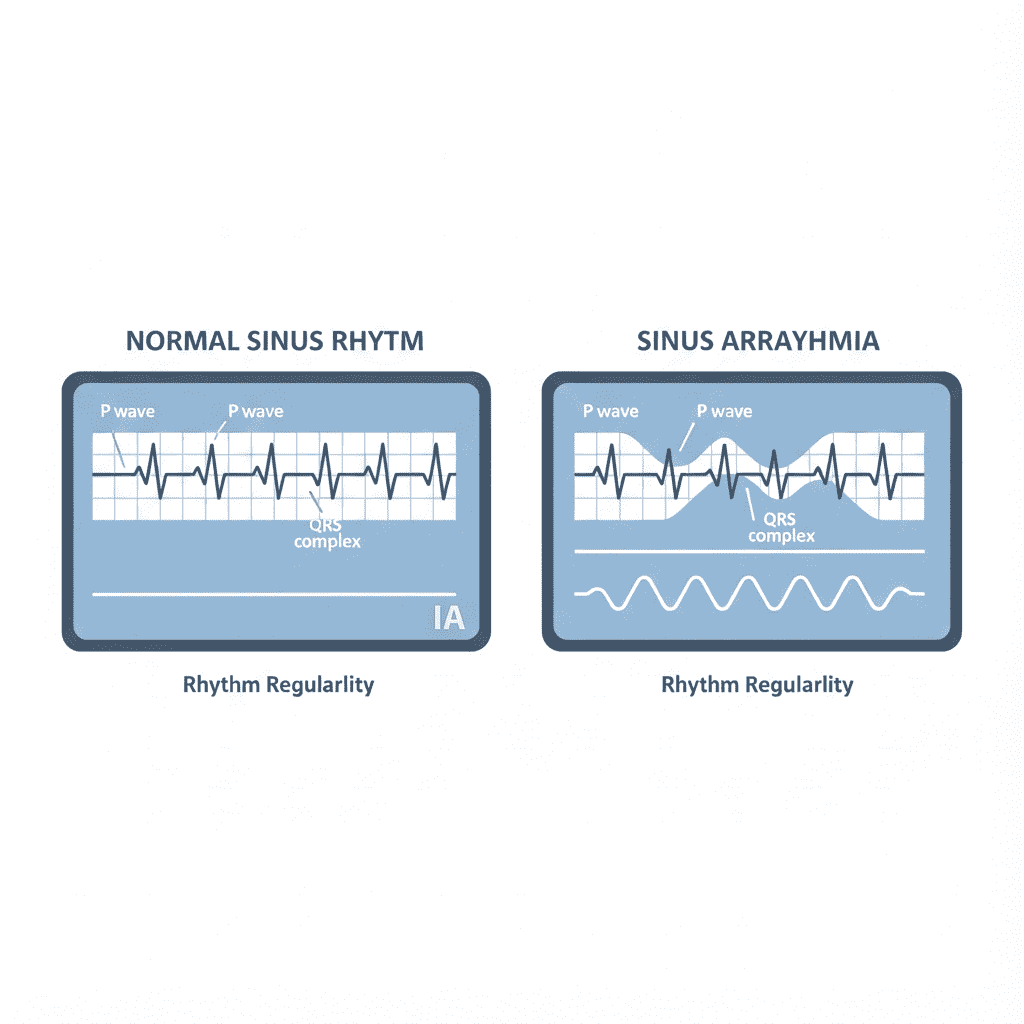
Understanding heart rhythms is essential for every nurse, especially those preparing for the NCLEX or working in clinical settings. Two rhythms that often confuse nursing students and even new registered nurses are sinus arrhythmia and normal sinus rhythm. Although both originate from the sinoatrial (SA) node, they have important differences that every RN nurse must recognize.
This article explains sinus arrhythmia vs normal sinus rhythm in a simple, nursing-friendly way, with clear assessment tips and NCLEX highlights.
What Is Normal Sinus Rhythm (NSR)?
Normal sinus rhythm represents the ideal and healthy electrical activity of the heart. The SA node initiates each heartbeat at a regular and consistent rate.
Key Characteristics of Normal Sinus Rhythm
- Heart rate: 60–100 beats per minute
- Rhythm: Regular
- P wave: Present and upright before every QRS complex
- PR interval: 0.12–0.20 seconds
- QRS complex: Narrow and consistent
From a nursing perspective, NSR indicates effective cardiac conduction and adequate perfusion. Most healthy adults display normal sinus rhythm at rest.
What Is Sinus Arrhythmia?
Sinus arrhythmia also originates from the SA node; however, the rhythm becomes slightly irregular. This variation usually relates to the respiratory cycle.
Key Characteristics of Sinus Arrhythmia
- Heart rate: Usually 60–100 beats per minute
- Rhythm: Irregular, but patterned
- P wave: Present and normal
- PR interval: Normal
- QRS complex: Normal
During inhalation, the heart rate increases. During exhalation, the heart rate decreases. This pattern is known as respiratory sinus arrhythmia.
Importantly, sinus arrhythmia is common and benign, especially in children, adolescents, and young adults.
Sinus Arrhythmia vs Normal Sinus Rhythm: Quick Comparison
| Feature | Normal Sinus Rhythm | Sinus Arrhythmia |
|---|---|---|
| Origin | SA node | SA node |
| Rhythm | Regular | Irregular (cyclic) |
| Heart Rate | 60–100 bpm | 60–100 bpm |
| Clinical Significance | Normal | Usually normal |
| Treatment Needed | No | No |
This comparison often appears in NCLEX questions, so nurses should memorize these differences.
Nursing Assessment Tips
When assessing cardiac rhythms, the nurse should always start with the patient, not just the monitor.
Nursing Priorities
- Assess vital signs and oxygen saturation
- Check for symptoms such as dizziness, chest pain, or shortness of breath
- Correlate rhythm changes with respiratory pattern
- Review patient age and medical history
In most cases, sinus arrhythmia does not require intervention. However, the RN nurse should document findings accurately and continue monitoring.
NCLEX Focus: What Nurses Must Remember
For NCLEX success, remember these key points:
- Sinus arrhythmia is benign and often normal
- It commonly occurs in children and young adults
- Normal sinus rhythm is regular
- Both rhythms show normal P waves and PR intervals
- No treatment is required unless symptoms appear
NCLEX questions often test whether the nurse can differentiate dangerous arrhythmias from normal variants.
Common Nursing Mistakes to Avoid
Even experienced nurses may misinterpret sinus arrhythmia.
Avoid these errors:
- Confusing sinus arrhythmia with atrial fibrillation
- Initiating unnecessary cardiac interventions
- Failing to assess the patient clinically
- Overlooking respiratory influence on heart rate
Strong rhythm recognition skills are emphasized in many nursing bundle study resources and EKG review modules.
Clinical Importance for Registered Nurses
A skilled registered nurse understands that not every irregular rhythm signals danger. Recognizing sinus arrhythmia builds confidence in cardiac assessment and prevents unnecessary provider notifications.
Additionally, accurate rhythm interpretation improves patient safety, documentation quality, and clinical decision-making.
Study Tip for Nursing Students
When studying EKGs:
- Practice rhythm strip analysis daily
- Compare NSR with sinus arrhythmia side by side
- Use visual EKG examples from a trusted nursing bundle
- Focus on rhythm regularity first
Consistent practice helps every RN nurse master cardiac rhythm interpretation.
Final Thoughts
Sinus arrhythmia and normal sinus rhythm both reflect healthy SA node function. The key difference lies in rhythm regularity, not origin or heart rate. For every nurse, especially those preparing for the NCLEX, understanding this distinction is essential.
With strong assessment skills and clinical awareness, registered nurses can confidently identify normal rhythm variations and provide safe, effective nursing care.