
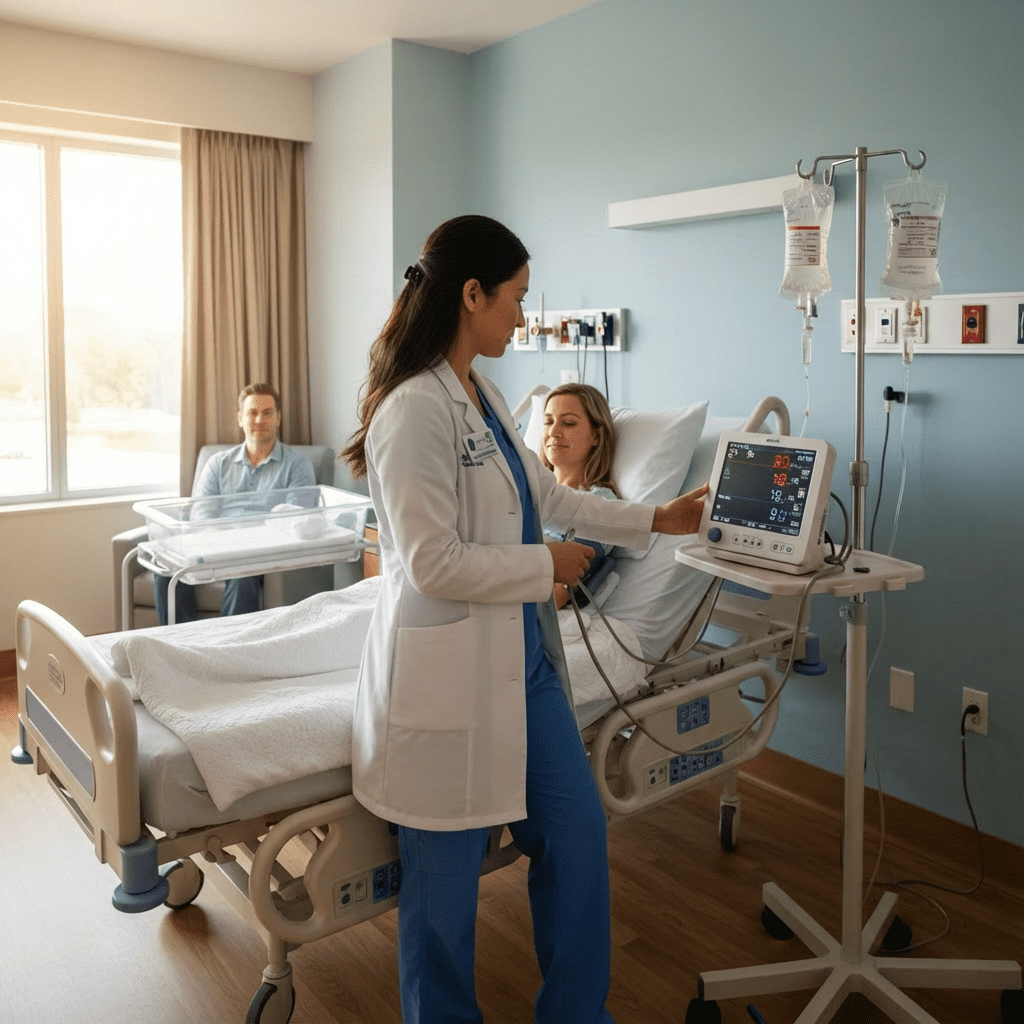
Postpartum hypertension is a serious condition that can occur after delivery, even in patients with no prior history of high blood pressure. Early recognition and prompt nursing interventions are essential to prevent life-threatening complications such as stroke, seizure, or organ damage. For nursing students, registered nurses, and RN nurses, understanding postpartum hypertension management is critical for safe care and NCLEX success.
This article reviews how nurses manage postpartum hypertension, key assessments, interventions, and NCLEX priorities.
Understanding Postpartum Hypertension
Postpartum hypertension refers to elevated blood pressure occurring after childbirth, typically within the first six weeks. It may be a continuation of gestational hypertension or preeclampsia, or it may develop for the first time postpartum.
From a nursing perspective, close monitoring during the postpartum period is essential.
Risk Factors Nurses Should Recognize
The nurse should be aware of patients at higher risk, including those with:
- History of preeclampsia or gestational hypertension
- Chronic hypertension
- Obesity
- Diabetes
- Multiple gestation
Identifying these risk factors allows the nurse to implement heightened monitoring and early intervention.
Nursing Assessment Priorities
Blood Pressure Monitoring
Frequent blood pressure checks are the cornerstone of postpartum hypertension management.
The nurse should:
- Measure BP at regular intervals
- Use proper cuff size
- Monitor trends rather than isolated readings
Severe hypertension (≥160/110 mmHg) is a medical emergency and a common NCLEX priority.
Neurological Assessment
Because postpartum hypertension increases seizure risk, neurological assessment is critical.
Nursing Assessment Includes:
- Headache severity
- Visual disturbances
- Level of consciousness
- Presence of hyperreflexia or clonus
These symptoms may indicate postpartum preeclampsia.
Monitoring for End-Organ Involvement
The nurse should assess for signs of organ damage, including:
- Decreased urine output
- Elevated liver enzymes (as ordered)
- Epigastric or right upper quadrant pain
- Shortness of breath or pulmonary edema
Prompt recognition improves patient outcomes.
Medication Management
Common Antihypertensive Medications:
- Labetalol
- Hydralazine
- Nifedipine
Nursing Responsibilities:
- Monitor blood pressure response
- Assess for side effects
- Ensure medication safety during breastfeeding
- Educate the patient about adherence
Medication knowledge is heavily emphasized in NCLEX nursing questions.
Seizure Precautions and Magnesium Sulfate
Patients at high risk for eclampsia may receive magnesium sulfate.
Nursing Care Includes:
- Monitoring respiratory rate
- Checking deep tendon reflexes
- Monitoring urine output
- Keeping calcium gluconate available
Magnesium toxicity is a high-yield NCLEX topic.
Patient Education: A Key Nursing Role
The registered nurse must educate patients before discharge.
Teaching should include:
- Importance of blood pressure monitoring
- Medication adherence
- Warning signs to report immediately
- Follow-up appointments
Education empowers patients and prevents readmissions.
Discharge Planning and Follow-Up
Postpartum hypertension may persist after discharge.
The RN nurse should ensure:
- Clear discharge instructions
- Home BP monitoring guidance
- Early postpartum follow-up
- Emergency symptom education
This continuity of care reflects professional nursing standards.
NCLEX Tips: Postpartum Hypertension
For NCLEX success, remember:
- Severe BP ≥160/110 requires immediate action
- Headache and visual changes are red flags
- Magnesium sulfate prevents seizures
- Monitor reflexes and respirations
- Patient education is essential
These principles are reinforced in maternity nursing bundles and NCLEX review programs.
Final Thoughts
Managing postpartum hypertension requires vigilant assessment, timely intervention, and patient education. Through skilled nursing care, the registered nurse plays a vital role in preventing complications and promoting maternal safety.