
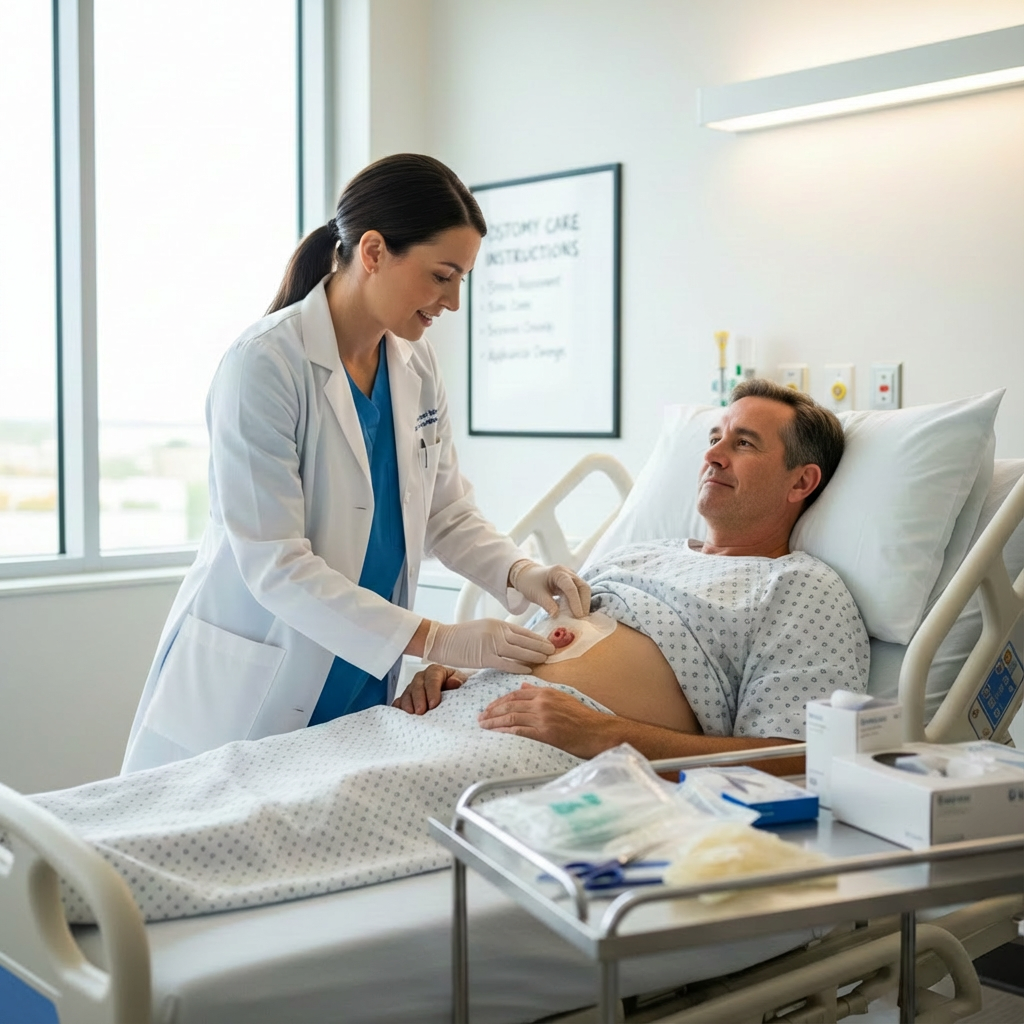
Caring for patients with an ileostomy or colostomy is an essential skill in medical-surgical nursing. These patients require physical care, emotional support, and thorough education to adapt safely to life with an ostomy. For every nurse, especially a registered nurse (RN nurse) preparing for the NCLEX, understanding ostomy care is critical for patient safety and exam success.
This article explains ileostomy and colostomy care in a simple, practical way, focusing on nursing priorities and patient teaching.
Understanding Ileostomy and Colostomy
An ostomy is a surgically created opening (stoma) that allows stool to exit the body through the abdominal wall.
Ileostomy
- Created from the ileum (small intestine)
- Output is liquid to semi-liquid
- Higher risk for dehydration and electrolyte imbalance
Colostomy
- Created from the colon (large intestine)
- Output varies from semi-formed to formed
- Output depends on stoma location
📌 NCLEX tip: Ileostomy output is more liquid than colostomy output.
Nursing Assessment of the Stoma
A thorough stoma assessment is a core nursing responsibility.
Normal stoma characteristics:
- Pink or red
- Moist
- Slightly swollen after surgery
Abnormal findings (report immediately):
- Pale, dusky, or black stoma
- Excessive bleeding
- Severe swelling or pain
A registered nurse must assess the stoma with every shift.
Peristomal Skin Care
Protecting the skin around the stoma is a major nursing priority.
Nursing interventions include:
- Clean skin with warm water (no soap with residue)
- Ensure pouch opening fits the stoma correctly
- Apply skin barrier products as needed
📌 NCLEX focus: Skin breakdown around the stoma indicates improper pouch fit.
Managing Ostomy Output
Ileostomy Output
- High volume
- Risk for dehydration
- Monitor fluid and electrolyte balance
Colostomy Output
- May be regulated over time
- Irrigation may be ordered in some cases
RN nurse responsibilities:
- Measure output
- Document consistency and amount
- Monitor intake and output closely
Nutrition and Hydration Teaching
Diet education is a key part of ostomy nursing care.
Ileostomy Teaching
- Increase fluid intake
- Add sodium as prescribed
- Chew food thoroughly
- Avoid foods that cause blockage
Colostomy Teaching
- Gradually reintroduce foods
- Identify gas-producing foods
- Maintain regular meal times
📌 NCLEX tip: Patients with ileostomy are at higher risk for dehydration.
Preventing Common Complications
Nurses must monitor for:
- Skin irritation
- Stoma prolapse or retraction
- Obstruction
- Infection
- Dehydration (especially ileostomy)
Early nursing intervention prevents serious complications.
Psychosocial Support and Patient Education
Living with an ostomy can affect body image and emotional well-being.
Nursing support includes:
- Encouraging patient participation in care
- Providing reassurance and education
- Referring to ostomy support groups
A compassionate registered nurse plays a major role in patient adjustment.
Patient Teaching Before Discharge
Before discharge, the RN nurse should ensure the patient can:
- Empty and change the pouch
- Identify signs of complications
- Maintain proper skin care
- Know when to seek medical help
Education is often reinforced using structured nursing bundle resources.
NCLEX Tips: Ileostomy vs Colostomy
- Ileostomy = liquid output, high fluid loss
- Colostomy = more formed stool
- Stoma should be pink and moist
- Skin breakdown is not normal
- Nurses teach and support, not diagnose
These concepts are commonly tested on the NCLEX.
Role of Nursing Bundles in Ostomy Care
Many nursing bundles include:
- Ostomy care checklists
- Stoma assessment charts
- Patient teaching handouts
- NCLEX-style practice questions
These tools help nurses build confidence and competence in ostomy care.
Final Thoughts for Nurses
Nursing care for patients with ileostomy and colostomy requires skill, patience, and education. By focusing on assessment, skin protection, hydration, and patient teaching, every nurse and registered nurse can promote safety, comfort, and independence.