
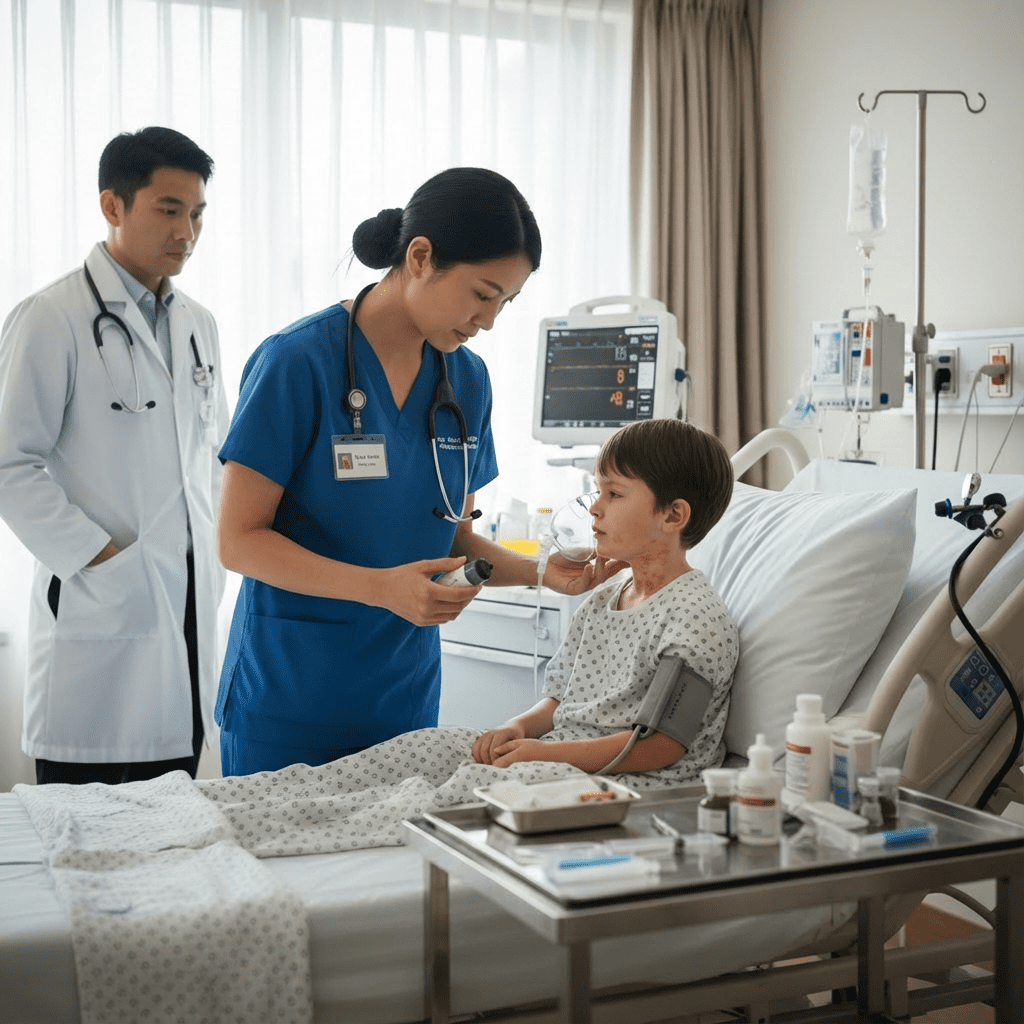
Childhood allergies are becoming increasingly common, and severe reactions such as anaphylaxis can occur suddenly and progress rapidly. Because of this, every registered nurse—from school nurses to pediatric hospital staff—must know how to recognize allergy symptoms early and intervene immediately. This topic appears frequently on the NCLEX, and it’s an essential part of pediatric nursing bundles and clinical practice.
When an allergic reaction develops in a child, an RN nurse must act quickly, think critically, and prioritize airway safety. Early, confident intervention can prevent respiratory failure, shock, and long-term complications.
🌼 Understanding Childhood Allergies
Allergies occur when a child’s immune system reacts abnormally to a substance that is usually harmless. Common allergens include:
- Peanuts and tree nuts
- Eggs and milk
- Shellfish
- Insect stings
- Medications
- Environmental triggers (pollen, dust mites)
For the nurse, understanding triggers helps guide teaching, prevention, and emergency planning.
⚠️ Recognizing Anaphylaxis (High-Yield NCLEX Topic)
Anaphylaxis is a severe, life-threatening allergic reaction that affects multiple organ systems. Every RN nurse should immediately identify the following signs:
Early Symptoms
- Hives, swelling, or itching
- Stuffy or runny nose
- Sneezing, coughing
- Tingling of lips or tongue
Severe Symptoms (Classic NCLEX clues)
- Difficulty breathing or wheezing
- Swelling of face, tongue, or throat
- Hypotension
- Dizziness or loss of consciousness
- Rapid progression of symptoms
The NCLEX often tests the ability to differentiate mild allergy symptoms from true anaphylaxis requiring emergency treatment.
🚑 Nursing Steps for Anaphylaxis: What Every RN Must Do Immediately
When a child shows signs of anaphylaxis, the registered nurse must take rapid, structured actions. These steps are essential in hospitals, schools, clinics, and community settings.
1. Stop the Allergen Exposure
Remove the trigger immediately if possible.
Examples:
- Stop IV medication
- Remove food allergen
- Move away from insect exposure
This is a priority in nursing care and commonly appears in NCLEX scenario questions.
2. Administer Epinephrine (FIRST Priority Treatment)
Epinephrine is the most critical intervention.
Dose (NCLEX standard):
- 0.01 mg/kg of 1 mg/mL (1:1000) IM in the mid-outer thigh
- May repeat every 5–15 minutes if symptoms persist
An RN nurse must know epinephrine dosing, timing, and injection site for safe practice.
3. Call Emergency Services
Activate EMS or rapid response.
Even if symptoms improve, a child must be monitored for rebound anaphylaxis.
This is a required action in every pediatric nursing bundle.
4. Maintain Airway and Breathing
- Apply oxygen
- Keep the child in a supine position with legs elevated unless breathing is compromised
- Prepare for airway management if swelling worsens
Airway compromise is the most dangerous complication, and the NCLEX often emphasizes “AIRWAY FIRST.”
5. Administer Additional Medications (After Epinephrine)
An RN nurse may give:
- Antihistamines (diphenhydramine)
- Corticosteroids (to prevent delayed reactions)
- Bronchodilators (if wheezing persists)
These are supportive, NOT primary treatments—another common NCLEX testing point.
6. Start IV Access and Fluids
Hypotension can develop quickly.
IV fluids help stabilize circulation and prevent shock.
7. Monitor Continuously
Every nurse must assess:
- Respiratory status
- Blood pressure
- Heart rate
- Skin signs
- Level of consciousness
Children may experience biphasic reactions, meaning symptoms return hours later.
🧑⚕️ Nurse Teaching for Parents and Caregivers
Education is a core role for every registered nurse, especially in pediatrics. Teaching helps families prevent future emergencies and respond correctly.
1. Teach How to Use an EpiPen
Parents must practice with a trainer device.
Key points:
- Inject into the outer thigh
- Hold for 3–10 seconds (depending on brand)
- Call EMS immediately after use
2. Create an Allergy Action Plan
A comprehensive plan should include:
- All known allergens
- Early and severe symptoms
- When to use the EpiPen
- Emergency contact information
This is often included in pediatric nursing bundles.
3. Help Families Identify Hidden Allergens
Examples:
- “May contain traces of nuts”
- Food labels for cross-contamination
- Restaurant risk factors
4. Provide Environmental Control Tips
- Avoidance strategies
- Safe snacks
- School communication
- Medical alert bracelets for children
5. Stress the Importance of Follow-Up
After an anaphylactic episode, children must see an allergist for long-term evaluation.
⭐ Final Takeaway for NCLEX and RN Nurses
Childhood allergies and anaphylaxis require quick, accurate, and confident actions. The RN nurse must prioritize airway, administer epinephrine immediately, and communicate effectively with caregivers. These skills are essential during pediatric emergencies, and they appear frequently on the NCLEX. With strong preparation and the right nursing bundle, nurses can improve patient safety and save lives.