
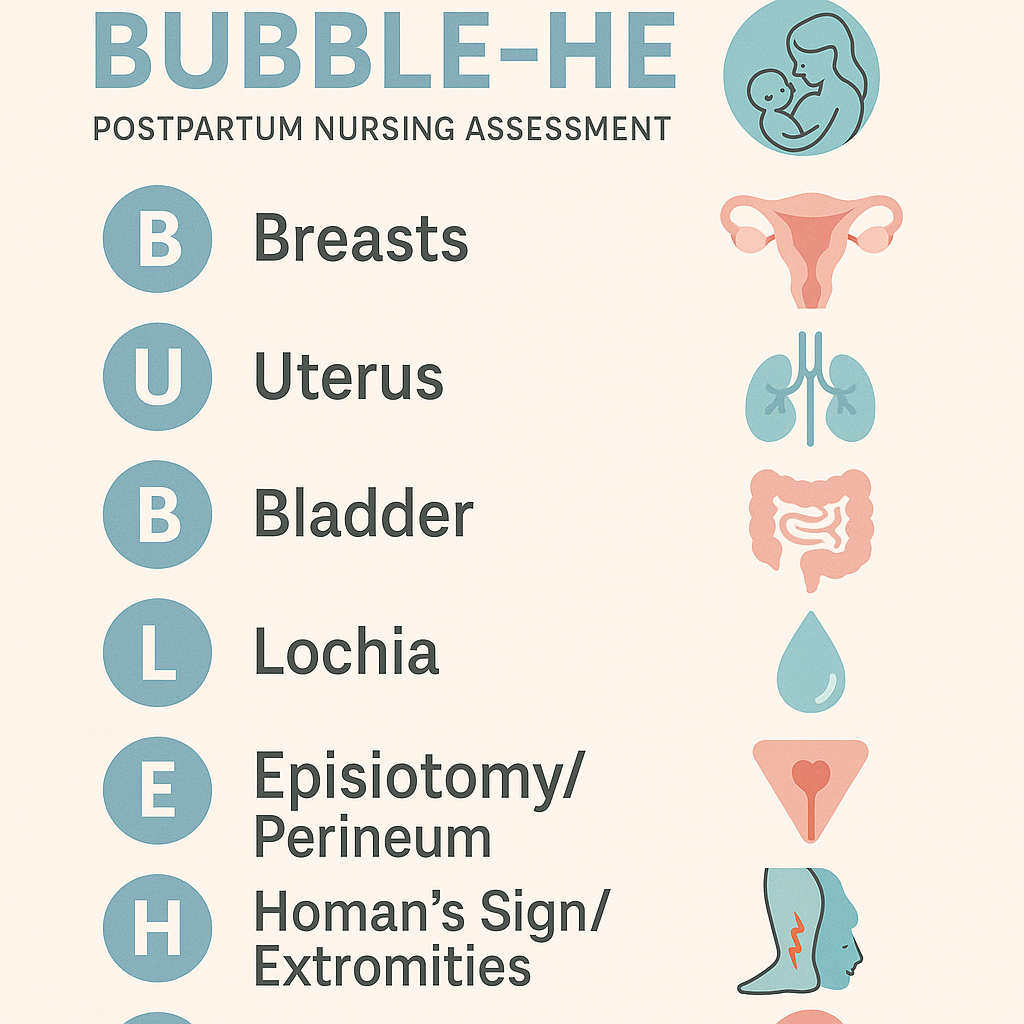
Caring for a mother after childbirth is one of the most important roles of a registered nurse (RN nurse). The postpartum period requires careful monitoring to detect complications early and promote recovery. To make this process easier, nurses use the BUBBLE-HE assessment—a structured tool that helps guide postpartum checks step by step.
For any nurse preparing for the NCLEX, mastering BUBBLE-HE is crucial. This framework not only simplifies postpartum care but also ensures no key area is missed. If you are studying with a nursing bundle or preparing for exams, this assessment is a must-know skill.
What Does BUBBLE-HE Stand For?
Each letter in BUBBLE-HE represents a specific area to assess in the postpartum patient:
- B – Breasts
- Assess for engorgement, cracked nipples, or mastitis.
- Check if breastfeeding is effective and offer teaching for positioning and latch.
- U – Uterus
- Palpate the fundus to ensure it is firm, midline, and descending daily.
- A boggy uterus may indicate uterine atony and risk for hemorrhage.
- B – Bladder
- Assess for urinary retention, distention, or incomplete emptying.
- Encourage frequent voiding to prevent displacement of the uterus.
- B – Bowels
- Monitor bowel sounds, gas passage, and return of normal bowel movements.
- Encourage hydration, ambulation, and stool softeners if needed.
- L – Lochia
- Assess vaginal discharge for amount, color, and odor.
- Scant to moderate lochia rubra is normal initially, but heavy clots or foul odor may indicate hemorrhage or infection.
- E – Episiotomy/Perineum
- Inspect for redness, swelling, hematoma, or signs of infection.
- Teach perineal care, including sitz baths and proper hygiene.
- H – Homan’s Sign/Extremities
- Assess for calf pain, warmth, or swelling (possible DVT).
- Encourage ambulation and monitor circulation.
- E – Emotional Status
- Evaluate maternal bonding, mood, and signs of postpartum blues or depression.
- Support emotional well-being and provide resources if needed.
Why BUBBLE-HE Matters for Nurses
- Provides a structured approach to postpartum care.
- Helps RN nurses quickly identify red flags such as hemorrhage, infection, or emotional distress.
- A high-yield NCLEX topic that nursing students should review regularly.
- Included in most nursing bundles because it connects directly to real-world patient care.
NCLEX Tip:
Expect questions where you need to prioritize postpartum assessments. For example:
- A boggy uterus → massage immediately.
- Heavy bleeding with clots → notify provider.
- Signs of depression → provide support and referral.
Final Thoughts
The BUBBLE-HE assessment is more than just a mnemonic; it’s a lifesaving tool. Every nurse, whether a student preparing for the NCLEX or a practicing registered nurse, should master this framework. Adding this to your study routine or nursing bundle ensures you’re confident in postpartum care and ready to keep moms safe.
Breasts
Check for engorgement, nipple integrity, pain, and breastfeeding technique.
Uterus
Assess fundal height, tone (firm/boggy), and position to monitor hemorrhage risk.
Bladder
Check voiding pattern, distension, discomfort, and ability to empty bladder.
Bowels
Assess bowel sounds, flatus, last bowel movement, and constipation concerns.
Lochia
Monitor amount, color (rubra→serosa→alba), odor, and presence of clots.
Episiotomy / Laceration
Assess using REEDA: Redness, Edema, Ecchymosis, Discharge, Approximation.
Homan’s Sign / Hemorrhoids
Check for signs of DVT (pain/swelling) and inspect hemorrhoid presence.
Emotional & Bonding
Observe mood, anxiety, bonding behaviors, and support system.