Group B Streptococcus (GBS) is a bacteria that can live in the gastrointestinal or genital tracts of healthy women without causing harm. However, it can be dangerous for newborns if passed on during delivery. As a nurse, registered nurse, or RN nurse, understanding GBS screening is crucial for ensuring the safety of mother and baby. This topic also appears on the NCLEX, making it an important part of any nursing bundle review.
🩺 Why is Group B Strep Screening Important?
GBS can lead to serious infections in newborns, including:
✅ Sepsis
✅ Pneumonia
✅ Meningitis
By screening pregnant women, healthcare teams can identify those who need antibiotics during labor to prevent transmission to the baby. As a nurse providing maternity care, knowing these facts is vital for protecting patients and their families.
🟡 When is Group B Strep Screening Done?
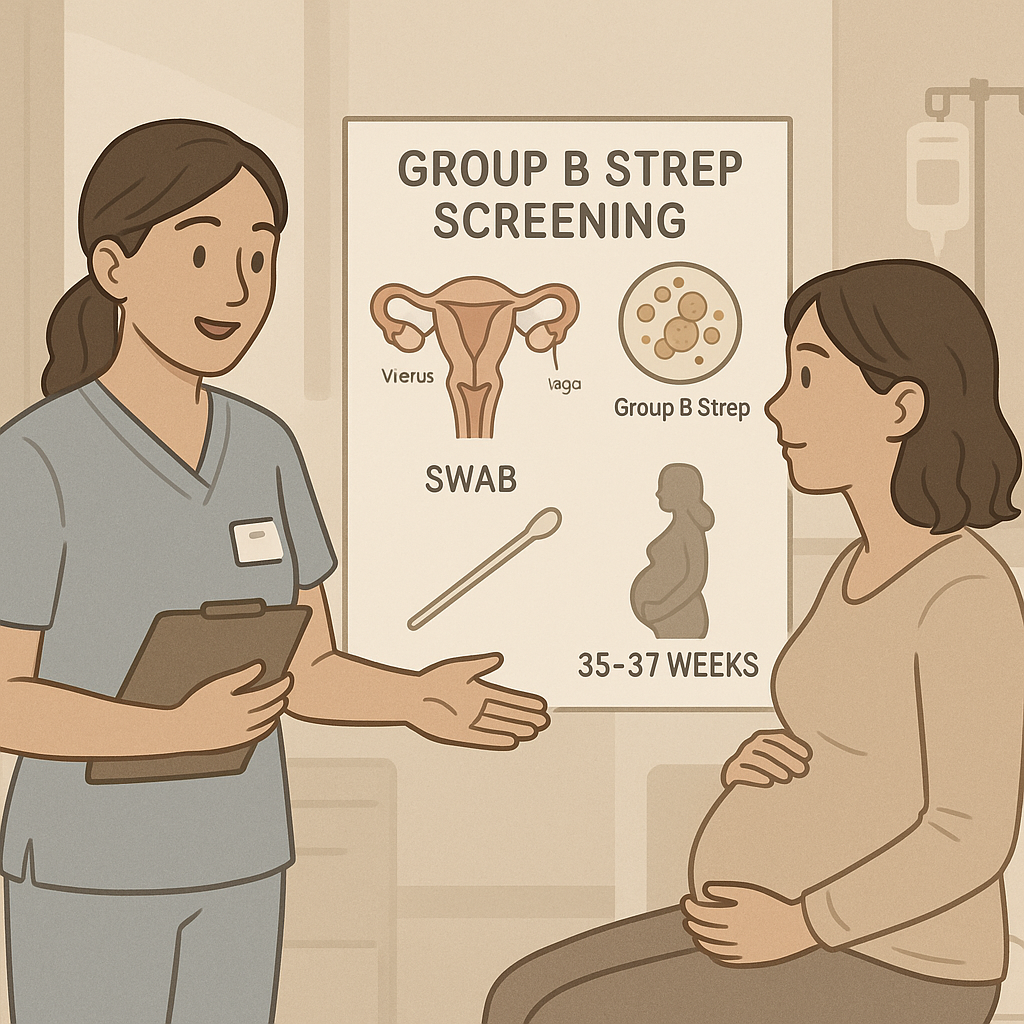
The standard recommendation is to screen pregnant women between 35 and 37 weeks gestation. A swab is collected from the vaginal and rectal areas and sent for culture.
👉 NCLEX tip: Always remember the 35–37 week window.
🟢 Nursing Role in Group B Strep Screening
As a registered nurse or RN nurse, your role includes:
✅ Educating the patient on what GBS is and why screening is important
✅ Assisting with specimen collection
✅ Documenting results and following up with the provider
✅ Preparing the patient for intrapartum antibiotic prophylaxis if they test positive
✅ Supporting questions or concerns from anxious mothers
Your calm explanation and reassurance can greatly reduce fear or confusion.
⚠️ Intrapartum Antibiotic Prophylaxis
When a pregnant patient tests positive for GBS, antibiotics are given during labor to prevent early-onset infection in the newborn.
First-line antibiotic: Penicillin G
Alternative options: Ampicillin or cefazolin (if penicillin allergic without severe reaction)
The NCLEX often tests your understanding of antibiotic choices and the importance of administering antibiotics on time.
🩹 Patient Teaching Tips
New moms often worry about a GBS-positive result. As a nurse:
✅ Explain that GBS is common and not a sexually transmitted infection
✅ Reassure them that antibiotics during labor are highly effective
✅ Clarify that no antibiotics are given before labor starts, since treatment only works during active labor
✅ Encourage them to attend all prenatal visits for ongoing assessment
Including this in your nursing bundle helps you deliver better patient-centered care.
👩⚕️ Red Flags for Nurses
While caring for a patient with GBS, watch for:
⚠️ Signs of preterm labor before prophylaxis can be started
⚠️ Allergy to penicillin that may complicate antibiotic choice
⚠️ Fever during labor, which can indicate chorioamnionitis
⚠️ Rupture of membranes over 18 hours (prolonged ROM increases infection risk)
📝 NCLEX Quick Review
✅ Screen all pregnant women at 35–37 weeks
✅ Vaginal + rectal culture
✅ Antibiotics only during labor
✅ Penicillin G is first-line
✅ Watch for penicillin allergies
✅ Educate and reassure the patient
Add these to your nursing bundle for fast, high-yield NCLEX review.
💡 Final Thoughts for RN Nurses
Group B Strep screening is simple, but its impact is huge. As a registered nurse, you help identify, educate, and protect mothers and babies from potentially life-threatening infections. Remember, a calm, confident approach can make the screening process less stressful and empower moms to trust your care.